Emergency Communication Systems for Household Preparedness
Emergency communication systems allow households to stay informed, coordinate decisions, and maintain situational awareness when normal infrastructure fails. During power outages, severe weather events, or large-scale disruptions, traditional communication channels such as cellular networks and internet services may become unreliable or unavailable.
Without a communication plan, households can quickly lose access to critical updates and the ability to connect with family members or emergency services. Establishing reliable backup communication methods ensures you can receive alerts, monitor conditions, and maintain contact when it matters most. This page supports the larger Communication Systems for Emergency Preparedness framework by focusing on practical systems households can use when primary communication methods fail.
This page serves as the communication layer within your overall preparedness system. It connects directly with your power systems for device operation, your security systems for situational awareness, and your overall preparedness plan for coordinated response.
By building a layered communication strategy, households can remain informed, connected, and capable of making decisions even when primary systems fail.
Why Communication Systems Matter During Disruptions
Communication systems are one of the most overlooked parts of household preparedness, yet they are critical for maintaining awareness and making informed decisions. During emergencies, information becomes as important as food, water, and power.
Without reliable communication, households may not receive evacuation orders, weather updates, or safety alerts. Even short disruptions can create confusion if there is no way to monitor changing conditions or stay connected with others.
A well-designed communication system ensures you can receive information, verify it, and act on it with confidence. It reduces uncertainty and helps households respond effectively instead of reacting blindly.
The 3 Layers of an Emergency Communication System
Effective emergency communication is not built on a single device. It requires a layered approach that provides redundancy, flexibility, and reliability under different conditions.
Each layer serves a specific role. Together, they ensure households can receive information, communicate locally, and maintain contact beyond their immediate area.
Information Reception (Stay Informed)
The first layer focuses on receiving reliable information during an emergency. This includes weather alerts, emergency broadcasts, and situational updates that help households understand what is happening.
Emergency radios are the backbone of this layer. NOAA weather radios and multi-function emergency radios can provide continuous updates even when power and internet services are unavailable.
This layer ensures you are never operating without current information.
Local Communication (Stay Connected Nearby)
The second layer allows communication within your immediate area, such as between family members, neighbors, or within your property.
Two-way radios (walkie-talkies) are commonly used for this purpose. They allow quick coordination without relying on cellular networks and are especially useful during evacuations, property monitoring, or managing household response.
This layer ensures you can coordinate actions and maintain awareness within your immediate environment.
Extended Communication (Reach Outside Your Area)
The third layer focuses on maintaining communication beyond your immediate surroundings. This may include contacting family members in other locations or accessing broader communication networks.
Depending on preparedness level, this can include mobile phones with backup power, signal boosters, or more advanced systems such as amateur (ham) radio.
For more detailed guidance on independent long-range communication, see Ham Radio for Emergency Communication to understand how radio systems can function when traditional networks are unavailable.
This layer ensures you are not isolated and can maintain contact outside your local area when needed.
How to Build a Reliable Emergency Communication Setup
Building a reliable communication system does not require complex equipment. It requires selecting a few key tools and ensuring they are ready when needed.
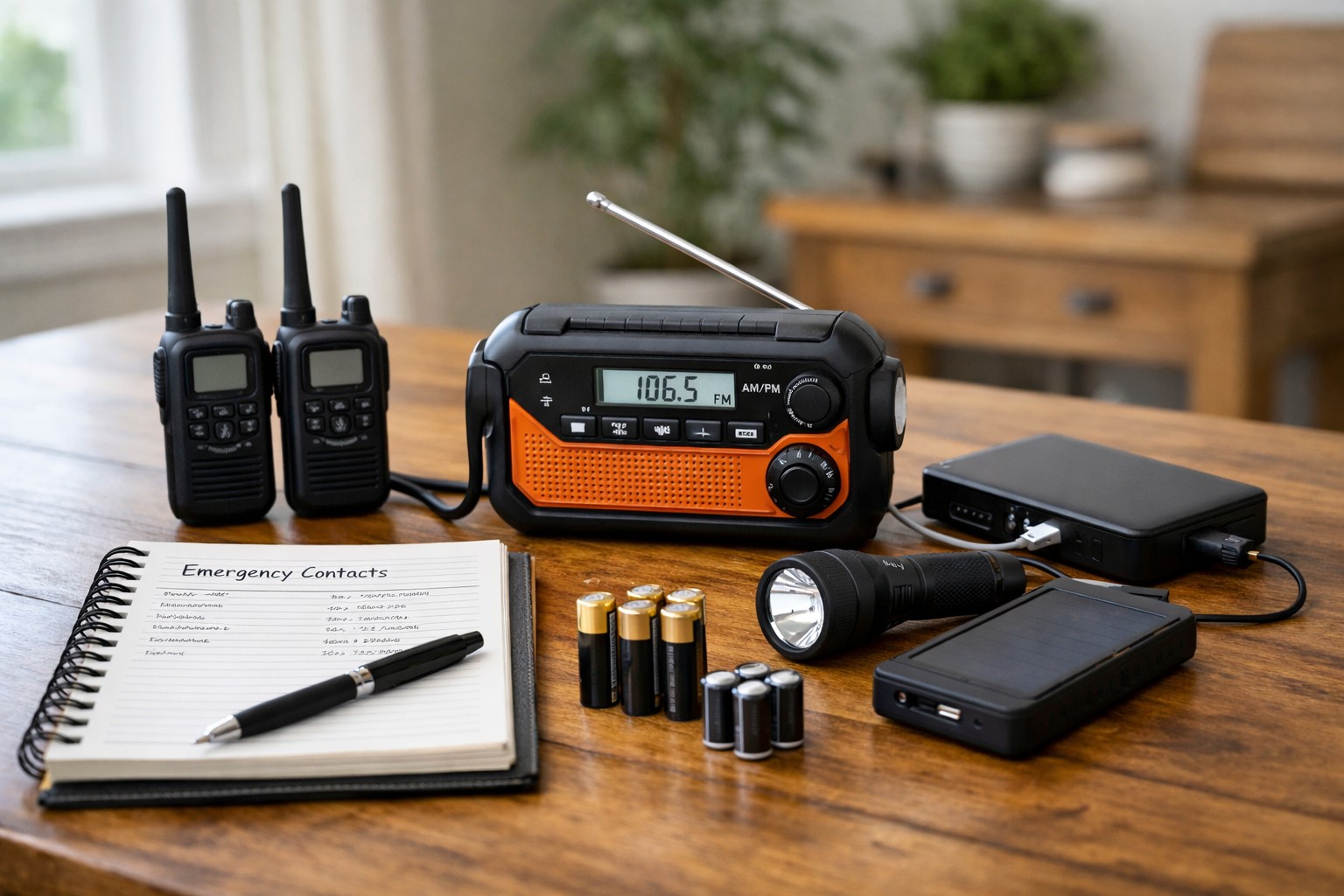
Start with a dependable emergency radio for receiving alerts and updates. Add two-way radios to enable communication within your household or nearby area. Keep a written list of emergency contacts in case digital access is unavailable.
Power is a critical part of communication planning. Devices must remain operational during outages, so backup power sources such as battery banks, spare batteries, or solar chargers should be included.
Regular testing ensures everything works when it matters. Check batteries, confirm radio functionality, and make sure all household members understand how to use the equipment.
Integrating Communication Into Your Preparedness System
Communication systems do not operate independently. They rely on other preparedness systems to remain effective during disruptions.
Power systems ensure communication devices remain charged and operational. Without backup power, radios, phones, and other tools quickly become unusable during extended outages.
Security systems benefit from reliable communication by improving situational awareness and coordination. Being able to monitor conditions and communicate with others enhances overall safety.
By integrating communication with power, security, and overall preparedness planning, households create a coordinated system that remains functional under stress.