How to Secure Doors and Windows for Emergency Preparedness
Doors and windows are the most common points of entry during a security breach. In emergency situations where normal protections may be reduced or unavailable, securing these entry points becomes a critical priority.
This guide outlines practical methods for reinforcing doors and windows to improve home security. The goal is to create a system that increases resistance to forced entry while remaining functional for everyday use.
Securing doors and windows is one of the most effective ways to strengthen your home’s overall security system. These entry points are the most common targets during a breach, making them a critical focus for any preparedness plan.
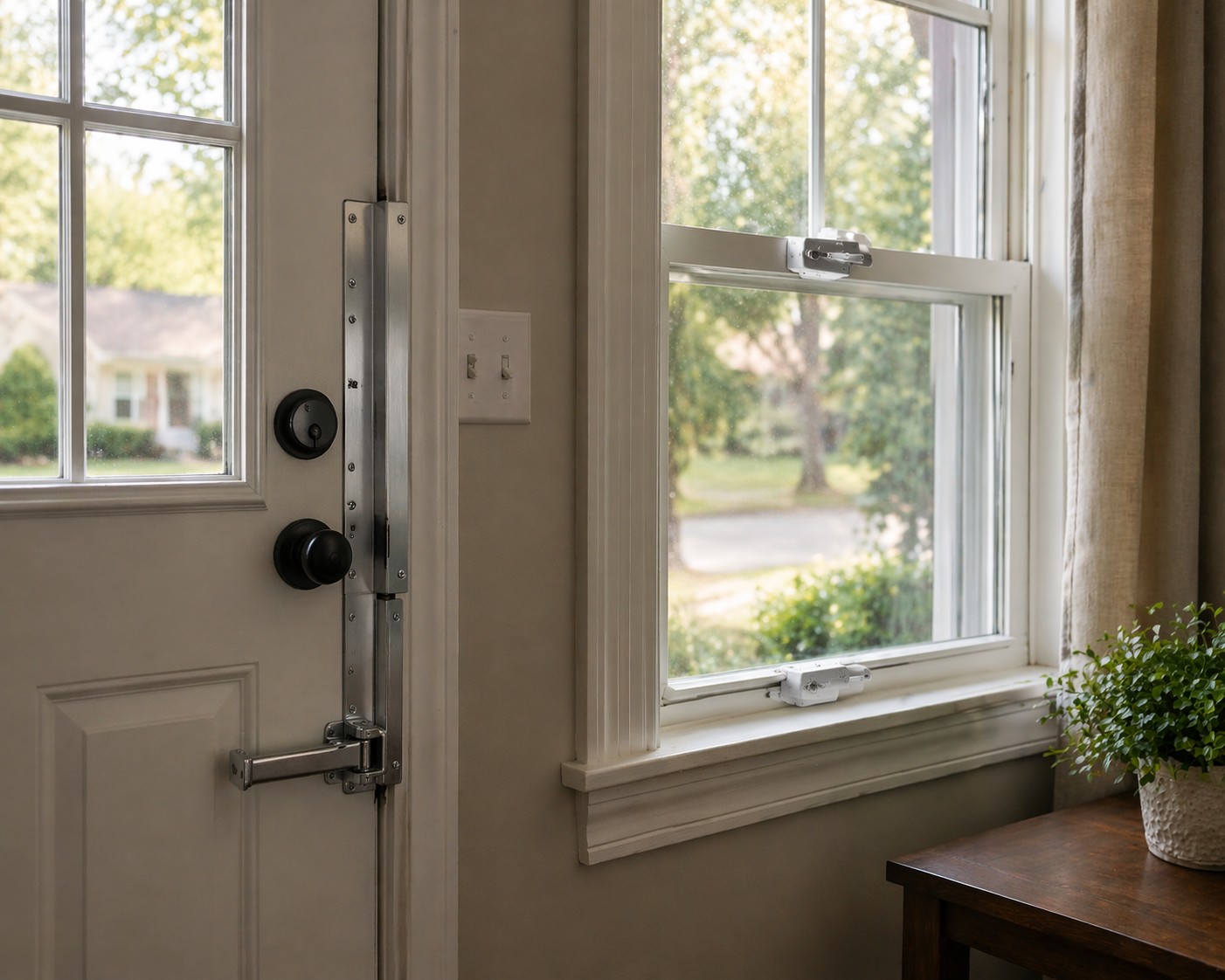
How to Secure Doors Against Forced Entry
Doors are the most common entry point during a security breach and should be the highest priority when reinforcing your home. Strengthening doors increases the time and effort required for forced entry, making your home a more difficult target.
Reinforcing Door Frames and Hinges
The strength of a door is often limited by the frame and hardware. Reinforcing door frames and upgrading hinge screws can significantly improve resistance to forced entry.
Upgrading Locks and Deadbolts
High-quality deadbolts and reinforced locking mechanisms provide an additional layer of protection. Proper installation is just as important as the quality of the hardware itself.
Using Door Bars and Braces
Door bars and braces add physical resistance by preventing doors from being forced open. These tools are especially useful during high-risk situations or when additional reinforcement is needed.
Securing Sliding and Secondary Doors
Sliding doors and secondary entrances are often weaker points of entry. Adding locks, bars, or track blockers can help prevent unauthorized access through these areas.
How to Secure Windows Against Forced Entry
Windows are another common vulnerability in home security systems. While they provide visibility and light, they can also present easy access points if not properly secured. Reinforcing windows helps reduce the risk of forced entry and improves overall system effectiveness.
Window Locks and Reinforcements
Upgrading window locks and adding reinforcement hardware improves resistance to forced opening. Simple upgrades can significantly increase the effort required to gain entry.
Security Film and Glass Protection
Security film strengthens glass and helps prevent it from shattering easily. This can delay entry and reduce the likelihood of quick access through broken windows.
Window Bars and Physical Barriers
Physical barriers such as window bars provide strong protection against forced entry. These should be installed with consideration for safety and emergency exit requirements.
Visibility and Placement Considerations
Maintaining visibility around windows reduces hiding spots and improves awareness. Landscaping, lighting, and clear sightlines all contribute to a more secure environment.
Integrating Entry Point Security Into Your Overall System
Securing doors and windows is one part of a larger home security system. These entry points work alongside surveillance, lighting, and response planning to create a complete and effective approach to protecting your home.
To understand how entry-point protection fits into a layered security system, see Home Security Systems for Emergency Preparedness for a complete overview of building a reliable home defense strategy.
Maintaining Effective Entry-Point Security Over Time
Entry-point security is not a one-time setup but an ongoing process. Regularly inspecting doors, windows, locks, and reinforcement measures ensures that your system remains effective over time.
Changes to your home, environment, or risk level may require adjustments to your security approach. Periodic reviews and updates help maintain a reliable system that continues to perform under changing conditions.