How Long Does Stored Food Last
Understanding how long stored food lasts is an important part of emergency preparedness planning. Many foods can remain safe and usable for extended periods when stored properly, while others have shorter shelf lives and require more frequent rotation. Knowing the expected shelf life of common foods helps households maintain a dependable emergency food supply.
Proper storage conditions, packaging methods, and the type of food being stored all influence how long food will remain usable. By learning how these factors affect shelf life, households can manage their food reserves more effectively and avoid unnecessary waste.
This page expands the Food Systems plan by explaining how long commonly stored foods can remain usable when kept under proper conditions. Understanding the shelf life of grains, canned foods, and other staples helps households design emergency food reserves that remain safe, practical, and ready for use when disruptions occur.
Factors That Affect Food Shelf Life
Several factors determine how long stored food will remain safe and usable. Temperature, moisture, light exposure, oxygen levels, and packaging methods all influence food shelf life. Foods stored in cool, dry, and dark environments generally last much longer than foods exposed to heat, humidity, or air.
Packaging also plays an important role. Sealed containers, vacuum packaging, and oxygen absorbers can significantly extend the storage life of many foods. By controlling these conditions, households can greatly increase the longevity of their stored food supplies.
Typical Shelf Life of Common Stored Foods
Different types of foods have very different shelf-life expectations. Dry staples such as rice, beans, and grains can often remain usable for many years when stored in sealed containers under proper conditions. Canned foods typically have shelf lives ranging from several years to a decade or more depending on the type of food and storage conditions.
Other foods such as oils, nuts, and certain packaged foods have shorter shelf lives because they contain fats that can eventually spoil. Understanding these differences helps households plan food storage systems that balance long-term staples with foods that require more frequent rotation.
Long-Lasting Dry Staple Foods
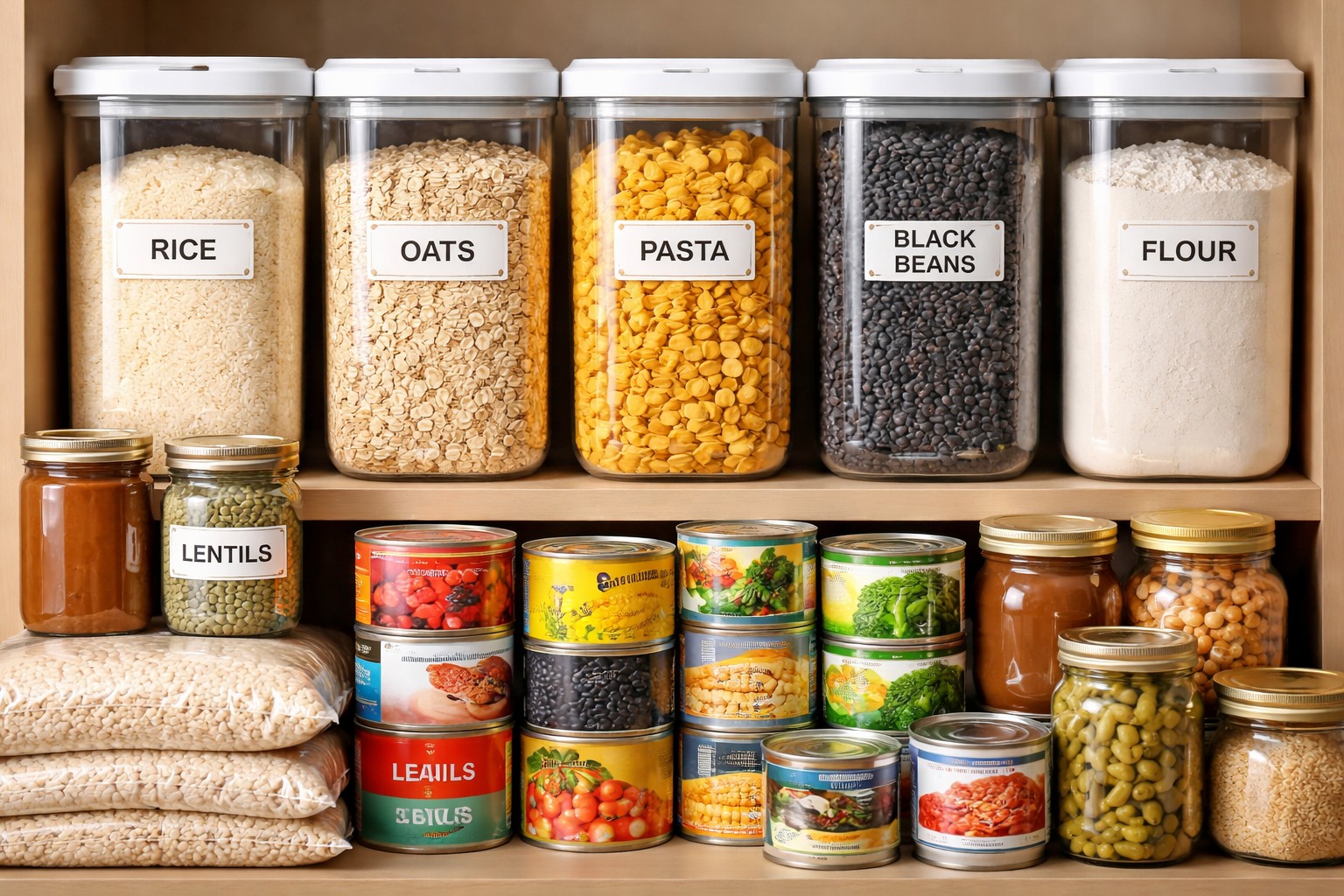
Dry staple foods often have some of the longest shelf lives in emergency food storage systems. Foods such as white rice, dried beans, oats, wheat, and pasta contain very little moisture, which slows the growth of bacteria and spoilage organisms. When packaged in sealed containers and stored in cool, dry environments, these foods can remain usable for many years.
Because of their long shelf life and reliable calorie content, dry staples are commonly used as the foundation of long-term emergency food supplies. These foods can be combined with other ingredients to create a wide variety of meals during extended disruptions.
Rotate Stored Foods to Maintain Quality
Rotating stored foods helps ensure that emergency supplies remain fresh and usable. Rotation simply means using older stored foods first and replacing them with newly purchased items. This practice helps prevent food from expiring while keeping emergency reserves fully stocked.
Many households rotate stored foods by incorporating shelf-stable items into their regular meals. By maintaining this cycle of use and replacement, households can keep their emergency food systems active and dependable.
Return to the Food Systems for Long-Term Infrastructure Disruptions overview to keep your emergency food planning aligned with the rest of your preparedness system.