How to Secure Your Home During a Collapse
Securing your home during a collapse involves taking practical steps to reduce vulnerability, improve awareness, and protect access points. As normal systems become unreliable, households must rely on their own preparation to maintain safety and control of their environment.
Effective home security is built on simple, consistent actions rather than complex solutions. By strengthening entry points, improving visibility, and establishing clear routines, it is possible to create a more secure and stable living environment during uncertain conditions.
This page builds on the layered home defense strategy by focusing on practical steps to secure your home. These actions support awareness, strengthen physical security, and improve your ability to maintain control of your environment during a collapse.
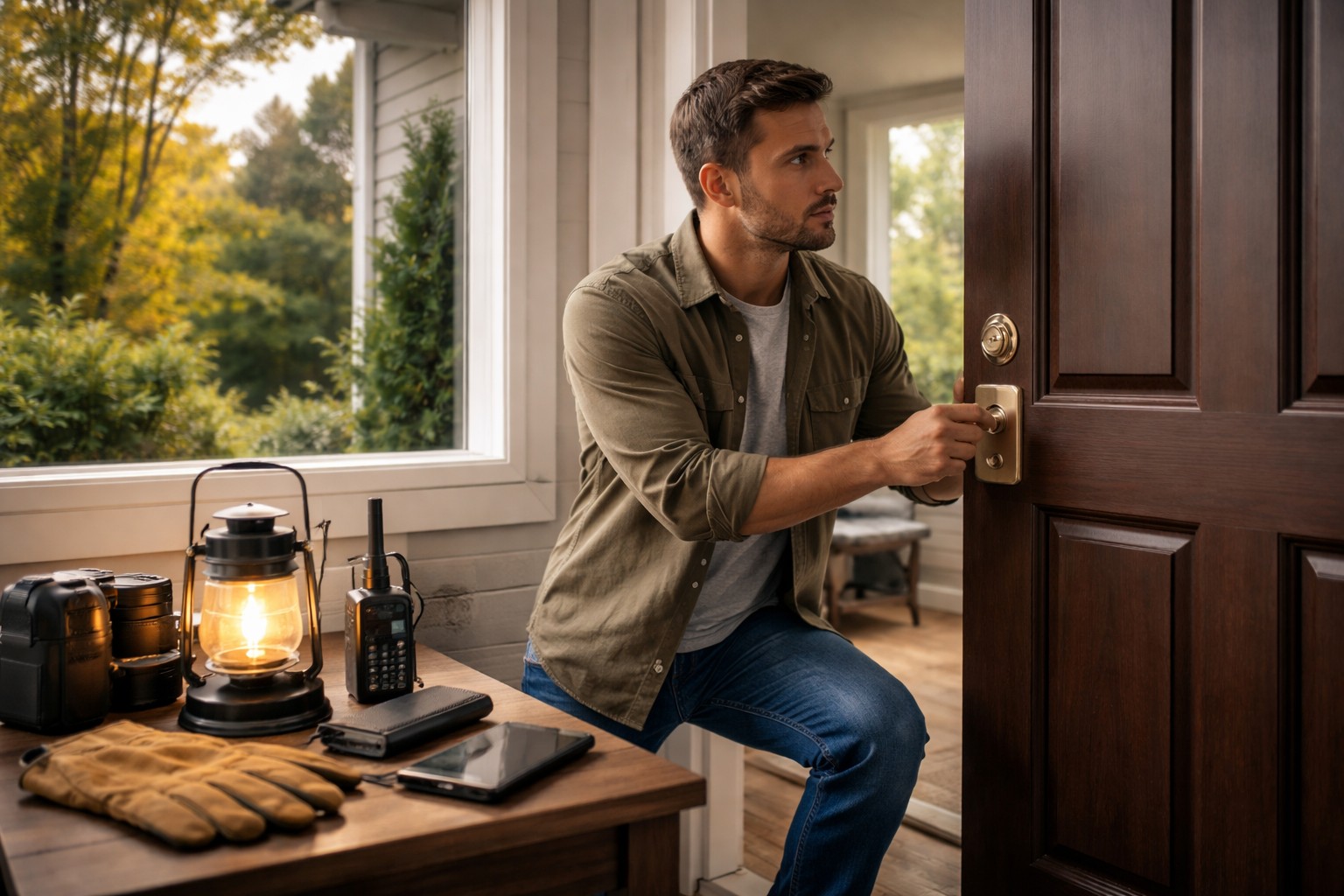
Securing Entry Points
Securing entry points is one of the most effective ways to improve home security during a collapse. Doors and windows represent the most common access points, making them the highest priority when strengthening your home. Reinforcing door frames, using quality locks, and ensuring windows are properly secured can significantly reduce vulnerability.
Simple upgrades such as installing deadbolts, adding window locks, and reinforcing weak points can make a meaningful difference. These improvements help create a stronger physical barrier and provide more time to respond if a threat arises.
Securing Doors
Doors are the primary entry point to most homes, making them a critical focus for security. Reinforcing door frames, using solid-core doors, and installing high-quality deadbolts can significantly improve resistance to forced entry. Even small upgrades, such as longer screws in door hinges and strike plates, can increase overall strength.
Ensuring that all exterior doors close securely and lock properly is essential. Regularly checking and maintaining these entry points helps prevent weaknesses that could be exploited during a collapse scenario.
Securing Windows
Windows are another common entry point and should be properly secured as part of a home defense plan. Ensuring that all windows have functional locks and are kept closed when not in use is a basic but important step. Reinforcing vulnerable windows or adding additional locking mechanisms can further improve security.
Maintaining visibility around windows is also important. Keeping the surrounding area clear and well-lit helps reduce blind spots and supports situational awareness. Simple measures can make windows less attractive as potential entry points during a collapse scenario.
Improving Visibility and Awareness
Improving visibility and awareness around your home is a key part of maintaining security during a collapse. Being able to see what is happening around your property allows you to identify potential issues early and respond appropriately.
Lighting, clear sightlines, and consistent observation all contribute to better awareness. Maintaining visibility both inside and outside your home helps reduce uncertainty and supports a more controlled and prepared response to changing conditions.
Maintaining Control and Routine
Maintaining control and routine during a collapse is essential for effective home security. Consistent habits such as checking entry points, monitoring surroundings, and communicating clearly within the household help create stability during uncertain conditions.
By focusing on simple, repeatable actions, households can reduce stress and improve their ability to respond calmly and effectively. Security is not a single action, but an ongoing process supported by awareness, preparation, and consistency.