How to Build an Emergency Communication Plan
An emergency communication plan helps ensure that family members can stay informed and connected when disasters disrupt normal communication systems. Severe storms, power outages, and other emergencies can quickly interrupt cell service, internet access, and other everyday communication tools.
Creating a communication plan ahead of time allows your household to establish backup alert methods, meeting points, and ways to share critical information during emergencies. With the right preparation, families can reduce confusion and respond more effectively when unexpected situations occur.
If a widespread outage disrupts cellular networks or internet access, alternative methods become essential. Our guide to grid-down communication explains practical ways households can stay connected when normal systems stop working.
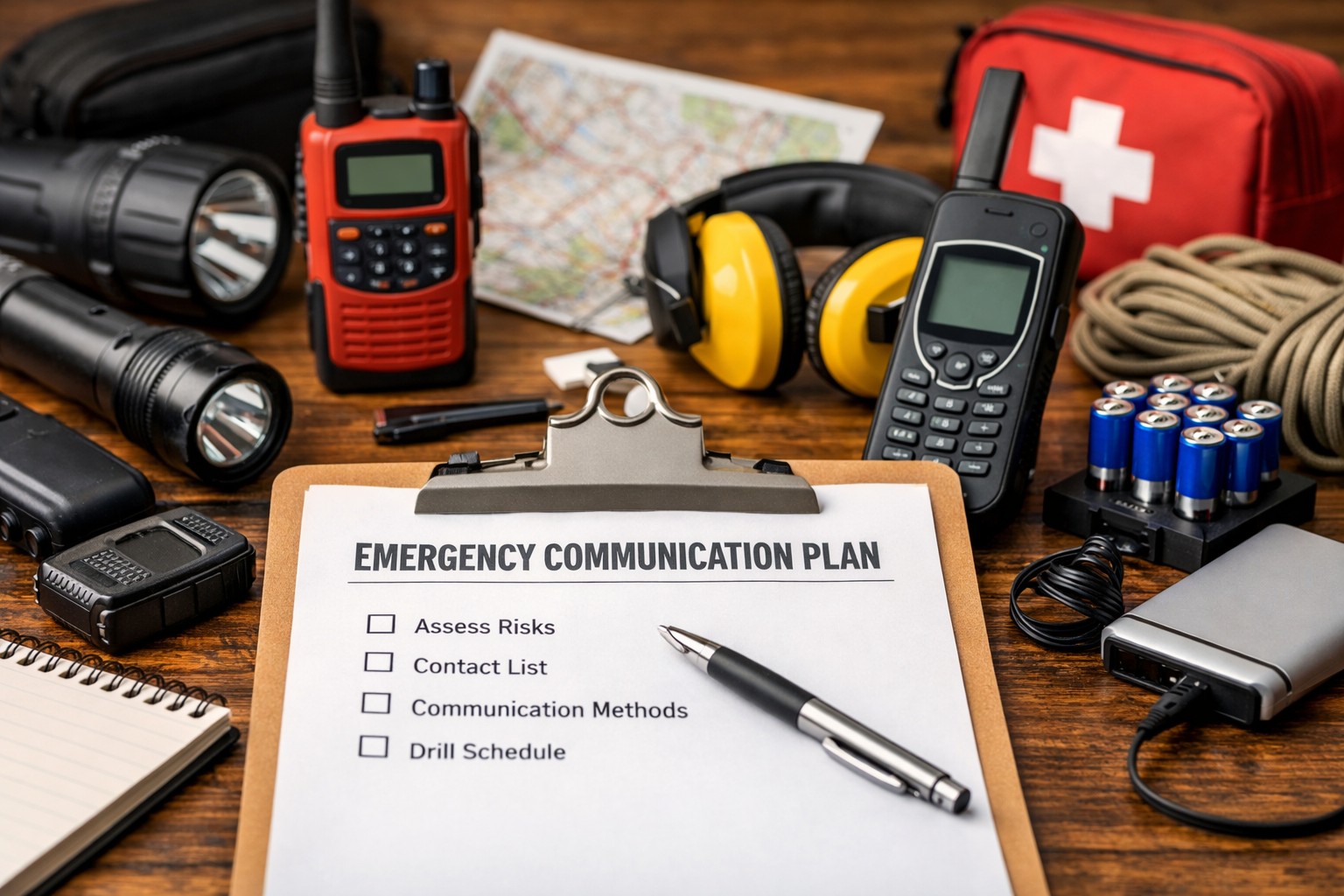
This page outlines the key elements of an effective emergency communication plan and explains how different alert systems and communication tools can work together to keep your household informed during disruptions.
Why an Emergency Communication Plan Is Important
During major disasters, communication networks can become overloaded or temporarily unavailable. Cell towers may be damaged, internet services can go down, and people may become separated from family members without a clear way to share information.
An emergency communication plan helps households prepare for these situations by establishing reliable ways to receive alerts, contact family members, and coordinate actions during emergencies. Planning these steps in advance reduces confusion and allows families to respond more quickly when conditions change.
Key Elements of an Emergency Communication Plan
A well-designed emergency communication plan typically includes several key components. Families should identify reliable alert systems for receiving warnings, establish primary and backup contact methods, and determine safe meeting locations if household members become separated.
It is also helpful to designate an out-of-area contact person who can relay information if local communication networks become overwhelmed. By organizing these elements in advance, households can improve their ability to coordinate actions and share important information during emergencies.
Communication Tools to Include in Your Plan
Households should consider using multiple communication tools to improve their ability to receive alerts and share information during emergencies. Weather radios, mobile alert systems, two-way radios, and local broadcast alerts can all play a role in keeping families informed.
Choosing a reliable alert radio is one of the most important parts of a communication plan. Our guide to the best emergency radios for disaster preparedness compares several dependable options for households preparing for emergencies.
Many households also keep a dedicated emergency communication kit that includes radios, spare batteries, flashlights, and backup power sources.
Using several different communication methods helps create redundancy so that if one system fails, another method may still deliver important warnings or allow family members to stay in contact.
Using Alert Systems in Your Communication Plan
Emergency alert systems play an important role in any communication plan by providing early warnings about severe weather and other hazards. Systems such as weather radios, mobile alerts, and broadcast alerts help ensure that households receive critical information when dangerous conditions develop.
To learn more about the different warning methods used during emergencies, visit our guide to Types of Emergency Alert Systems.
Return to the Communication Systems for Long-Term Disruption Planning page to continue building your household emergency communication strategy.
Related Communication Guides
• Emergency Communication Kit: What Every Household Should Have
• Grid-Down Communication: How to Stay Connected Without Cell Service
• Best Emergency Radios for Disaster Preparedness
Return to the Communication Systems for Long-Term Disruption Planning guide to continue building a complete household communication strategy.