Solar vs Fuel Generators: Which Backup Power Strategy Is Right for Your Home?
When grid power fails for more than a few hours, most households face the same question: should you rely on a fuel-based generator, a solar generator, or a combination of both? The right choice depends on your essential load, outage duration, fuel access, and long-term planning goals.
This page supports the Emergency Power Systems plan by helping you compare solar and fuel-based generators in real-world scenarios. Instead of focusing on brands or models, this guide shows how each system performs under different outage conditions so you can choose the right strategy for your household.
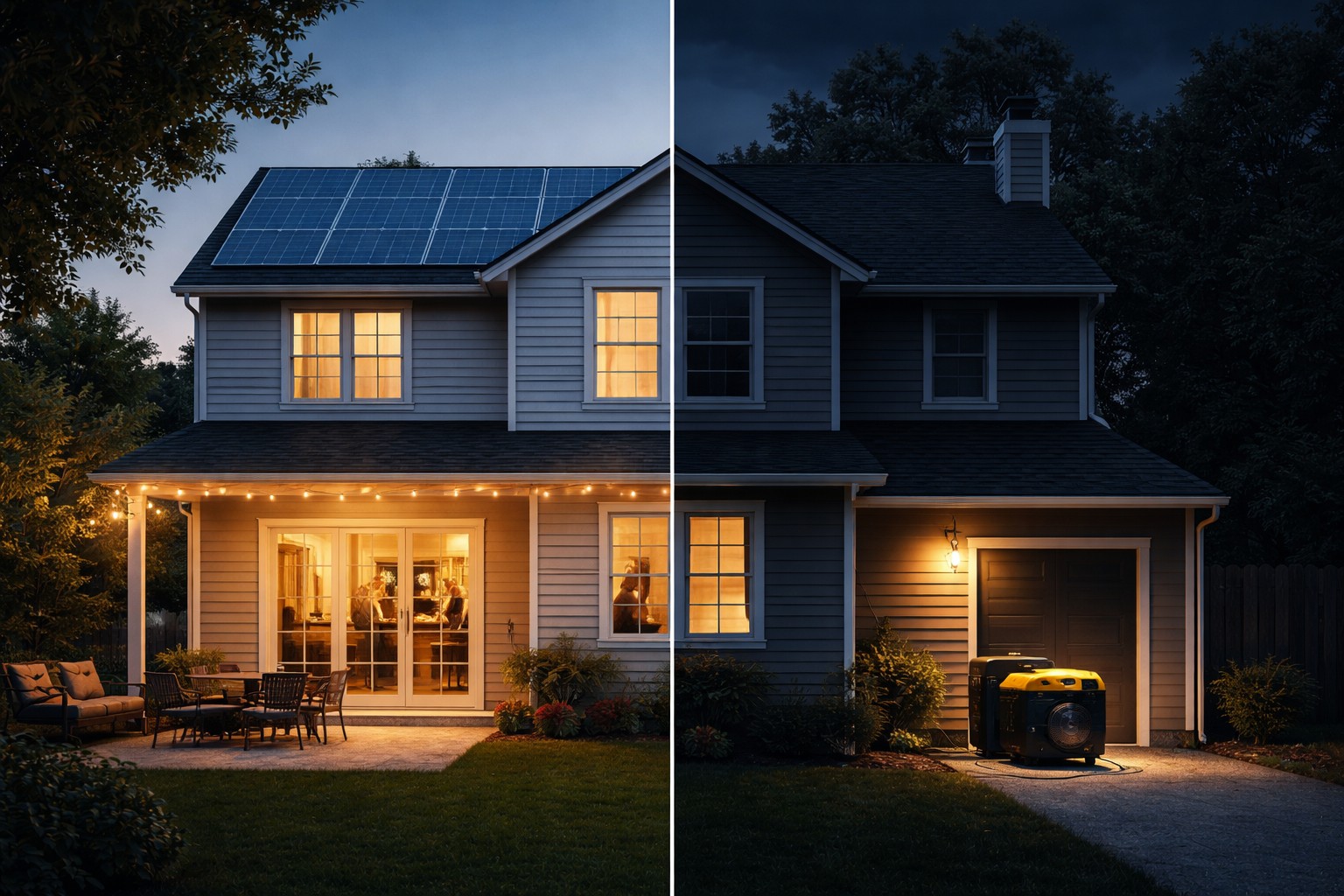
This comparison illustrates two common backup power approaches. Solar systems provide continuous, quiet energy when properly sized, while fuel generators offer high output but depend on fuel availability and active operation during outages.
Solar vs Fuel Generators: Key Differences
Solar and fuel-powered generators differ in how they produce power, how long they can operate, and how they are used during an outage. Understanding these differences helps households choose the right system based on reliability, duration, and available resources.
Power Source
Solar Generators: Use stored battery power charged by solar panels
Fuel Generators: Use gasoline, propane, or diesel to generate electricity
Runtime
Solar Generators: Limited by battery capacity and sunlight availability
Fuel Generators: Can run continuously as long as fuel is available
Noise
Solar Generators: Silent operation
Fuel Generators: Produce noise during operation
Maintenance
Solar Generators: Minimal maintenance
Fuel Generators: Require fuel management and regular servicing
Ease of Use
Solar Generators: Simple plug-and-play operation
Fuel Generators: Require startup procedures and fuel handling
When Solar Generators Make Sense
Solar generators are best suited for households that prioritize quiet operation, low maintenance, and indoor-safe power solutions. They perform well during short outages, for essential devices, and in situations where fuel storage or noise is a concern.
Best Use Cases
• Powering essential devices such as phones, lights, and small appliances
• Indoor-safe backup without fumes or ventilation concerns
• Quiet operation in residential neighborhoods
• Building a renewable, long-term power strategy
Limitations to Consider
• Limited runtime based on battery capacity
• Recharge depends on sunlight or grid availability
• Higher upfront cost for larger systems
• May not support heavy, continuous loads without scaling
When Fuel Generators Are the Better Choice
Fuel generators are better suited for households that need higher power output and longer runtime during extended outages. They are effective when running large appliances or maintaining power over multiple days, provided fuel is available and safely stored.
Best Use Cases
• Running high-wattage appliances such as refrigerators, freezers, or well pumps
• Maintaining power during multi-day outages
• Situations where refueling is practical and planned
• Providing strong output for heavy or continuous loads
Limitations to Consider
• Requires fuel storage and rotation
• Produces noise and exhaust fumes
• Must be operated outdoors for safety
• Requires maintenance and periodic testing
How to Evaluate the Right Option
Instead of focusing on brand names first, evaluate each option using the same decision criteria. This approach helps you choose a system based on real household needs rather than marketing claims.
Power Output
How much wattage can the system provide consistently and at peak load?
Runtime & Refueling
How long can it operate before needing fuel, recharge time, or sunlight?
Noise & Location Limits
Can it run safely in your setting without disturbing neighbors?
Fuel or Energy Dependence
Does it rely on stored gasoline, propane, or sunlight availability?
Maintenance & Reliability
How complex is upkeep, and how likely is failure during extended use?
Which System Is Right for Your Home?
Choose a solar generator if your priority is quiet operation, indoor-safe backup, and building a long-term renewable power foundation. Solar systems work especially well for essential devices and shorter-to-medium outages where simplicity and low maintenance are important.
Choose a fuel generator if your priority is running high-wattage appliances or maintaining power during extended outages where refueling is practical. Fuel generators provide strong output and flexibility when continuous power is required.
For many households, the most reliable approach is not choosing one system over the other, but combining both. A solar generator can handle essential loads quietly and safely, while a fuel generator provides additional capacity for heavy loads and extended outages.
Return to the Emergency Power Systems overview to keep your full plan aligned.