Household Readiness Levels
Most households do not fail because they lack information—they fail because they do not know where they actually stand. Preparedness without structure creates random purchases, false confidence, and major blind spots across power, water, food, communication, and security.
Household readiness improves when systems are measured honestly. The goal is not perfection or fear-driven prepping. It is understanding whether your home is operating at a basic level, stable level, resilient level, or true independent continuity level during disruption.
Most people think preparedness is about owning more supplies, but readiness is really about system reliability. A generator does not create readiness if fuel planning is weak. Stored food does not create stability if water access fails first. Real preparedness comes from how household systems work together under pressure.
Readiness levels help households identify what is actually strong, what is vulnerable, and what must be improved next. This creates better decisions, stronger priorities, and a clear path forward instead of random emergency planning.
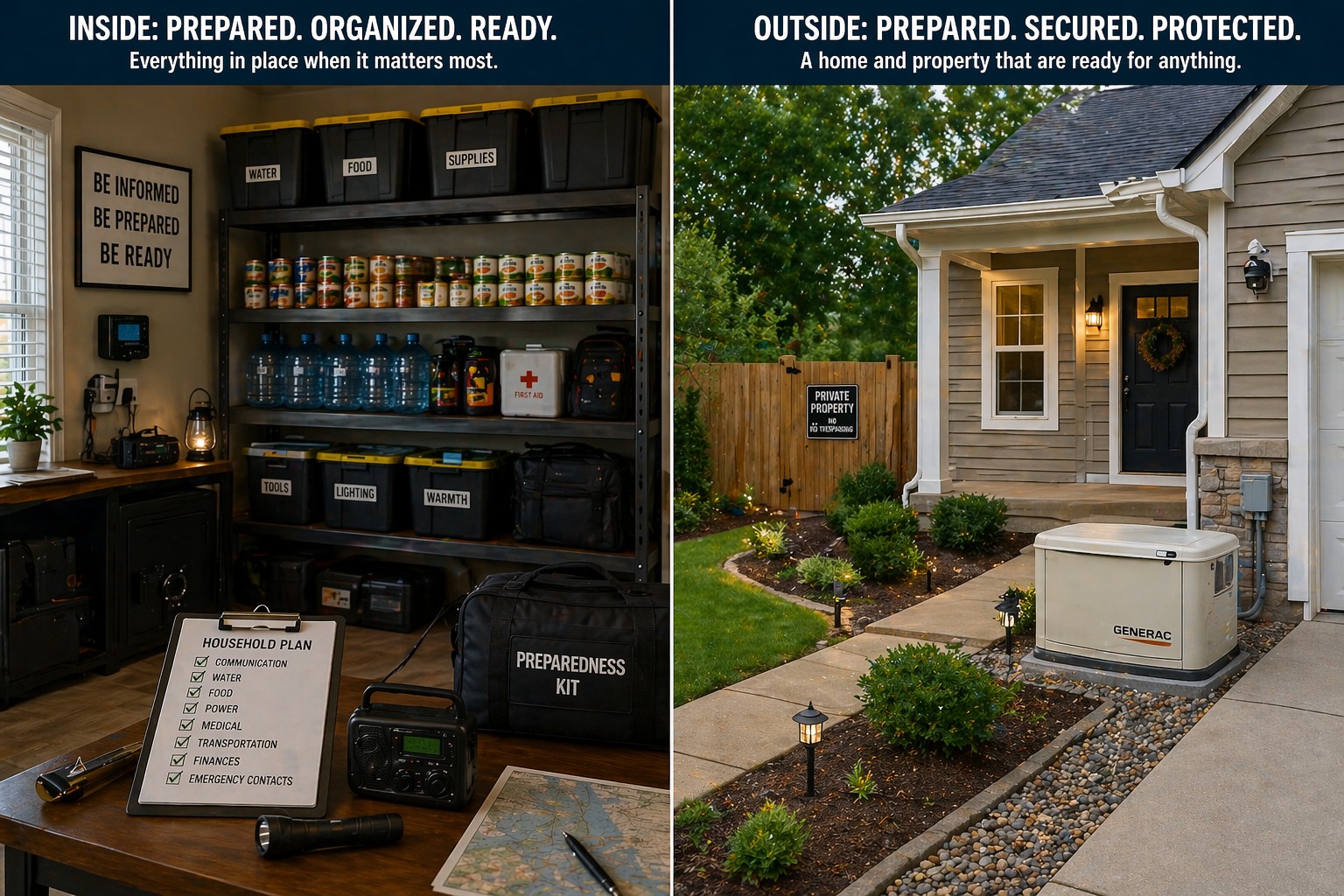
What Household Readiness Actually Means
Household readiness is not measured by how much gear is stored in the garage. It is measured by whether the home can continue operating when normal systems fail. A household with bottled water, backup lighting, and stored food may still be unprepared if power failure, communication breakdown, or poor security routines create fast instability.
Real readiness means systems continue functioning under pressure. Power supports refrigeration and medical needs. Water protects health and sanitation. Communication prevents confusion. Security protects stability. Preparedness is strongest when these systems work together instead of existing as isolated purchases.
The 4 Household Readiness Levels
Most households fall somewhere between basic preparation and true independence. The goal is not to become extreme—it is to understand what level your home can realistically maintain when disruption lasts longer than expected.
These four readiness levels create a practical way to measure preparedness across power, water, food, communication, and security so improvement happens with purpose instead of guesswork.
Level 1 — Basic
A basic household is prepared for short inconvenience but not true disruption. There may be bottled water, flashlights, extra batteries, some stored food, and general awareness that emergencies happen, but systems are not planned or connected. Preparedness exists more as supplies than as household continuity.
At this level, most failures still create fast instability. Power loss quickly affects food and lighting, water reserves are limited, communication plans are weak, and security depends mostly on normal routines. The household is reactive, not structured.
The next step is moving from random supplies to intentional system planning. Basic readiness becomes stable readiness when households identify weak points and begin protecting continuity instead of just storing emergency items.
Level 2 — Stable
A stable household can manage short-term outages without immediate disruption or panic. Water storage is intentional, backup lighting exists, refrigeration protection is planned, and basic communication and security routines are in place. The household is no longer relying entirely on normal utility service to stay functional.
At this level, the home can handle the first 72 hours far more effectively because critical systems have been identified and protected. There is less waste, fewer rushed decisions, and stronger control over the early phase of disruption.
The next step is building resilience. Stable readiness becomes resilient readiness when the household can maintain function beyond short-term outages and protect systems even when restoration timelines become uncertain.
Level 3 — Resilient
A resilient household can continue functioning during extended disruption without immediate outside support. Backup power is planned with fuel discipline, water access includes storage plus filtration or refill strategy, food continuity extends beyond short-term reserves, and communication routines work even when normal systems become unreliable.
At this level, the household is no longer just surviving outages—it is protecting continuity. Daily function can continue with far less stress because systems are built for longer disruption instead of short inconvenience.
The next step is independence. Resilient readiness becomes independent readiness when the household can maintain critical systems with minimal reliance on fragile outside infrastructure.
Level 4 — Independent
An independent household can maintain critical life systems for an extended period with minimal dependence on normal infrastructure. Power systems are sustainable, water access is reliable beyond stored reserves, food continuity is structured for longer-term disruption, communication options are layered, and security routines protect stability without relying on outside response.
This does not mean total isolation or “off-grid fantasy.” It means the household is strong enough to make decisions from stability instead of urgency. Recovery becomes strategic instead of reactive because the home can function without immediate outside rescue.
Independent readiness is not required for every household, but understanding the level helps families decide how far they want their preparedness system to go.
How to Identify Your Current Level
Most households overestimate readiness because they judge preparedness by ownership instead of system performance. A generator does not create resilience if fuel planning fails. Stored food does not create stability if water access is weak. Security gear does not create readiness if household routines collapse during disruption.
The best way to identify your level is to ask one question: Can this system continue working if normal services stop for several days? Honest answers reveal where the real weaknesses exist and where the next improvements should happen.
Test Power Before You Need It
If backup power exists but has never been tested under real household load, it is not true readiness. Households should know exactly what must stay powered, how long backup systems can run, and what happens when fuel or battery limits are reached.
A common mistake is assuming ownership equals function. Prepared households test generators, battery systems, charging routines, and refrigeration protection before failure happens—not during the outage.
Follow Water to the Failure Point
Most people think they have enough water because they have stored some water. Real readiness means knowing how long drinking, cooking, sanitation, and hygiene can continue if refill options disappear.
Prepared households identify where water becomes the first real failure point and solve that problem before expanding other systems.
Ask What Breaks First
Every home has a weak point. It may be refrigeration, medication storage, fuel dependence, communication gaps, or poor security routine. The fastest failure usually reveals the true readiness level more accurately than any checklist.
Preparedness improves fastest when households solve the first real failure point instead of buying random upgrades that feel productive.
Moving From One Level to the Next
Most preparedness progress does not come from major purchases. It comes from closing the specific gap that creates the fastest household instability. Moving from Basic to Stable often means reliable water storage and backup lighting. Moving from Stable to Resilient often means fuel discipline, food continuity, and stronger communication planning.
The goal is not upgrading everything at once. Strong households improve by solving the next real weakness in the system. Readiness grows faster when priorities are clear and improvements are made with purpose instead of fear.
Return to Household Preparedness Systems