Portable Power Stations: How They Fit Into Emergency Preparedness
Portable power stations provide a flexible and accessible way to maintain electricity during outages. These systems store energy in a battery and deliver power without the noise, fuel, or maintenance requirements of traditional generators.
This page supports the Emergency Power Systems plan by explaining how portable power stations function within a broader backup power strategy. Instead of focusing on specific models, this guide shows when and how these systems are most effective for home preparedness.
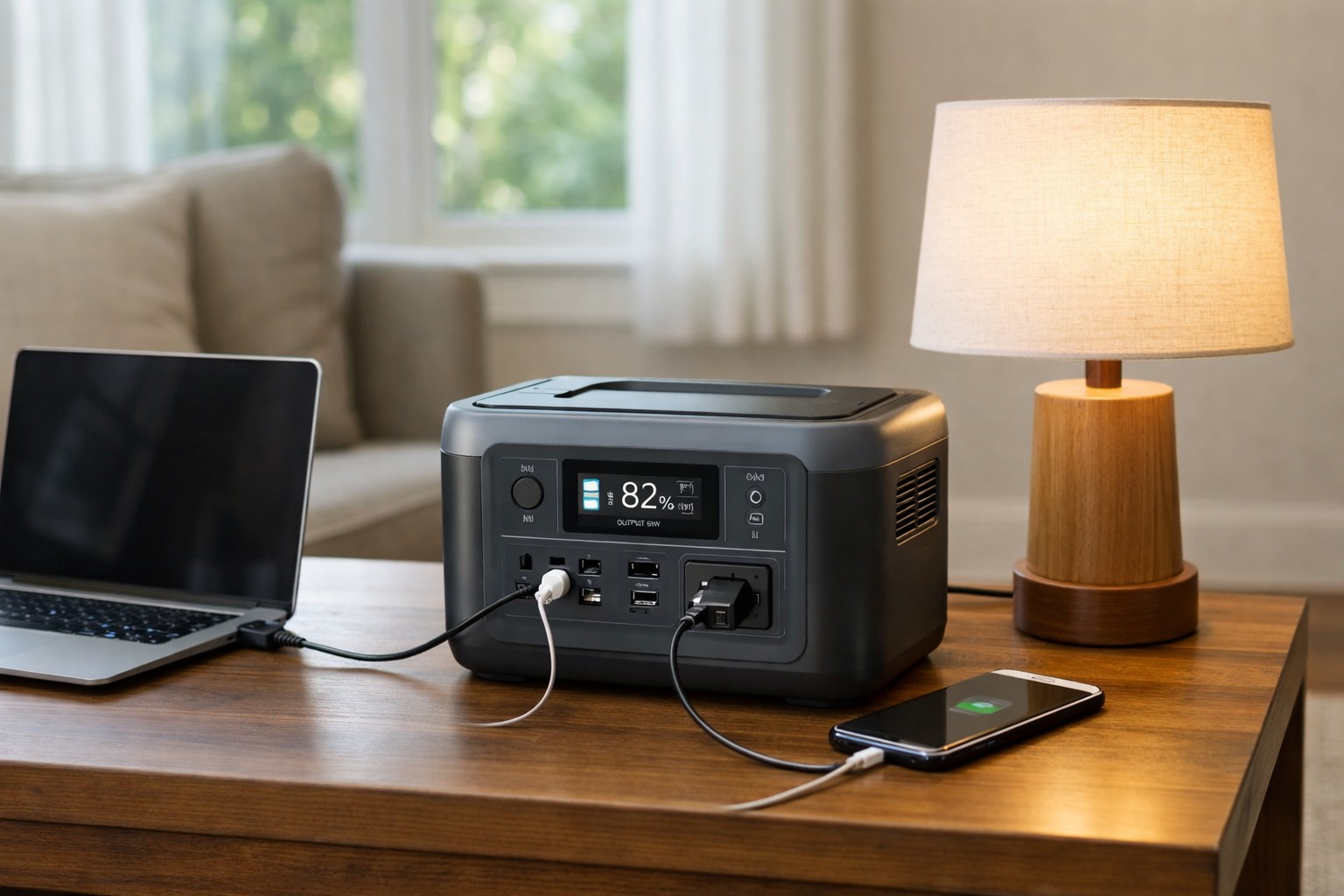
What Is a Portable Power Station?
A portable power station is a battery-based system that stores electricity and delivers it through standard outlets, USB ports, and DC connections. Unlike fuel generators, these systems do not produce emissions and can be used safely indoors.
Most portable power stations are rechargeable using wall outlets, car chargers, or solar panels. This flexibility allows them to function as both a backup power source and a mobile energy solution during emergencies.
How Portable Power Stations Work
Portable power stations store energy in an internal battery and deliver that energy through built-in outlets. When a device is connected, the system converts stored power into usable electricity for everyday appliances and electronics.
These systems typically include an inverter to convert battery power into standard household current, along with multiple output options for different devices. Charging can be done from grid power, a vehicle, or solar panels depending on the setup.
When Portable Power Stations Make Sense
Portable power stations are most effective for households that need simple, reliable backup power for essential devices. They are especially useful in situations where fuel storage, noise, or indoor safety are concerns.
• Short to medium-duration outages
• Powering lights, communication devices, and small electronics
• Indoor-safe backup power without fumes or noise
• Supplemental power alongside larger systems
While highly convenient, portable power stations have limited capacity compared to fuel-based generators and must be recharged to remain effective during extended outages.
How Portable Power Stations Fit Into Your Emergency Power Plan
Portable power stations are one part of a layered backup power strategy. They provide immediate, easy-to-use power for essential devices while larger systems handle higher-demand needs.
In many households, portable power stations are used for communication, lighting, and small electronics, while solar generators or fuel-based systems are used for appliances and longer-duration power needs.
For a complete system, portable power stations should be integrated with your overall backup power strategy. Start with the Emergency Power Systems for Home Preparedness overview and understand system sizing in the Solar Generator Capacity Guide.
Return to the Emergency Power Systems overview to keep your full plan aligned.