Power Systems for Long-Term Infrastructure Disruption
Reliable power is the backbone of household stability during infrastructure disruption. Heating, refrigeration, communication, medical devices, and security systems all depend on consistent energy. The Power System within the Foundation Framework focuses on deliberate planning, correct sizing, redundancy, and long-term reliability — not impulse purchases.
Reliable backup power protects every major function within a prepared household. Power systems support refrigeration, communication, water access, medical equipment, and daily household stability when normal infrastructure becomes unreliable or unavailable.
A strong preparedness plan matches the right power solution to the right household needs, balancing short-term outages, extended disruptions, and long-term resilience.
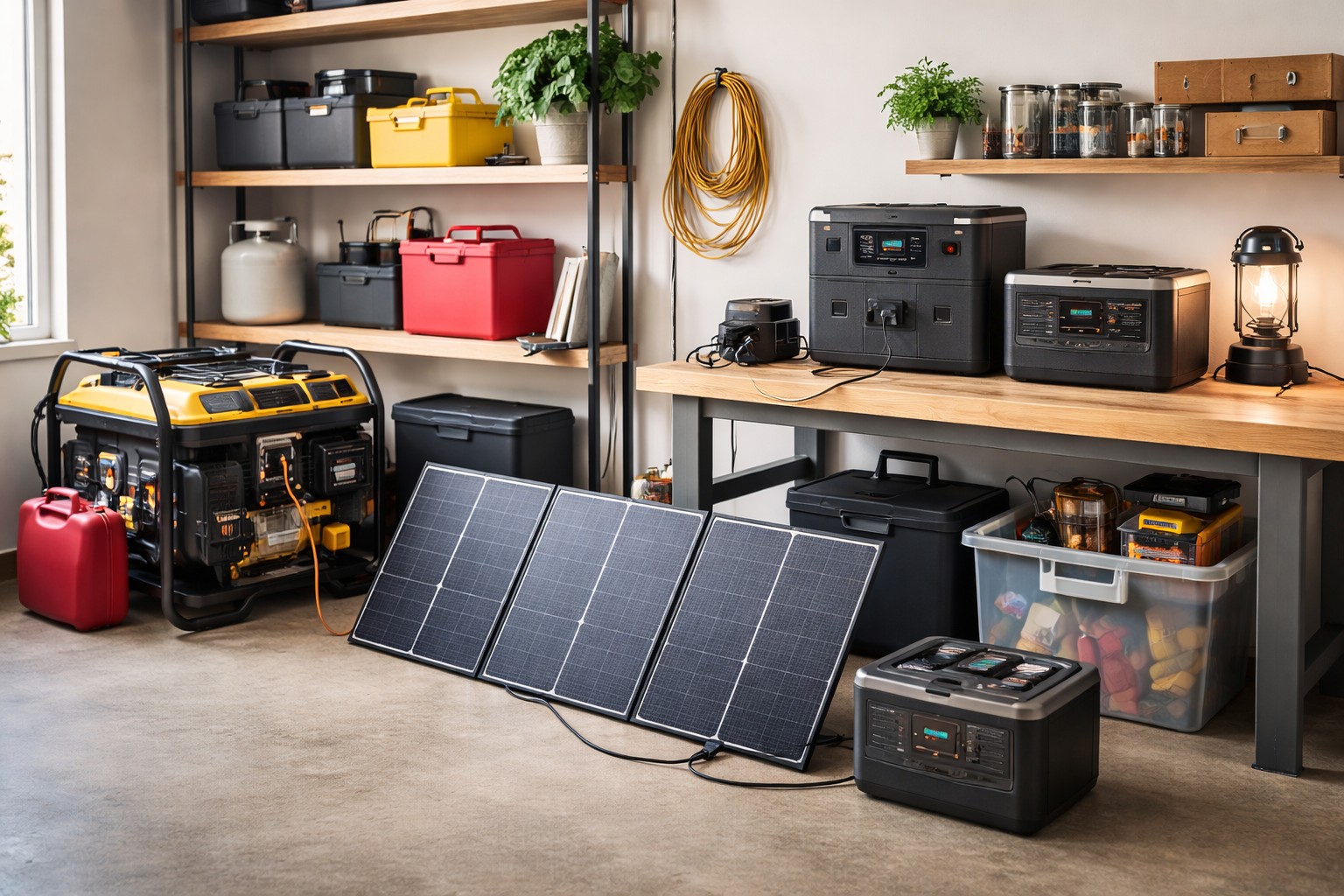
The Four Layers of Power Planning
A resilient household power plan is built in layers. Start with essentials, add duration, then build redundancy so a single failure doesn’t take your household offline.
Layer 1: Essentials — Identify what must keep running (refrigeration, heat source, basic lighting, charging, medical needs).
Layer 2: Sizing — Estimate realistic wattage and daily energy use so you don’t underbuy or overspend.
Layer 3: Duration — Plan for how long you need to operate (24 hours, 7 days, 30 days) and what fuel/charging supports that.
Layer 4: Redundancy — Use multiple methods (fuel + solar + battery) so failure of one source doesn’t end your plan.
Primary Power Solution Paths
Most households will combine more than one approach. Each power path has strengths, limitations, and ideal use cases depending on duration, budget, and location.
Start by Defining Your Essential Load
Before comparing generators or battery systems, define what absolutely must run during an outage. Your essential load determines the size, cost, and complexity of your entire power plan.
Fuel-Based Generators — Reliable, high-output power for extended outages. Ideal for running major appliances but dependent on fuel availability and storage.
Battery Power Stations — Quiet, portable, and simple to operate. Best for short-to-medium outages and essential loads when paired with recharging options.
Solar + Battery Systems — Long-term renewable solution with low operating cost. Requires planning, correct sizing, and realistic expectations about production during poor weather.
Want a structured generator plan? Start with Inverter Generators (2,000–3,500W) for quiet essential coverage, or move up to Dual-Fuel Generators (4,000–7,500W) for higher-output household backup planning.
Common essential loads include:
• Refrigerator or freezer
• Basic lighting
• Phone and device charging
• Internet modem/router
• Medical equipment (if applicable)
• Heating circulation fan or small space heater (climate dependent)
Match Your Load to the Right System
Use this simple guide to narrow down the right power path. You can refine sizing and redundancy later.
Tier 1: Minimal Essentials (24–48 hours)
Battery power station + basic charging plan (and optional small solar input).
Tier 2: Essential Appliances (3–7 days)
Fuel generator for high-output needs + battery power for quiet overnight essentials.
Tier 3: Extended Disruption (7+ days)
Solar + battery foundation + fuel-based backup for poor weather and peak loads.
Return to Household Preparedness Systems