Home Security System Placement Guide
Proper placement of security components is essential for building an effective home defense system. Even the best equipment will fail to perform if it is not positioned correctly. Strategic placement ensures early detection, full visibility, and reliable response across your entire property.
This guide explains where to install cameras, motion sensors, lighting, and alarm components to maximize coverage and eliminate blind spots in your home security system.
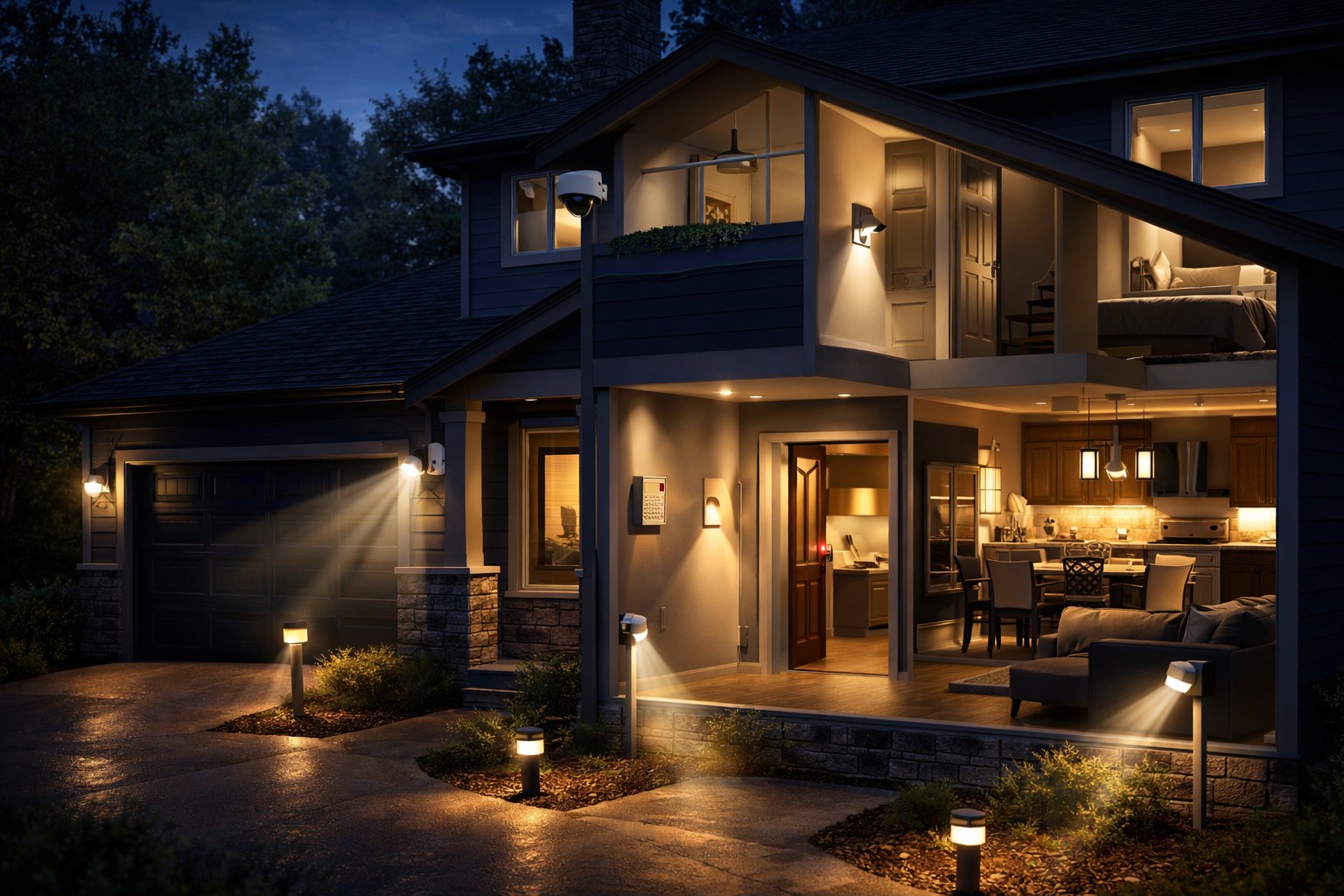
Where to Place Security Cameras
Security cameras should be positioned to monitor all key entry points and high-traffic areas around your property. Proper placement ensures clear visibility and reduces blind spots.
Front Door and Entry Points
Install cameras at the front door, back door, and any side entrances. These are the most common access points and should always be monitored.
Driveways and Garages
Position cameras to cover driveways and garage entrances. This allows you to monitor vehicle activity and detect movement approaching your home.
Backyard and Perimeter Areas
Place cameras to cover backyard spaces, fences, and less visible areas. These locations are often targeted due to reduced visibility.
Where to Place Motion Sensors
Motion sensors should be placed where they can detect movement early and trigger other components in your security system. Proper positioning ensures reliable detection without excessive false alarms.
Entry Points and Hallways
Install motion sensors near entry points and inside hallways where movement is unavoidable. These locations ensure that anyone entering the home is quickly detected.
Outdoor Pathways and Approaches
Place motion sensors along walkways, driveways, and approaches to your home. This allows early detection before someone reaches entry points.
Avoid Obstructions and Heat Sources
Ensure sensors are not blocked by furniture or exposed to direct heat sources, which can cause false triggers. Proper placement improves accuracy and reliability.
Where to Place Outdoor Security Lighting
Outdoor security lighting should be positioned to eliminate dark areas and improve visibility around your property. Proper placement ensures that movement is exposed and supports both cameras and motion sensors.
Entry Points and Doorways
Install lighting near all doors and entry points to ensure these areas are always visible. Motion-activated lighting can enhance both security and energy efficiency.
Driveways and Walkways
Place lights along driveways, sidewalks, and pathways to illuminate movement as it approaches your home. This improves visibility and deters unwanted activity.
Backyard and Dark Corners
Identify and eliminate dark areas around your property by placing lights in corners, along fences, and in backyard spaces. Removing shadows reduces hiding spots.
Where to Place Alarm System Components
Alarm system components should be positioned to ensure quick activation and easy access. Proper placement allows the system to respond immediately when a threat is detected.
Control Panel Near Main Entry
Install the main control panel near your primary entry point so it is easy to arm and disarm the system when entering or leaving the home.
Door and Window Sensors
Place sensors on all doors and accessible windows to detect unauthorized entry. These are critical trigger points for the alarm system.
Audible Alarm Location
Position alarm sirens where they can be clearly heard both inside and outside the home. This helps alert occupants and deter intruders.
Proper placement of each component is essential for building a reliable home security system. When cameras, motion sensors, lighting, and alarm systems are positioned correctly, they work together to provide full coverage, early detection, and effective response. A well-planned setup eliminates blind spots and ensures your entire system functions as a coordinated defense.