Dual-Fuel Generators (4,000–7,500W): Flexible Backup Power for Extended Outages
Dual-fuel generators provide reliable backup power by allowing households to operate on either gasoline or propane. This flexibility makes them a strong option for extended outages where fuel availability may be uncertain.
This page supports the Emergency Power Systems plan by explaining how dual-fuel generators fit into a home backup power strategy. Instead of focusing on specific models, this guide shows when and how these systems are most effective during longer disruptions.
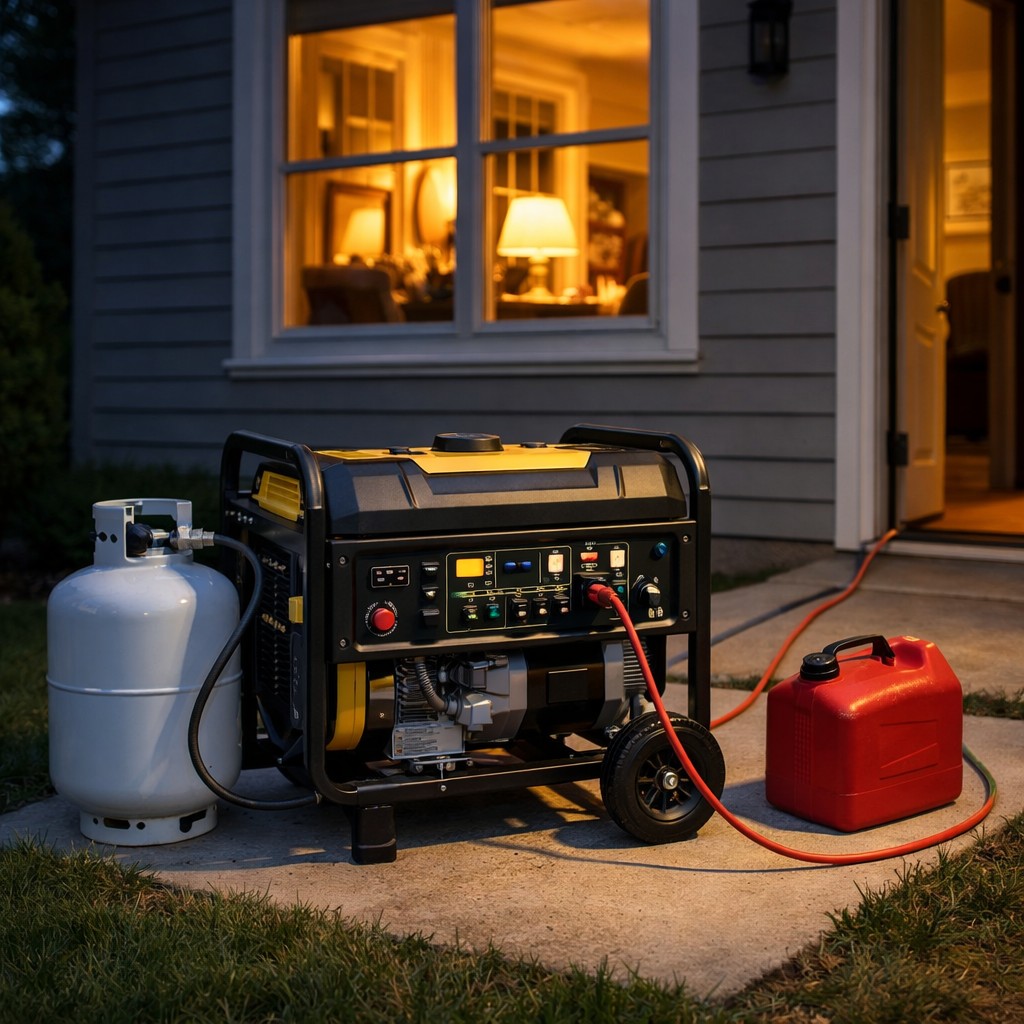
What Is a Dual-Fuel Generator?
A dual-fuel generator is a fuel-powered system designed to run on either gasoline or propane. This flexibility allows households to switch between fuel sources depending on availability, making it a reliable option during extended outages.
Unlike single-fuel generators, dual-fuel systems provide an added layer of resilience. If gasoline becomes difficult to obtain or store, propane can serve as a stable alternative with a longer shelf life.
Dual-fuel generators must always be operated outdoors, away from doors and windows, to prevent carbon monoxide exposure. Proper placement and ventilation are essential for safe operation.
How Dual-Fuel Generators Work
Dual-fuel generators use an internal combustion engine to produce electricity, similar to traditional fuel-powered generators. The key difference is that they are equipped to operate on either gasoline or propane, allowing users to select the most practical fuel source at any given time.
Switching between fuel types is typically done through a selector valve or control switch. While performance may vary slightly between gasoline and propane, both options provide reliable power for essential household needs during an outage.
Gasoline often provides higher power output, while propane offers cleaner burning operation and longer storage stability, making each fuel useful in different scenarios.
When Dual-Fuel Generators Make Sense
Dual-fuel generators are especially useful for households planning for extended outages where fuel availability may be uncertain. The ability to switch between gasoline and propane provides flexibility that single-fuel systems cannot offer.
Best Use Cases
• Multi-day or extended power outages
• Households storing both gasoline and propane
• Situations where fuel supply may be disrupted
• Higher power needs beyond battery-based systems
While versatile, dual-fuel generators still require fuel management, safe storage, and proper outdoor operation, making planning and maintenance an important part of their use.
How Dual-Fuel Generators Fit Into Your Backup Power Plan
Dual-fuel generators are best used as part of a layered backup power strategy. They provide higher output for essential appliances while offering flexibility in fuel choice during longer disruptions.
Many households combine dual-fuel generators with battery-based systems such as solar generators or portable power stations. This allows quiet, indoor power for essential devices while reserving fuel-based generation for higher-demand loads or extended outages.
To build a complete system, start with the Emergency Power Systems for Home Preparedness overview and evaluate your energy needs using the Solar Generator Capacity Guide.
Choosing the Right Backup Power Strategy
Dual-fuel generators provide a strong combination of power output, flexibility, and reliability for households preparing for extended outages. The ability to switch between gasoline and propane gives them a practical advantage when fuel availability becomes uncertain.
When combined with battery-based systems and proper planning, dual-fuel generators become a key part of a resilient, layered approach to maintaining power during disruptions.
Return to the Emergency Power Systems for Home Preparedness overview to continue building your complete backup power plan.