How to Prepare Your Home for a 7-Day Power Outage
Most households can manage a short outage with flashlights and inconvenience. A seven-day outage is different. Refrigeration fails, fuel decisions become critical, water access becomes uncertain, communication routines break down, and small household weaknesses turn into expensive system failures.
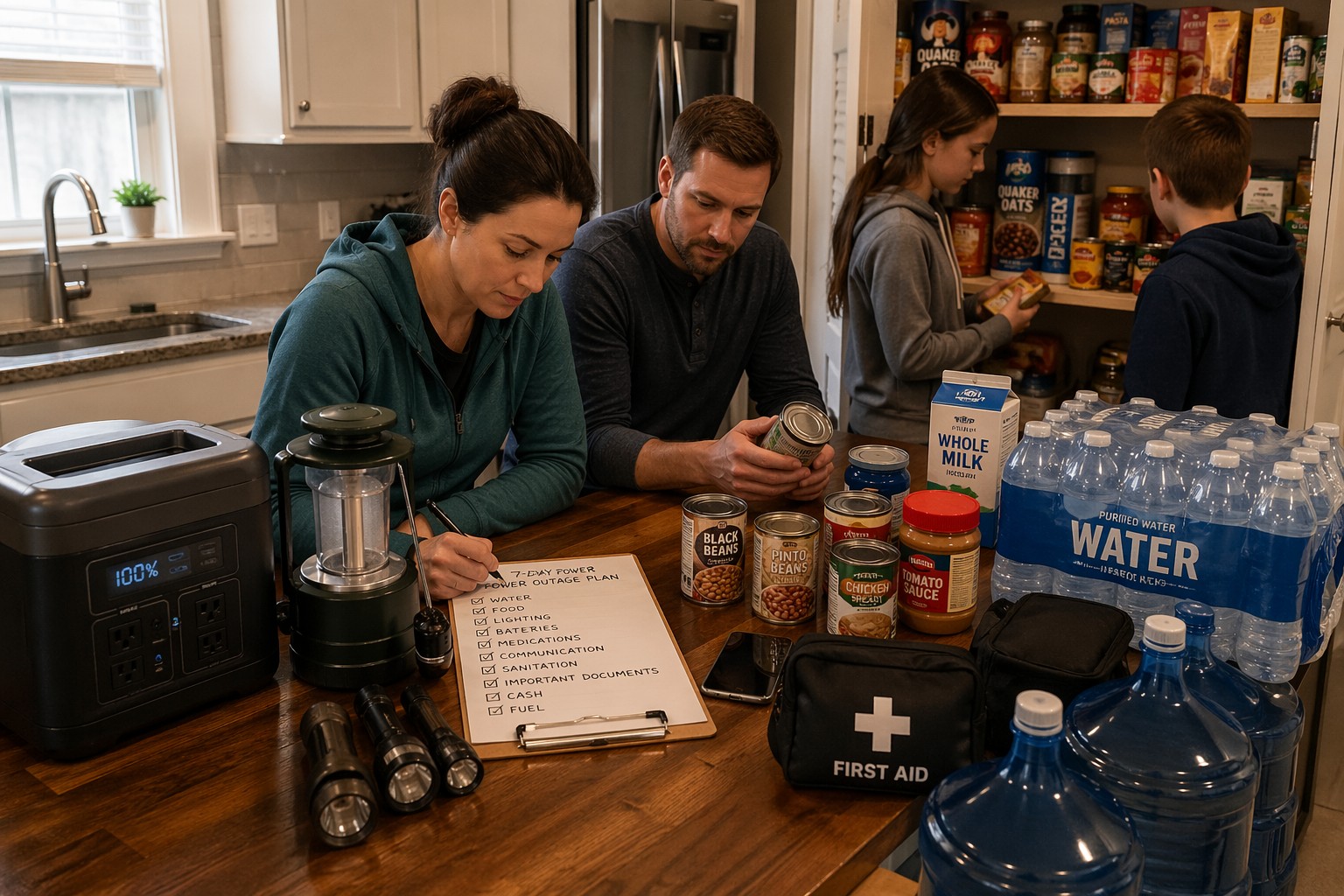
Strong preparedness for a week-long outage is not about panic buying or trying to live normally without power. It is about protecting the systems that keep the home stable—water, food, refrigeration, medication, communication, sanitation, and security—before the outage begins.
Most power outage failures happen because people prepare for discomfort instead of duration. They plan for a few hours without lights instead of several days without refrigeration, fuel resupply, reliable communication, or safe household routines. The longer the outage lasts, the faster small assumptions become major failures.
A seven-day outage requires continuity thinking. Households must know what fails first, what fails next, and what must be protected immediately so the home stays functional instead of reacting under pressure.
Protect Refrigeration Before Food Storage
Most households think food storage is the first priority during a long outage, but refrigeration failure often creates the fastest and most expensive problem. Medication refrigeration, refrigerated groceries, freezer loss, and unsafe food handling can create major household disruption within the first 24 hours.
Preparedness starts by protecting what spoils first. Backup power planning, freezer discipline, cooler strategy, ice management, and reducing unnecessary refrigerator opening matter far more than buying additional pantry food after the outage begins.
Know What Must Stay Cold
Not everything in the refrigerator carries the same priority. Medications, infant supplies, essential foods, and high-cost freezer items should be identified before the outage happens so decisions are fast and clear when power is lost.
The real question is not “How full is the fridge?” but “What creates the biggest consequence if temperature control fails?” Prepared households protect the highest-risk items first instead of trying to save everything equally.
A common mistake is treating convenience food and critical medical refrigeration as the same priority.
Backup Power Must Match the Load
A generator or battery system only helps if it can reliably protect the actual refrigeration load. Refrigerator startup demand, freezer cycles, medication cooling, and charging needs must be understood before the outage—not guessed during it.
Prepared households test what must stay powered, how long fuel or battery reserves last, and what happens when resupply is delayed. A common mistake is owning backup power without knowing whether it truly protects refrigeration continuity.
Fuel Discipline Prevents Day-Three Failure
Many households fail on Day Three because they run backup power like normal grid service. Continuous generator use for convenience appliances burns fuel too fast and creates the exact shortage that destroys refrigeration later.
Prepared households ration fuel from the beginning. Critical cooling windows, limited run schedules, and nonessential load control protect the systems that matter most. A common mistake is solving Day One comfort by creating Day Four failure.
Water and Sanitation Fail Faster Than Expected
During a long power outage, many households focus on lighting while water and sanitation quietly become the real emergency. Well pumps stop, hot water disappears, refrigeration affects food safety, toilets become harder to manage, and normal hygiene routines begin breaking down much faster than expected.
Preparedness improves when households plan for daily function instead of just stored gallons. Drinking, cooking, cleaning, sanitation, and medication routines all depend on reliable water access. If those systems fail, household stability disappears quickly—even when the lights are still working.
Know Where Water Actually Stops
Many households assume water failure means the tap stops running, but homes with wells, pressure systems, electric pumps, filtration systems, or stored hot water often experience a more complex breakdown. Power loss can quietly turn into a full water failure long before people recognize it.
The real question is not “Do we have bottled water?” but “What stops working when normal water flow becomes unreliable?” Prepared households identify where drinking, cooking, sanitation, and hygiene fail first and solve that problem before the outage happens.
A common mistake is preparing for thirst while missing the larger sanitation collapse behind it.
Sanitation Breaks Before People Expect
Toilets, dishwashing, bathing, laundry, pet care, and basic household cleaning create far more daily water demand than most people realize. Once sanitation routines begin failing, stress rises quickly and the entire household feels unstable.
The real test is identifying when normal household function starts breaking down. If toilets become difficult to manage after one day, dishes pile up, hygiene becomes unsafe, or caregiving routines cannot continue, the weak point is not water storage—it is sanitation continuity.
Prepared households calculate how long real daily routines can continue, not just how much drinking water is stored. A common mistake is planning for hydration only and discovering too late that sanitation failure becomes the real emergency.
Stored Water Must Match Reality
Water storage should be based on actual household demand, not generic preparedness advice. Family size, pets, medications, hygiene needs, climate, and whether the home depends on hauled water or wells all change what “enough” actually means.
The real test is what happens if refill access disappears for several days. If stored water supports drinking but cooking, sanitation, pet care, or medical routines begin failing long before reserves run out, the weak point is not storage volume—it is poor continuity planning.
Prepared households test realistic daily use and identify where refill options exist if the outage extends longer than planned. A common mistake is storing water based on theory instead of how the household actually functions.
Medication, Communication, and Security Cannot Wait
Long outages create more than food and water problems. Medications run out, refrigerated prescriptions become vulnerable, communication routines weaken, security habits become inconsistent, and household decision-making gets worse as stress increases. These failures often happen quietly before people recognize the risk.
Preparedness works best when households protect continuity before crisis behavior begins. Medication schedules, provider access, backup charging, written contacts, exterior lighting, and controlled household routines should already be planned before the outage reaches the point where leaving becomes necessary.
Medication Failure Creates Fast Emergencies
Prescription delays, refrigeration loss, missed refill windows, transportation problems, and pharmacy closures can turn a manageable outage into a medical emergency much faster than most households expect. Medication continuity should be treated like power and water—not as a secondary concern.
The real question is what happens if normal refill access stops for three or more days. If missing one prescription creates immediate health risk, that weak point must be protected before the outage begins.
Prepared households track refill timing, written medication lists, provider contacts, and transportation options instead of assuming normal pharmacy access will always be available.
Communication Fails Before Phones Die
Communication problems usually begin with low batteries, weak charging routines, missed updates, outdated contacts, and assumptions that everyone “already knows the plan.” Total silence happens later. The real failure starts when decisions become unclear.
Prepared households use written contacts, check-in routines, backup charging discipline, and simple meeting plans before disruption begins. A common mistake is treating phones as the plan instead of treating communication as the system that protects decisions.
Security Starts With Routine
Extended outages create security problems when normal routines disappear. Exterior lighting becomes inconsistent, access points are left unsecured, neighborhood awareness drops, and household expectations become unclear. Most security failures begin with disorder, not outside threats.
Prepared households protect stability first. Controlled access, predictable routines, lighting discipline, and clear household expectations prevent more problems than panic-driven equipment purchases. A common mistake is treating security as gear instead of household management.
Know When the Outage Has Become a Leaving Problem
A seven-day outage is not automatically a reason to leave—but some outages stop being a shelter-in-place problem and become an evacuation decision. If water cannot be maintained, medical needs cannot be protected, fuel is running out without replacement, security is failing, or outside conditions are becoming unsafe, staying may create more risk than leaving.
Prepared households decide these thresholds early. The goal is not waiting for collapse. It is recognizing when the home can no longer protect stability and leaving while safe travel options still exist.
Return to Household Preparedness Systems