How to Prepare for Water Service Failure in Your Home
Most households think water failure means the tap stops running. In reality, water service failure creates a chain of problems much faster than most people expect. Drinking water becomes urgent, but so do cooking, sanitation, medication routines, hygiene, pet care, and the basic systems that keep the household stable.
Strong preparedness starts before the disruption. The goal is not simply storing bottled water—it is understanding what fails first, what fails next, and how the home continues functioning when normal water access becomes unreliable.
Most water failures begin quietly. Pressure drops, hot water disappears, toilets become harder to manage, well pumps stop working, and normal routines start breaking down before people recognize a real emergency. By the time drinking water feels urgent, the household is often already reacting instead of planning.
Preparedness works best when households identify the first failure point early. The goal is not asking “Do we have bottled water?” but asking “What stops working first when reliable water access becomes uncertain?” That answer determines where real preparedness should begin.
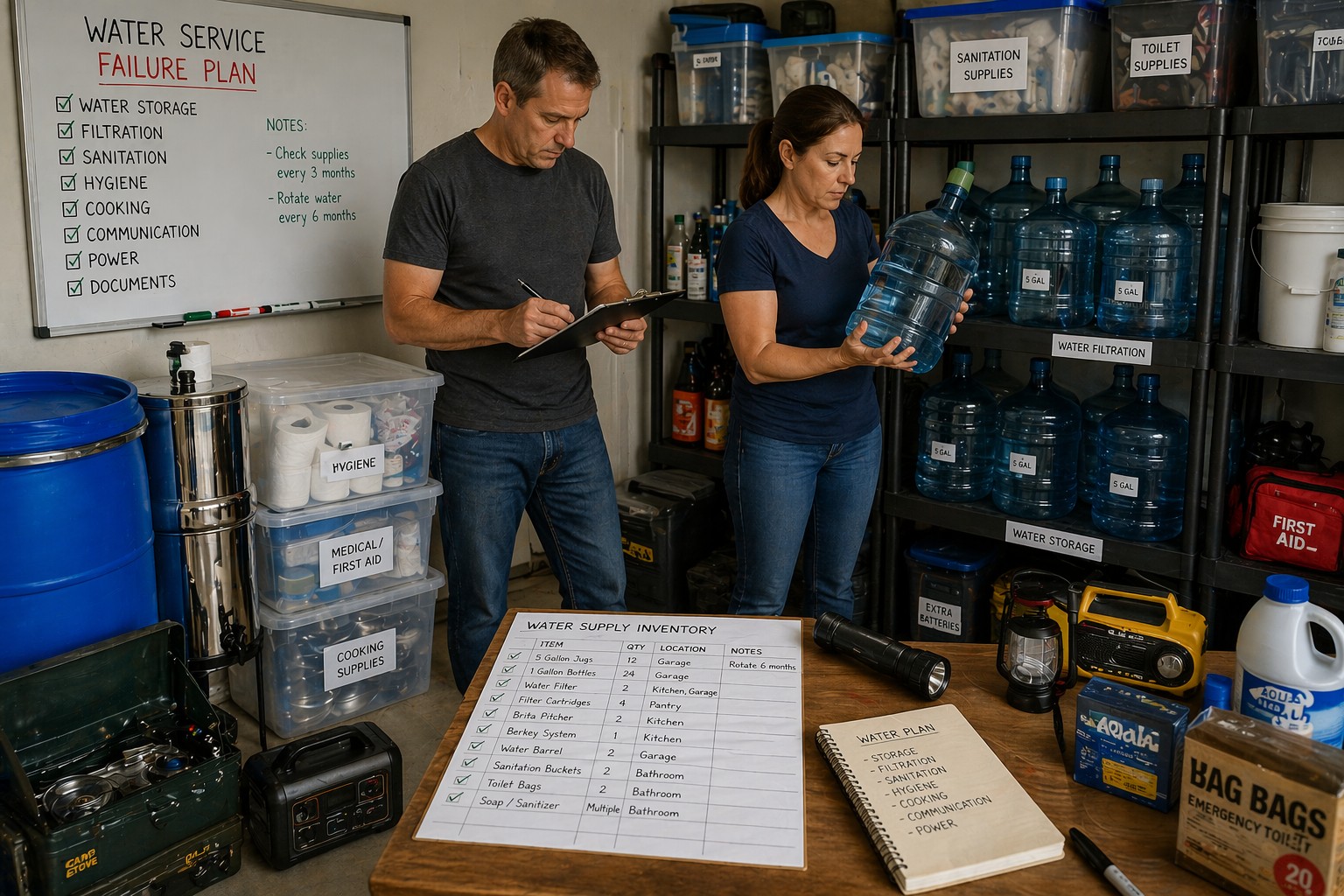
Know Where Water Actually Fails First
Most households prepare for water failure by thinking about drinking water alone, but the first breakdown often happens somewhere else. Well pumps stop when power fails, hot water disappears, toilets become harder to manage, dishwashing slows, medication routines get disrupted, and normal household sanitation begins breaking down before thirst feels urgent.
Preparedness improves when households identify the first weak point instead of reacting to the final emergency. The goal is understanding which system fails first—pressure, sanitation, cooking, hygiene, pets, or medical routines—and solving that problem before disruption forces rushed decisions.
Well Pumps and Pressure Systems Fail Quietly
Many households assume water service failure only applies to city water, but homes using wells, booster pumps, pressure tanks, or electric filtration systems often lose reliable water the moment power fails. The tap may still run briefly, which creates a false sense of security before full failure arrives.
The real question is not “Do we have water right now?” but “What stops working when power disappears?” Prepared households know exactly how long pressure lasts, what requires electricity, and which systems fail first once normal utility support stops.
A common mistake is preparing for drinking water while missing the complete household water shutdown already beginning.
Sanitation Becomes the Real Emergency
Toilets, dishwashing, laundry, bathing, pet cleanup, and basic household hygiene create far more water demand than most people realize. Once sanitation routines begin failing, stress rises quickly and the household starts feeling unstable long before stored drinking water runs low.
The real test is identifying when normal household function begins breaking down. If toilets become difficult to manage after one day, dishes pile up, hygiene becomes unsafe, or caregiving routines cannot continue, the weak point is not water storage—it is sanitation continuity.
Prepared households calculate how long normal sanitation can continue, not just how much bottled water is stored. A common mistake is preparing for hydration only and discovering too late that sanitation failure becomes the real collapse point.
Cooking and Medication Depend on Water Too
Water failure affects far more than thirst. Cooking, dish safety, infant care, prescription routines, refrigerated medications, and caregiver support often depend on reliable water access and safe sanitation. These failures can create medical problems faster than people expect.
The real test is identifying what happens when normal daily care routines stop functioning. If meals cannot be prepared safely, medications cannot be managed correctly, infant care becomes unsafe, or hygiene breaks down around medical needs, the weak point is not drinking water—it is total household continuity.
Prepared households identify where daily health routines break first and protect those continuity points before disruption begins. A common mistake is treating water storage like a supply problem instead of a medical and household stability issue.
Refill Strategy Matters More Than Stored Gallons
Stored water creates time, but refill strategy determines whether the household stays stable beyond the first few days. Many families focus on bottled water counts without knowing where additional safe water would come from if service disruption lasts longer than expected.
Preparedness improves when households plan for continuity instead of quantity alone. Filtration, gravity-fed systems, refill locations, backup transport, rain capture where appropriate, and safe storage discipline all matter more than simply stacking more cases of bottled water.
Stored Water Only Buys Time
Even large stored water reserves eventually run out. Family size, pets, hygiene needs, medication routines, climate, and sanitation all change how quickly “enough” disappears. Preparedness fails when households mistake short-term storage for long-term continuity.
The real question is not “How many gallons do we have?” but “What happens when those gallons are gone?” Prepared households plan the next source before the first reserve is touched.
A common mistake is treating storage volume as the solution instead of treating it as the opening window.
Filtration Must Match the Real Source
Owning a filter is not the same as having a working refill plan. Wells, rain capture, surface water, hauled water, community refill points, and stored non-potable water all create different filtration needs. The wrong filter creates false confidence instead of safe water.
Prepared households know exactly where replacement water would come from and whether current filtration actually makes that source usable. A common mistake is buying filtration gear without knowing what real water source it must support.
Transport Failure Can End the Plan
Many refill plans fail because the household cannot move enough water safely once normal service stops. Heavy containers, vehicle limitations, fuel shortages, mobility issues, and access restrictions can turn a good refill source into a useless plan.
Prepared households test how water actually gets home—not just where it exists. A common mistake is planning around a refill source that becomes unreachable when the disruption begins
Know When Water Failure Becomes a Leaving Problem
Water disruption is not automatically a reason to leave, but some failures stop being a shelter-in-place problem and become an evacuation decision. If sanitation collapses, medical needs cannot be supported, refill access fails, temperatures become unsafe, or dependent care breaks down, staying may create more risk than leaving.
Prepared households decide these thresholds early. The goal is not waiting for obvious collapse—it is recognizing when the home can no longer safely support normal life and leaving while transportation, destination options, and safe decision-making still exist.
Return to Water Systems