Situational Awareness During a Collapse
Situational awareness is one of the most important skills during a collapse. It involves understanding what is happening around you, recognizing potential risks early, and maintaining a clear picture of your environment as conditions change.
During a disruption, normal patterns of behavior may shift, making it more important to observe your surroundings carefully. Developing strong awareness allows you to make better decisions, avoid unnecessary risks, and respond effectively to evolving situations.
This page builds on the home defense framework by focusing on awareness as the first layer of security. Strong situational awareness supports every other aspect of preparedness by helping you identify potential issues early and respond with clarity and control.
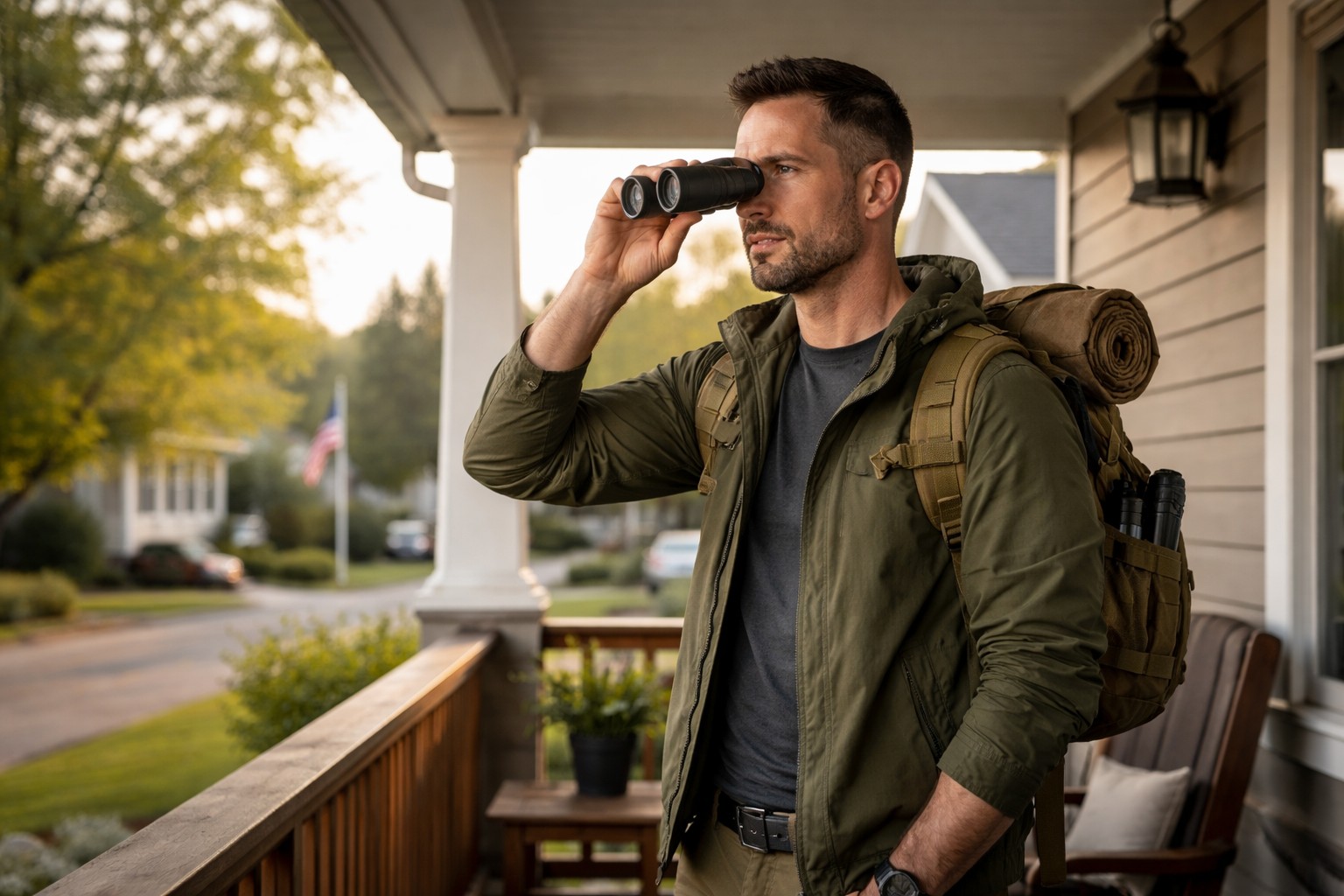
Understanding Your Environment
Understanding your environment involves recognizing normal patterns and identifying when something changes. This includes observing daily activity in your neighborhood, noting typical sounds, and being aware of how people and vehicles usually move through your area.
During a collapse, these patterns may shift, making it important to notice unusual behavior or unexpected activity. By developing a clear sense of what is normal, it becomes easier to detect potential risks early and respond appropriately.
Recognizing Normal Patterns
Recognizing normal patterns is the foundation of situational awareness. This includes understanding typical routines in your area, such as when neighbors are active, how traffic flows, and what everyday sounds are common. These patterns create a baseline that helps you quickly identify when something is out of place.
When normal patterns change, it can signal a potential issue. Being able to recognize these changes early allows you to adjust your behavior, increase caution, and make informed decisions before a situation escalates.
Identifying Unusual Activity
Identifying unusual activity involves recognizing behaviors or events that fall outside of normal patterns. This may include unfamiliar individuals in the area, unexpected movement at unusual times, or changes in noise levels and activity.
Not all unusual activity indicates a threat, but it should prompt increased awareness. By paying attention to these changes, you can better evaluate potential risks and decide whether additional caution or action is needed.
Maintaining Visibility
Maintaining visibility is essential for effective situational awareness. This involves ensuring that you can clearly observe key areas around your home, including entry points, pathways, and surrounding spaces. Reducing visual obstructions and keeping important areas well-lit can significantly improve your ability to monitor your environment.
Clear lines of sight allow you to detect movement and changes more easily. By improving visibility both inside and outside your home, you create a more controlled and predictable environment during a collapse scenario.
Responding to Changing Conditions
Responding to changing conditions requires staying calm, evaluating new information, and adjusting your actions as needed. Situational awareness is not only about observing your environment, but also about making informed decisions based on what you see and hear.
By combining awareness with thoughtful response, households can reduce risk and maintain control during uncertain situations. The ability to adapt quickly and remain composed is a key part of effective preparedness.