How to Prepare Your Bathroom for Long-Term Water Disruption
Most households think water disruption becomes serious when drinking water runs low. In reality, bathrooms often become the first place where household stability starts breaking down. Toilets stop functioning normally, hygiene routines fail, caregiving becomes harder, and sanitation problems create stress long before thirst becomes the main concern.
Strong preparedness starts by protecting the systems people use every day without thinking about them. The goal is not simply storing extra water—it is maintaining safe sanitation, hygiene, bathing, medication support, and normal household function when water service becomes unreliable.
Most bathroom failures begin quietly. Toilet flushing becomes inconsistent, hot water disappears, bathing routines become harder to maintain, laundry creates pressure, and hygiene standards begin slipping before people recognize a true emergency. By the time sanitation feels urgent, the household is often already reacting instead of planning.
Preparedness works best when households identify the first bathroom failure point early. The goal is not asking “Do we have bottled water?” but asking “What stops safe daily function first when reliable water access becomes uncertain?” That answer determines where real preparedness should begin.
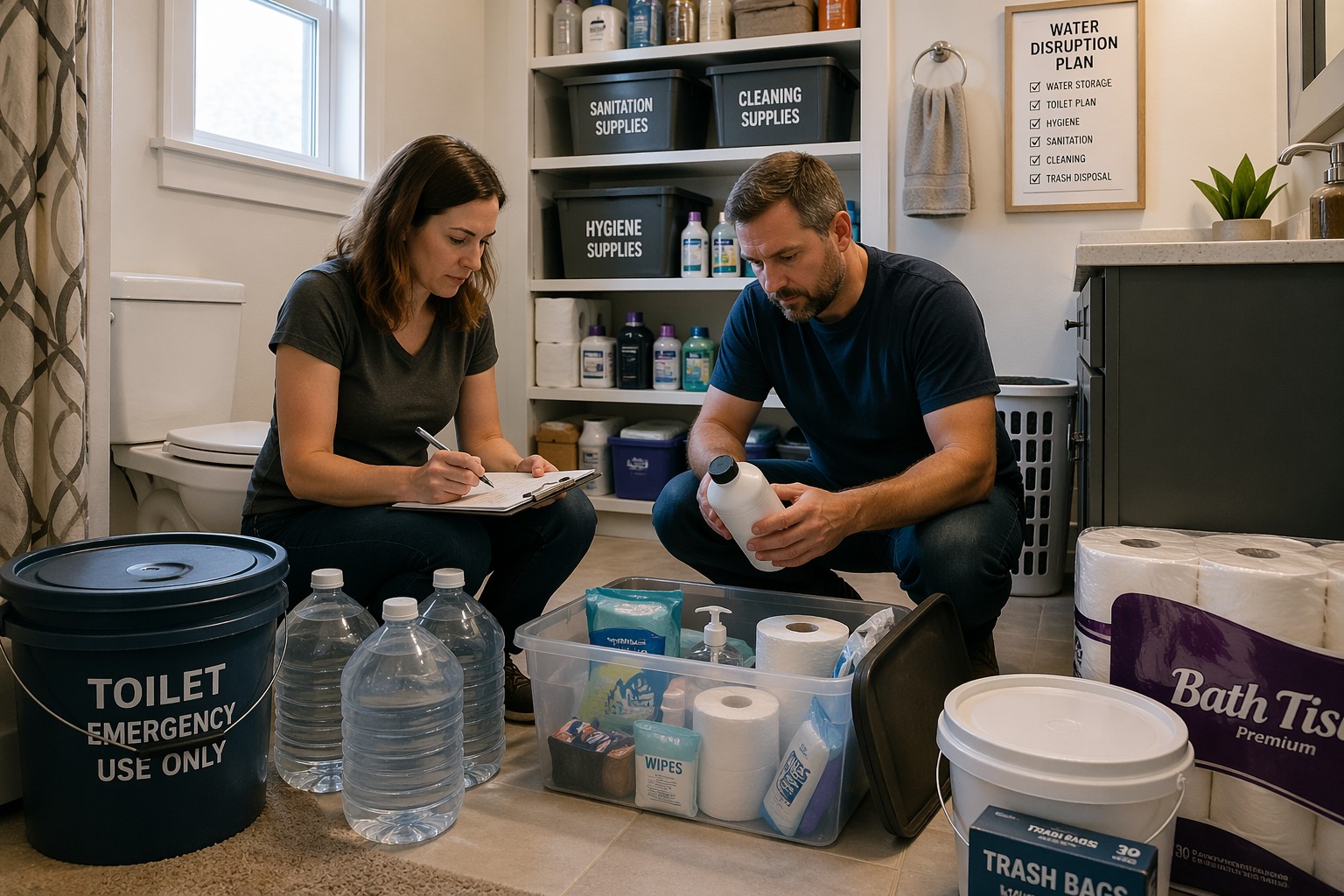
Toilets Become the First Real Problem
Most households think bathroom preparedness starts with extra toilet paper, but toilet function is usually the first real failure point. Flushing becomes unreliable, septic strain increases, water pressure drops, and sanitation risk rises long before the household runs out of hygiene supplies.
Preparedness improves when households protect toilet continuity before disruption begins. The goal is not simply storing convenience items—it is maintaining safe waste management, preventing sanitation collapse, and protecting the daily routines that keep the home functional.
Know How Your Toilet Actually Works
City sewer systems, septic systems, lift pumps, grinder pumps, and well-dependent homes all fail differently during water disruption. Some toilets keep flushing longer than expected, while others become unusable almost immediately when power or pressure changes.
The real question is not “Do we have a toilet?” but “What causes this bathroom to stop functioning safely?” Prepared households understand exactly what their system depends on and what fails first when normal water access becomes unreliable.
A common mistake is assuming every toilet functions the same during a disruption.
Sanitation Failure Escalates Fast
Once flushing becomes unreliable, household stress rises quickly. Waste containment, odor control, handwashing, trash management, pet cleanup, and caregiving routines all become harder to maintain. What feels like an inconvenience can become a real health problem very fast.
The real test is identifying when normal daily function begins breaking down. If waste starts accumulating, handwashing becomes inconsistent, caregiving routines become unsafe, or odor and contamination begin affecting the home, the weak point is not comfort—it is sanitation continuity.
Prepared households calculate how sanitation continues after normal flushing stops, not just how long toilet paper lasts. A common mistake is preparing for comfort instead of preparing for safe waste management.
Backup Toilet Planning Prevents Panic
Portable toilets, lined bucket systems, septic-safe backup plans, and clear household sanitation rules prevent rushed decisions during disruption. The best backup system is the one the household can use safely, consistently, and without confusion.
The real test is what happens after the first failed flush. If the household has no clear waste plan, no safe containment method, or no agreement on how sanitation will be managed, panic starts immediately and the bathroom becomes the center of household instability.
Prepared households decide this before the emergency begins. A common mistake is waiting until the first failed flush to start inventing a sanitation plan under pressure.
Bathing, Hygiene, and Laundry Break Down Next
After toilet function becomes unstable, hygiene failure follows quickly. Bathing becomes harder, handwashing routines weaken, laundry piles up, towels and bedding become harder to manage, and normal caregiving standards begin slipping. These failures create stress, illness risk, and household instability long before people think of them as emergencies.
Preparedness improves when households protect daily hygiene instead of reacting after sanitation standards collapse. The goal is maintaining safe bathing, handwashing, cleaning, and laundry routines long enough to keep the household functional during extended disruption.
Hot Water Disappears Faster Than Expected
Power failure, gas interruption, well pump shutdown, and pressure loss can remove hot water long before households think of it as a major problem. Bathing, dishes, infant care, elderly caregiving, and medical cleaning routines often depend on hot water more than people realize.
The real question is not “Can we shower?” but “What daily care becomes unsafe without reliable hot water?” Prepared households identify where hygiene and medical routines break first and protect those continuity points before disruption begins.
A common mistake is treating hot water loss like an inconvenience instead of a caregiving and sanitation problem.
Handwashing Protects More Than Comfort
When water becomes limited, households often reduce handwashing first because it feels less urgent than drinking or cooking. That decision creates fast contamination risk, especially around bathrooms, food preparation, medications, pets, and caregiving routines.
The real test is identifying when hygiene shortcuts begin creating bigger problems than the original water shortage. If illness risk rises, food preparation becomes unsafe, medication handling becomes contaminated, or caregiving routines start spreading risk through the home, the weak point is not water volume—it is hygiene continuity.
Prepared households protect handwashing as a priority system, not a convenience. A common mistake is rationing hygiene too early and creating illness risk that becomes harder to control than the original water problem.
Laundry Failure Changes Household Stability
Laundry becomes critical much faster when children, elderly family members, medical caregiving, pets, or sanitation-heavy work are involved. Towels, bedding, clothing, and cleaning cloths all affect hygiene and household morale once normal washing routines stop.
Prepared households decide what must stay clean first and how that happens if machines stop working. A common mistake is treating laundry like a comfort issue instead of recognizing when it becomes part of health and sanitation continuity.
Know When Bathroom Failure Becomes a Leaving Problem
Bathroom disruption is not automatically a reason to leave, but some failures stop being a shelter-in-place problem and become an evacuation decision. If sanitation collapses, safe caregiving becomes impossible, contamination risk rises, medical hygiene cannot be maintained, or household waste management fails completely, staying may create more risk than leaving.
Prepared households decide these thresholds early. The goal is not waiting for obvious collapse—it is recognizing when the home can no longer safely support normal daily function and leaving while transportation, destination options, and calm decision-making still exist.
Return to Water Systems