Emergency Communication Kit: What Every Household Should Have
An emergency communication kit helps ensure that households can stay informed and maintain contact during disasters when normal communication systems may fail. Severe storms, power outages, and other emergencies can quickly disrupt cell networks, internet services, and broadcast infrastructure.
Having dedicated communication tools prepared in advance allows families to receive alerts, coordinate with each other, and stay updated on changing conditions. A well-prepared communication kit provides backup options that help maintain situational awareness during disruptions.
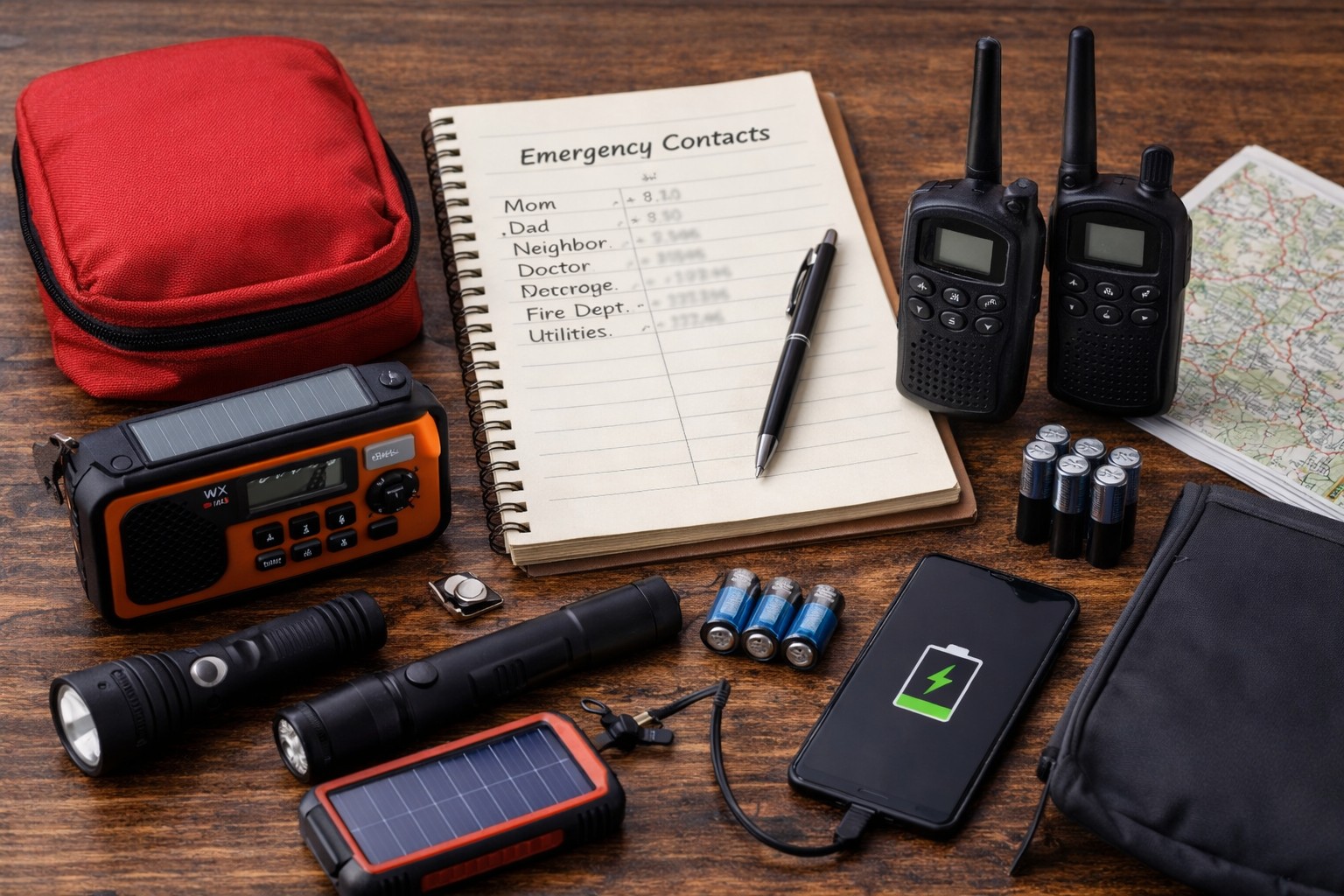
A well-designed emergency communication kit should include multiple tools that provide access to alerts, enable direct communication, and ensure devices remain powered during disruptions. Combining several communication methods improves reliability when one system becomes unavailable.
Emergency Radios
Emergency radios are one of the most important tools in a communication kit because they provide access to official alerts and weather warnings when other communication systems fail. Many emergency radios can receive continuous weather broadcasts and sound alerts when severe weather warnings are issued.
Battery-powered or hand-crank emergency radios are especially useful during extended power outages. These radios allow households to stay informed about developing conditions even when electricity and internet services are unavailable.
Two-Way Radios
Two-way radios allow family members or small groups to communicate directly with each other when mobile networks are unavailable. These radios transmit voice messages over radio frequencies, allowing nearby users tuned to the same channel to receive the message instantly.
Including two-way radios in an emergency communication kit allows households to coordinate activities, check on neighbors, and maintain local communication during disasters when phone service may be unreliable.
Backup Power Sources
Communication devices are only useful if they remain powered during emergencies. Including backup power sources in an emergency communication kit helps ensure that radios, mobile phones, and other communication tools continue functioning during outages.
Common backup power options include spare batteries, portable battery banks, solar chargers, and hand-crank charging systems. These solutions provide multiple ways to keep essential communication equipment operating when grid power is unavailable.
Organizing and Maintaining Your Communication Kit
An emergency communication kit should be stored in a location that is easy to access during emergencies. Households should periodically check the equipment in the kit to ensure that batteries are charged, devices are functioning properly, and all necessary items remain available.
Regularly reviewing and updating the communication kit helps ensure that the equipment will work when it is needed most. Maintaining this kit as part of a broader preparedness plan improves a household’s ability to stay informed and connected during disruptions.
Return to the Communication Systems for Long-Term Disruption Planning page to continue strengthening your household communication preparedness strategy.
Related Communication Guides
• How to Build an Emergency Communication Plan
• Grid-Down Communication: How to Stay Connected Without Cell Service
Return to the Communication Systems for Long-Term Disruption Planning guide to continue building a complete household communication strategy.