Most households think kitchen preparedness during water disruption means storing bottled water and extra food. In reality, kitchens often become one of the fastest failure points because cooking, dish sanitation, refrigeration, medication routines, and food safety all depend on reliable water access long before drinking water feels urgent.
Strong preparedness starts by protecting the systems that keep meals safe and household routines stable. The goal is not simply storing supplies—it is maintaining safe cooking, cleanup, refrigeration support, and daily kitchen function when normal water service becomes unreliable.
Most kitchen failures begin quietly. Dishwashing becomes harder, food prep routines slow down, refrigerator management becomes more complicated, sanitation standards begin slipping, and safe cooking starts requiring more planning before people recognize a real emergency. By the time meals feel difficult, the household is often already reacting instead of preparing.
Preparedness works best when households identify the first kitchen failure point early. The goal is not asking “Do we have bottled water?” but asking “What stops safe daily kitchen function first when reliable water access becomes uncertain?” That answer determines where real preparedness should begin.
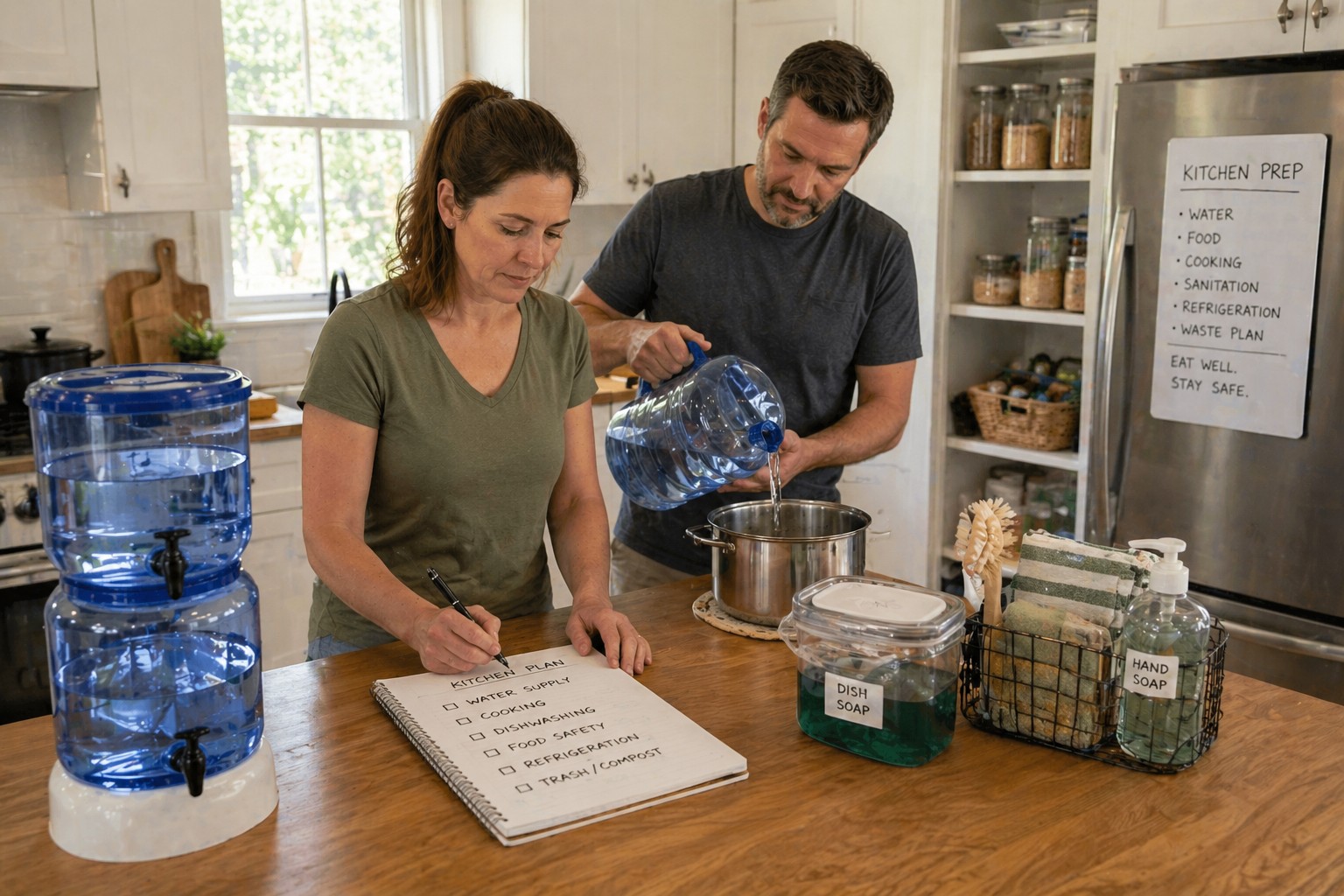
Dish Sanitation Fails Before Food Runs Out
Most households think kitchen preparedness starts with food storage, but dish sanitation is often the first real failure point. Sinks become harder to manage, safe cleanup slows down, handwashing routines weaken, and contamination risk rises long before pantry food becomes the problem.
Preparedness improves when households protect sanitation before disruption begins. The goal is not simply storing extra meals—it is maintaining safe dishwashing, food preparation, cleanup routines, and kitchen hygiene so the household can continue functioning without creating avoidable illness.
Sinks Become a Failure Point Fast
Dishwashing depends on far more than having plates and soap. Water pressure loss, drain problems, septic strain, well pump failure, and reduced hot water can turn normal sink use into one of the fastest household breakdowns during disruption.
The real question is not “Can we wash dishes?” but “What causes this kitchen to stop handling safe cleanup?” Prepared households understand exactly what their sink, drainage, and water systems depend on before normal service becomes unreliable.
A common mistake is preparing food storage while ignoring the system needed to keep the kitchen sanitary.
Dirty Dishes Create Bigger Problems Than Hunger
When safe dishwashing slows down, contamination spreads quickly. Cooking surfaces, utensils, cutting boards, food containers, and hands all become risk points. What feels like a small inconvenience can turn into illness risk much faster than most households expect.
The real test is identifying when kitchen shortcuts begin creating bigger problems than the original water shortage. If food prep becomes unsafe, cross-contamination increases, illness risk rises, or cleanup delays begin affecting daily meals, the weak point is not food supply—it is sanitation continuity.
Prepared households protect dish sanitation as a priority system, not a convenience. A common mistake is focusing on food supply while allowing kitchen hygiene to quietly collapse first.
Disposable Shortcuts Are Only Temporary
Paper plates, disposable utensils, wipes, and simplified meal routines can reduce short-term pressure, but they do not solve long-term sanitation problems. Trash volume increases, cleanup still exists, and cooking eventually requires real kitchen function again.
Prepared households use disposables as breathing room, not as the plan itself. A common mistake is treating temporary convenience as a complete kitchen continuity strategy.
Cooking and Refrigeration Depend on Water Too
Water disruption affects far more than cleanup. Cooking becomes harder, refrigeration management changes, frozen food decisions become urgent, medication preparation can become unsafe, and meal routines begin breaking down faster than most households expect. Kitchens fail through continuity loss long before they fail through empty shelves.
Preparedness improves when households protect safe meal preparation before disruption begins. The goal is maintaining cooking, refrigeration support, medication routines, and practical food safety long enough to keep the household stable during extended water disruption.
Safe Cooking Fails Before Food Runs Out
Stored food does not matter if meals cannot be prepared safely. Limited clean water, poor dish sanitation, reduced fuel access, and restricted cleanup routines can make normal cooking unsafe long before pantry supplies are gone.
The real question is not “Do we have food?” but “Can we safely turn stored food into safe meals?” Prepared households plan cooking methods, cleanup routines, and water use together instead of treating food storage as a separate system.
A common mistake is building food reserves without protecting the kitchen system required to use them.
Refrigeration Problems Become Kitchen Decisions Fast
When power disruption overlaps with water disruption, refrigerators and freezers create fast pressure. Frozen food must be managed quickly, spoiled food increases sanitation risk, and medication storage can become unsafe. These decisions often happen before households feel ready.
Prepared households know what must stay cold, what can be used first, and what becomes unsafe fastest. A common mistake is focusing on food quantity while ignoring how refrigeration failure changes kitchen safety.
Medication Prep Often Depends on Kitchen Stability
Infant formula, prescription routines, supplements, temperature-sensitive medications, and caregiver support often depend on clean water, safe dish sanitation, refrigeration, and predictable meal preparation. Kitchen disruption can quietly become a medical problem before people recognize it.
The real test is identifying what happens when normal daily care routines stop functioning safely. If formula preparation becomes unsafe, medications cannot be handled correctly, refrigeration loss affects prescriptions, or caregiving routines begin failing around meals and hygiene, the weak point is not food supply—it is total household continuity.
Prepared households identify where medication and caregiving routines break first and protect those continuity points before disruption begins. A common mistake is treating kitchen failure like a food problem instead of a broader household health issue.
Know When Kitchen Failure Becomes a Leaving Problem
Kitchen disruption is not automatically a reason to leave, but some failures stop being a shelter-in-place problem and become an evacuation decision. If safe cooking becomes impossible, contamination risk rises, refrigeration loss creates medical danger, caregiving routines break down, or food preparation can no longer support daily life, staying may create more risk than leaving.
Prepared households decide these thresholds early. The goal is not waiting for obvious collapse—it is recognizing when the home can no longer safely support normal meals, medication routines, and household function, and leaving while transportation, destination options, and calm decision-making still exist.
Return to Water Systems