Home Security System Setup for Emergency Preparedness
A home security system is most effective when all components work together as a coordinated system. Cameras, motion sensors, lighting, and alarm systems each play a role, but their true strength comes from how they are integrated and positioned throughout your property. A structured setup ensures early detection, clear visibility, and rapid response during an emergency.
This page outlines how to set up a complete home security system for emergency preparedness, including how each component works together to create a layered perimeter defense.
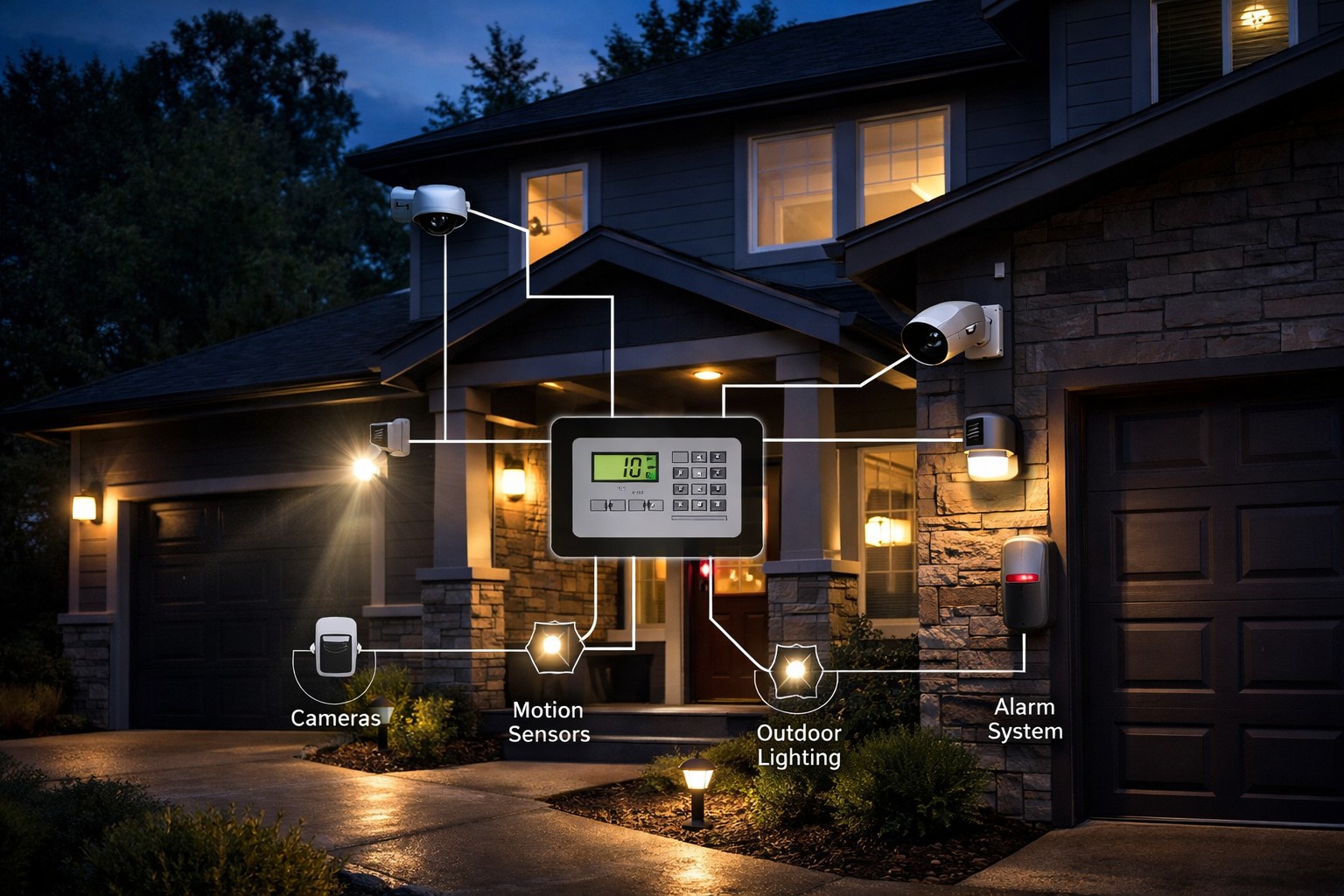
The 4 Layers of a Complete Home Security System
A complete home security system is built in layers, with each component serving a specific role. These layers work together to detect, illuminate, monitor, and respond to potential threats. Understanding each layer helps ensure your system is properly structured and fully effective.
Detection Layer (Motion Sensors)
Motion sensors act as the first line of detection by identifying movement around your property. Proper placement ensures early awareness of activity before a threat reaches entry points.
Visibility Layer (Lighting)
Outdoor lighting removes darkness and exposes movement, making it harder for intruders to remain hidden. Motion-activated lighting enhances visibility exactly when it is needed.
Monitoring Layer (Cameras)
Security cameras provide visual confirmation and recording of activity. They allow you to monitor your property in real time and review events if needed.
Response Layer (Alarm Systems)
Alarm systems trigger alerts and initiate response when a threat is detected. This layer ensures that detection leads to action, whether through audible alarms or notifications.
How to Set Up a Home Security System for Maximum Coverage
Setting up a home security system requires strategic placement of each component to eliminate blind spots and ensure full coverage. The goal is to detect movement early, increase visibility, monitor activity, and trigger a response when needed.
Cover All Entry Points
Install sensors and cameras at all doors, windows, and primary access points. These areas are the most likely points of entry and should be prioritized for both detection and monitoring.
Eliminate Dark Areas
Use outdoor lighting to remove shadows around your home, especially near entry points and pathways. Proper lighting improves visibility and works with motion sensors to expose movement.
Layer Your Systems
Each component should support the others. Motion sensors trigger lighting and cameras, while alarm systems activate when a threat is confirmed. This layered approach ensures your system works as a coordinated defense.
Test and Adjust Regularly
Regularly test your system to ensure all components are functioning correctly. Adjust placement and sensitivity as needed to maintain full coverage and reliable performance.
A properly configured home security system provides layered protection that detects, exposes, monitors, and responds to potential threats. By combining cameras, motion sensors, lighting, and alarm systems into a coordinated setup, you create a reliable defense that improves awareness and response during emergencies. A structured approach ensures your system remains effective as conditions change.