Solar Panels for Emergency Power and Off-Grid Preparedness
Solar panels play an important role in emergency power planning because they allow households to recharge portable power stations, solar generators, and battery systems when grid electricity is unavailable. During extended outages or grid disruptions, the ability to generate electricity from sunlight can help keep communication devices, lighting, refrigeration, and other essential equipment operating.
In this guide, we explain how solar panels support emergency power systems, how they connect to portable power stations and solar generators, and what households should consider when building a dependable off-grid charging setup for preparedness.
This page expands the Emergency Power Systems plan by explaining how solar panels recharge portable power stations, solar generators, and other backup power systems during outages. Understanding how solar charging works helps households maintain electricity for critical devices even when grid power is unavailable.
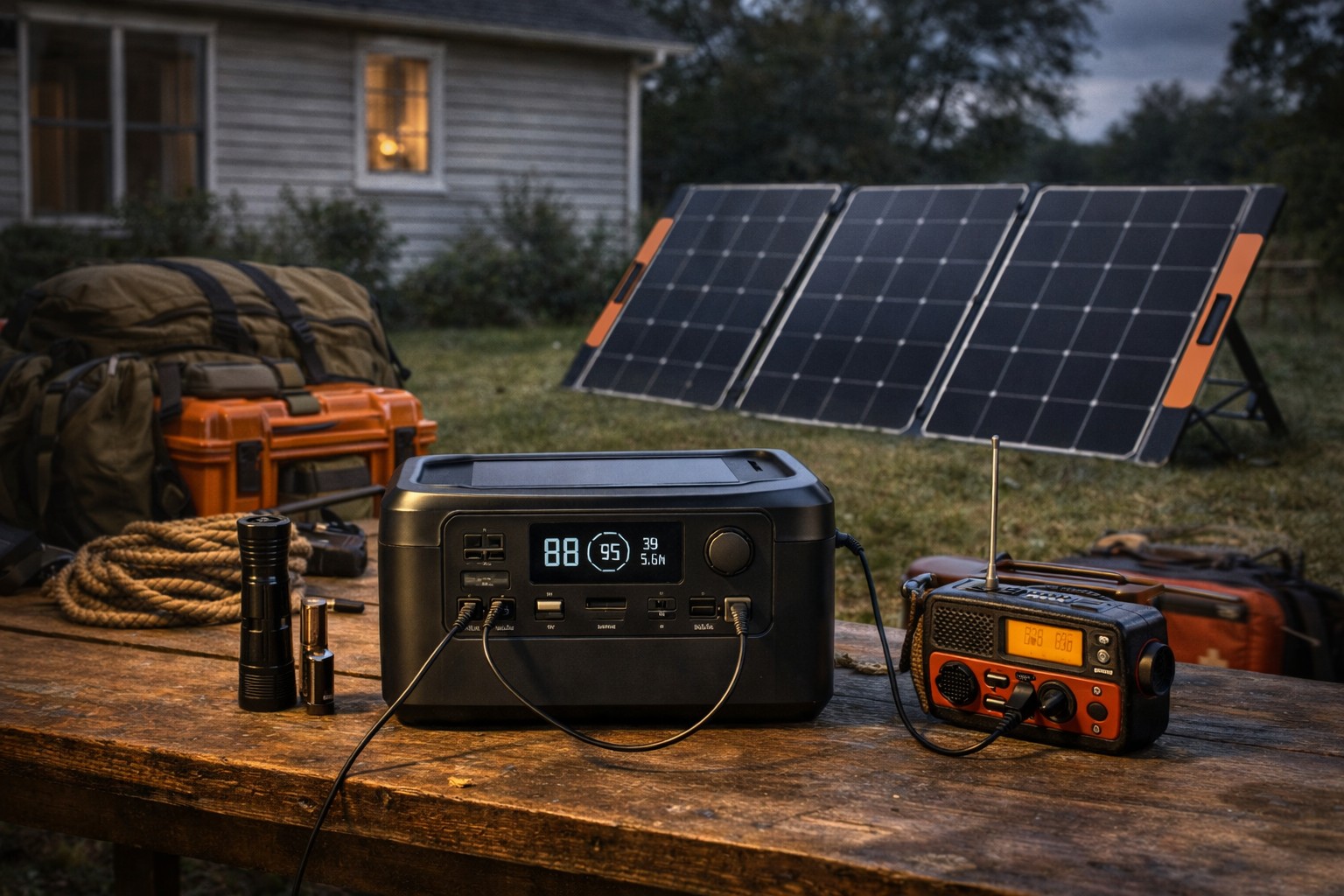
How Solar Panels Support Emergency Power Systems
Solar panels provide a renewable way to generate electricity when the grid is unavailable. When connected to portable power stations or solar generators, they allow households to recharge battery systems using sunlight. This capability becomes especially important during extended outages, natural disasters, or other disruptions where fuel, generators, or normal electricity may not be available.
In a preparedness system, solar panels act as the long-term energy source that keeps backup power systems functioning. While batteries store electricity, solar panels make it possible to continually replenish that stored energy during multi-day or multi-week disruptions.
How Solar Panels Connect to Portable Power Stations and Solar Generators
Most modern portable power stations and solar generators are designed to accept solar panel input through built-in charge controllers and solar connectors. When solar panels are connected to these systems, they convert sunlight into electricity and send that energy into the battery for storage.
This allows households to recharge their backup power systems without relying on fuel or grid electricity. By combining solar panels with portable power stations or solar generators, a preparedness system gains the ability to produce and store electricity even during prolonged grid disruptions.
Choosing Solar Panels for Emergency Preparedness
When selecting solar panels for emergency preparedness, households should focus on wattage, portability, charging compatibility, and durability. Foldable panels are easier to store and deploy during outages, while rigid panels may provide a more permanent charging option for larger preparedness systems. It is also important to verify that the panel connectors, voltage range, and charging specifications match the portable power station or solar generator you plan to use.
Choosing the right panel setup depends on how much power your household needs to generate and how mobile the system needs to be. A small foldable panel may be enough to recharge phones, radios, and lights, while larger panels can better support higher-capacity battery systems used for longer disruptions.
Building a Reliable Solar Charging Setup for Emergencies
A reliable solar charging setup combines compatible solar panels, battery storage, and realistic household power planning. Solar panels alone do not provide usable backup power unless they are paired with a system that can safely store and distribute electricity. For most households, this means integrating solar panels with portable power stations, solar generators, or larger backup battery systems that can keep essential devices operating during outages.
By adding solar charging to an emergency power plan, households gain a renewable energy source that can extend preparedness far beyond the limits of stored battery capacity alone. This makes solar panels an important part of long-term resilience for outages, disasters, and grid-down events.
Return to the Emergency Power Systems for Home Preparedness overview to keep your backup power plan fully aligned.