How Much Food Do You Need for Emergency Preparedness?
One of the most common questions in preparedness planning is how much food a household should store for emergencies. Power outages, natural disasters, supply disruptions, and other emergencies can interrupt normal food availability, making it important to maintain a reliable reserve of essential supplies.
Determining how much food to store depends on several factors, including household size, calorie needs, storage space, and the length of time you want your food supply to last. By understanding these factors, households can build a realistic food storage plan that supports both short-term emergencies and longer disruptions.
A step-by-step introduction to storing food safely is explained in Long-Term Food Storage for Beginners.
This page helps you estimate the amount of food your household may need during an emergency. It expands the Food Systems plan by explaining how calorie requirements, storage duration, and household size influence the amount of food that should be included in a preparedness supply.
Start With Daily Calorie Requirements
Emergency food planning begins with understanding how many calories each person in your household needs per day. Adults typically require between 2,000 and 2,500 calories daily depending on age, activity level, and physical condition. Children generally require fewer calories, but their nutritional needs still need to be considered when building a household food reserve.
By estimating daily calorie needs for every household member, you can determine how much food must be stored to support your family during an emergency. This calorie-based approach provides a practical starting point for calculating both short-term and long-term food storage plans.
Decide How Long Your Food Supply Should Last
The amount of food a household should store often depends on how long they want their emergency supply to last. Many preparedness plans begin with a 72-hour supply designed to support short-term disruptions such as storms or temporary power outages. Others expand this reserve to two weeks or one month to prepare for longer emergencies that interrupt normal food distribution.
Households preparing for extended disruptions may build food reserves that last several months or longer. The appropriate duration depends on individual preparedness goals, storage space, and the types of foods being stored. Establishing a clear timeline helps determine the total amount of food required.
Account for Household Size and Dietary Needs
The number of people in your household plays a major role in determining how much food must be stored for emergencies. A single individual may need a relatively small food reserve, while larger families require significantly more supplies to maintain adequate calorie intake during disruptions.
Dietary needs should also be considered when building a preparedness food system. Allergies, medical conditions, and individual food preferences may influence which foods are stored and how they are distributed within the household. Planning around these factors helps ensure that emergency food supplies remain practical and usable during stressful situations.
Build a Practical Long-Term Food Storage Plan
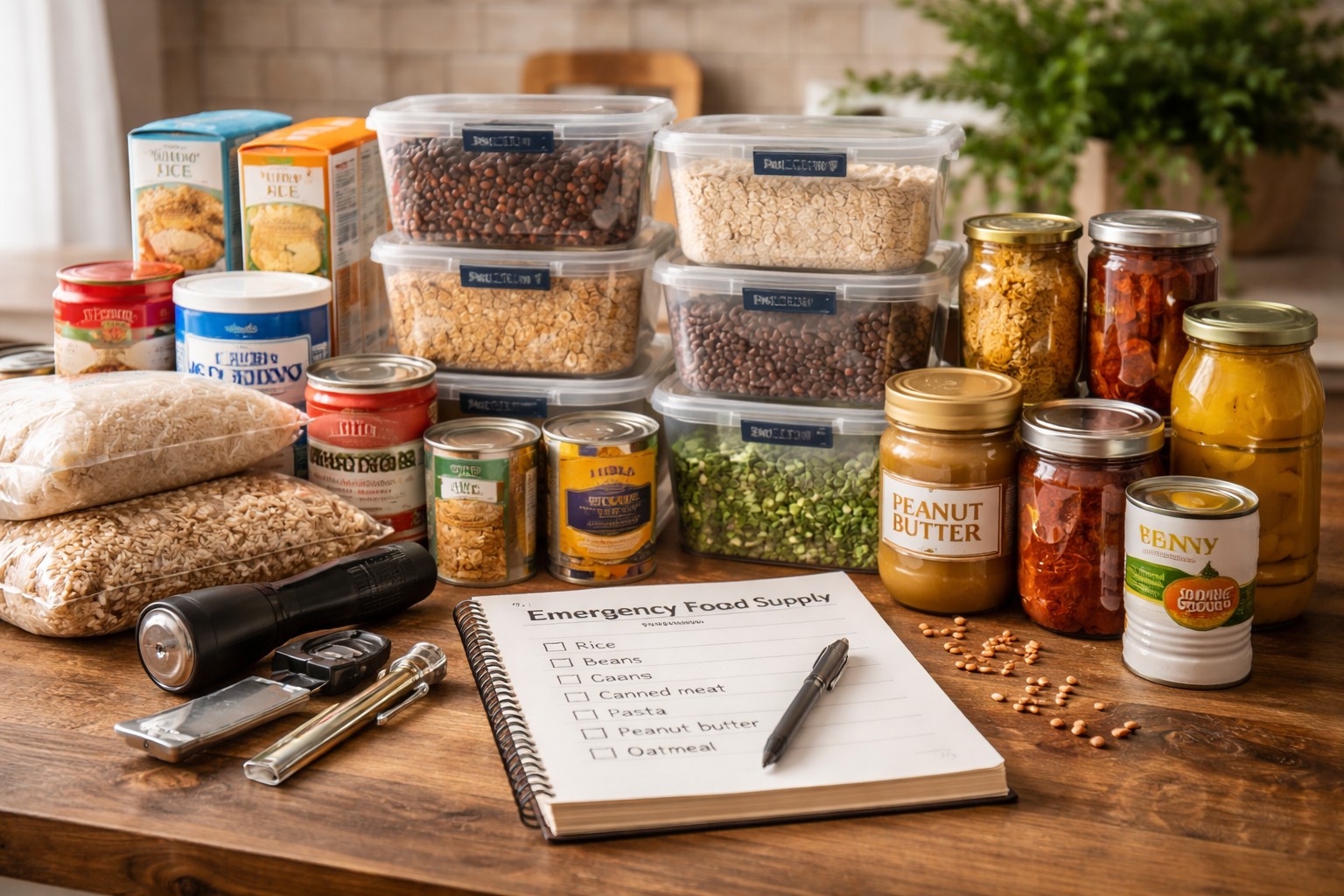
Once you estimate daily calorie needs, decide how long your food supply should last, and account for household size, you can begin building a practical food storage plan. Many preparedness systems combine shelf-stable staples such as grains, beans, canned foods, and preserved ingredients to create a balanced emergency food reserve.
Developing a long-term food system also involves rotating stored food, maintaining proper storage conditions, and gradually expanding supplies over time. This approach allows households to build a dependable food reserve that supports both short-term emergencies and longer disruptions.
Return to the Food Systems for Long-Term Infrastructure Disruptions overview to keep your household food planning aligned with the rest of your preparedness system.