Motion Sensors vs Security Cameras
Choosing between motion sensors and security cameras is a critical part of building an effective home security system. Each plays a different role in detection, monitoring, and deterrence.
This guide compares motion sensors and security cameras, explains when to use each, and shows how they work together as part of a layered perimeter security strategy.
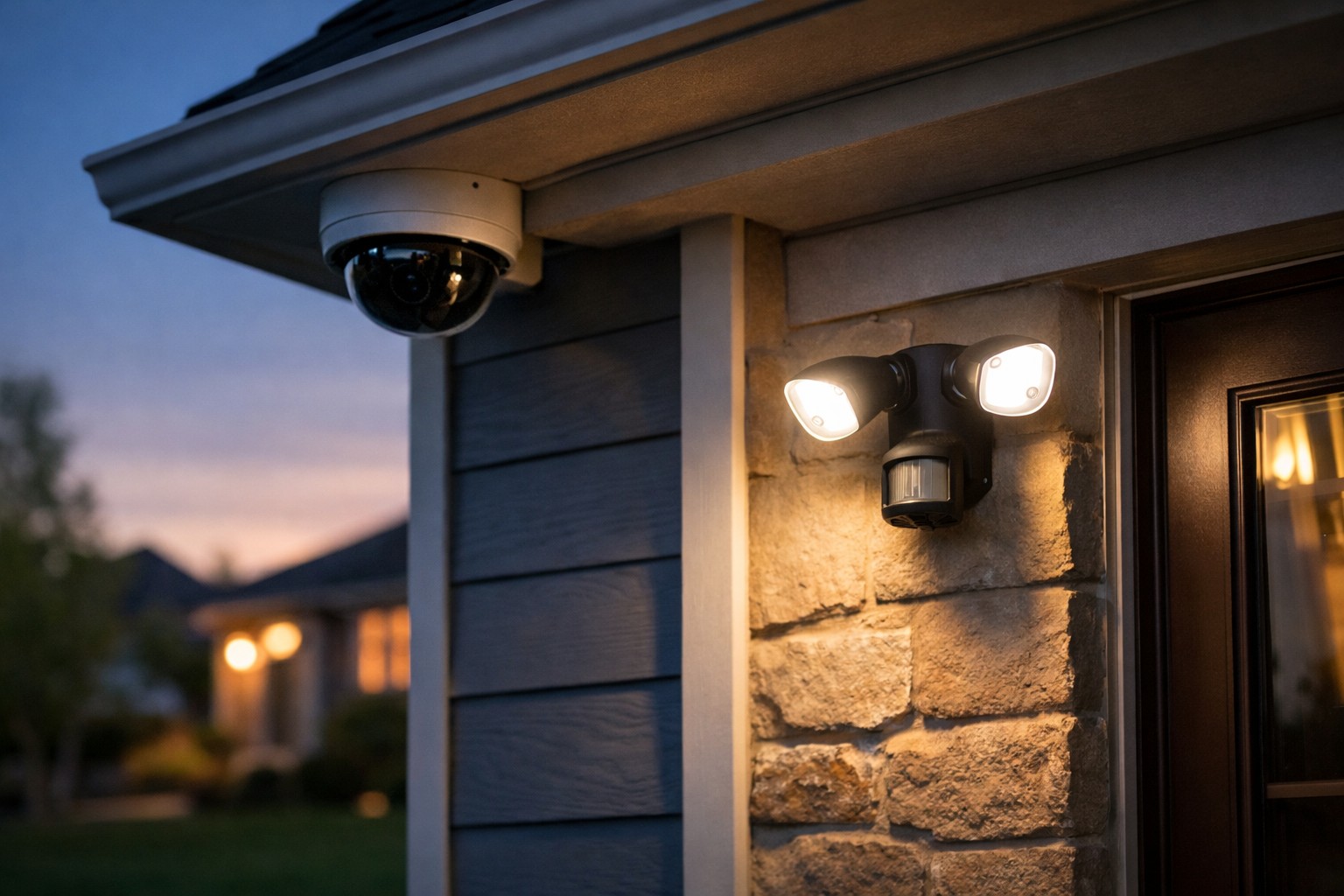
Motion Sensors vs Security Cameras: Key Differences
Motion sensors and security cameras serve different roles within a home security system. Motion sensors are designed to detect movement and trigger alerts, lighting, or alarms. Security cameras provide visual monitoring, recording, and verification of events.
Understanding the differences between these two tools helps you choose the right solution for your home and ensures you build a system that provides both detection and visibility.
What Motion Sensors Do
Motion sensors detect movement within a defined area and trigger a response such as lighting, alarms, or notifications. They are designed to provide early warning when someone enters a monitored space.
These devices are commonly used to protect entry points, driveways, and pathways. Because they react instantly to movement, they are effective for alerting homeowners before a threat reaches the home.
Strengths of Motion Sensors
• Immediate detection of movement
• Low power usage and simple setup
• Effective for triggering lights and alarms
• Covers wide areas without constant monitoring
What Security Cameras Do
Security cameras provide visual monitoring of your property, allowing you to see and record activity in real time or review it later. They help verify what triggered an alert and provide valuable evidence if an incident occurs.
Cameras are commonly placed at entry points, along perimeters, and in high-traffic areas. Unlike motion sensors, they offer continuous visibility rather than just detection.
Strengths of Security Cameras
• Provides visual confirmation of events
• Records footage for review and evidence
• Allows remote monitoring via apps
• Acts as a visible deterrent
Motion Sensors vs Security Cameras: Side-by-Side Comparison
Motion sensors and security cameras are most effective when used together, but understanding their differences helps you decide where each fits within your security plan.
Detection: Motion sensors detect movement instantly, while cameras capture and record activity.
Coverage: Motion sensors can cover wide areas with a single device, while cameras focus on specific zones.
Response: Motion sensors trigger lights and alarms, while cameras provide visual verification.
Monitoring: Cameras allow live and recorded viewing, while motion sensors only trigger alerts.
Deterrence: Cameras act as a visible deterrent, while motion sensors work more passively.
When to Use Motion Sensors vs Security Cameras
Choosing between motion sensors and security cameras depends on your security goals, property layout, and how you want to monitor activity around your home.
Use Motion Sensors When:
• You want instant alerts when movement is detected
• You need to trigger lights or alarms automatically
• You want wide-area coverage with minimal equipment
• You are focused on early detection
Use Security Cameras When:
• You want to see and record what is happening
• You need visual confirmation of events
• You want remote monitoring from your phone
• You want a visible deterrent
Why the Best Security Systems Use Both
The most effective home security systems do not rely on a single tool. Motion sensors and security cameras serve different roles, and when combined, they create a layered security system that provides both detection and verification.
Motion sensors act as the early warning system, triggering alerts, lighting, or alarms the moment movement is detected. Security cameras then provide visual confirmation, allowing you to see what caused the alert and respond appropriately.
This layered approach reduces blind spots, improves response time, and creates a stronger deterrent. Motion sensors activate the system, while cameras document and monitor the situation.
Motion sensors and cameras are most effective when integrated into a complete system that includes lighting, alarms, and perimeter planning. Learn how to build a full perimeter security strategy for your home.
Choosing the Right Security Setup for Your Home
Choosing between motion sensors and security cameras is not about selecting one over the other. The most effective approach is to use both in a coordinated system that provides early detection, visibility, and response.
Start by identifying your most vulnerable areas, including entry points, pathways, and blind spots. Then layer motion detection, lighting, and camera coverage to create a complete perimeter defense.
A structured approach to home security ensures that each component works together, giving you greater awareness, faster response, and stronger overall protection.
Return to the Perimeter Security for Your Home During a Collapse guide to continue building your complete home security system.