How to Prepare Your Laundry Room for Long-Term Water Disruption
Most households think laundry becomes important only after everything else fails. In reality, laundry rooms become critical much faster when children, elderly family members, medical caregiving, pets, or sanitation-heavy routines are involved. Clean bedding, towels, clothing, and household cleaning materials directly affect hygiene, health, and daily stability.
Strong preparedness starts by protecting the routines that keep the home functional. The goal is not simply washing clothes—it is maintaining sanitation, caregiving support, bedding hygiene, and household stability when normal water access becomes unreliable.
Most laundry failures begin quietly. Washing routines slow down, towels stop rotating, bedding becomes harder to manage, caregiving pressure increases, and hygiene standards begin slipping before people recognize a true emergency. By the time clean linens feel urgent, the household is often already reacting instead of planning.
Preparedness works best when households identify the first laundry failure point early. The goal is not asking “Can we still do laundry?” but asking “What stops safe daily household function first when reliable water access becomes uncertain?” That answer determines where real preparedness should begin.
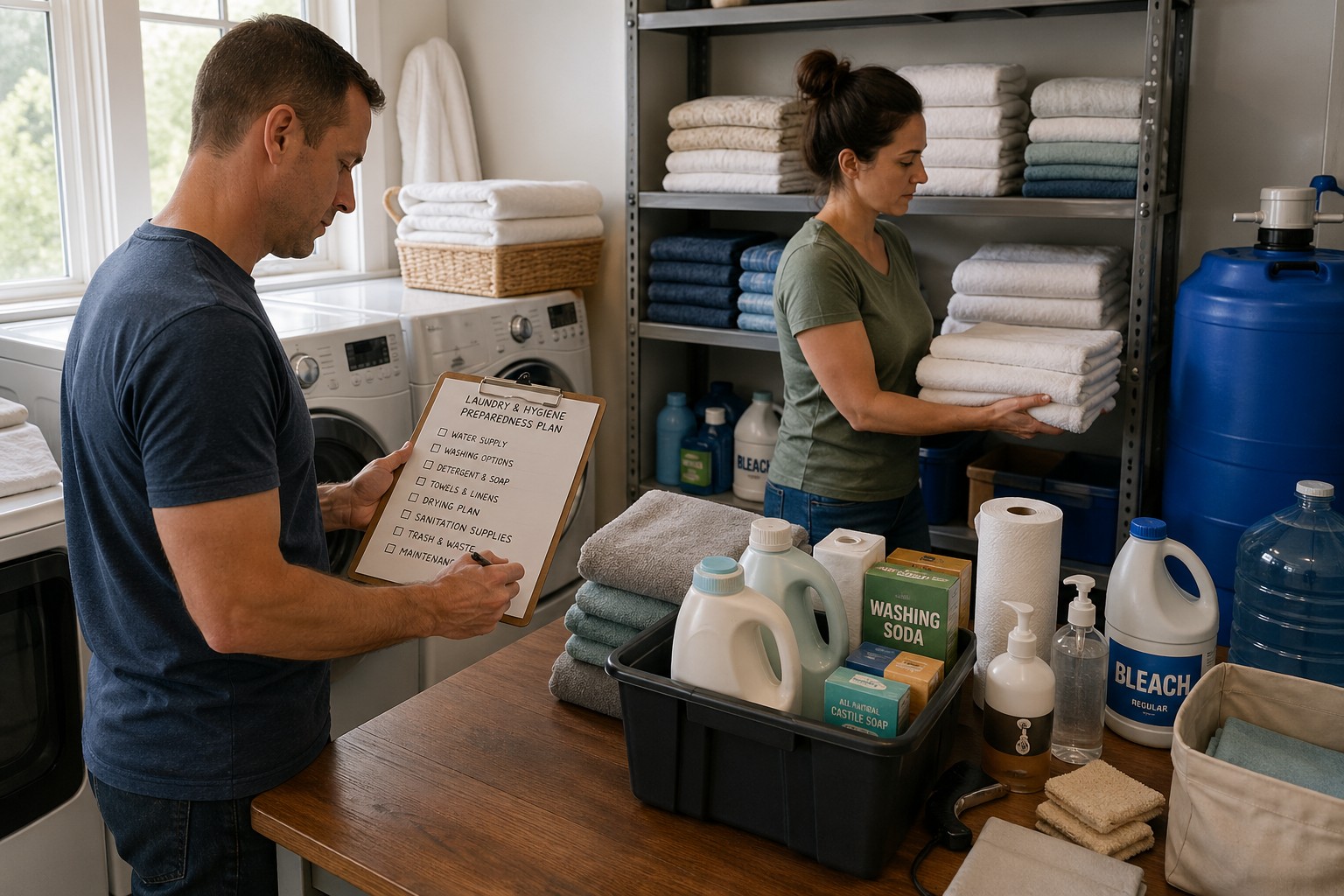
Clean Bedding Becomes a Critical System
Most households think laundry preparedness starts with detergent and extra clothes, but clean bedding is often the first real failure point. Sheets, towels, blankets, and caregiving linens directly affect hygiene, sleep quality, illness recovery, and household stability long before “doing laundry” feels like the main problem.
Preparedness improves when households protect bedding continuity before disruption begins. The goal is not simply keeping clothes clean—it is maintaining safe sleeping conditions, hygiene standards, caregiving support, and the routines that keep the household functional.
Towels and Linens Rotate Faster Than Expected
Bath towels, hand towels, washcloths, sheets, blankets, and caregiving linens move through a household much faster during disruption than most people expect. Limited bathing, illness recovery, pet cleanup, children, and dependent care all increase laundry pressure quickly.
The real question is not “Do we have enough towels?” but “What must stay clean first when washing becomes difficult?” Prepared households identify which linens support hygiene, caregiving, and household stability before water disruption forces rushed decisions.
A common mistake is preparing for clothing only while ignoring the bedding systems that protect health and daily function.
Dirty Bedding Creates Hidden Health Problems
Unwashed sheets, damp towels, contaminated blankets, and delayed linen changes create hygiene problems that build quietly. Skin irritation, sleep disruption, illness spread, odor, and caregiving stress often rise before households recognize bedding as the cause.
The real test is identifying when bedding neglect begins creating bigger problems than the original water shortage. If illness recovery slows, sleep quality drops, contamination spreads through towels and blankets, or caregiving routines become harder to maintain, the weak point is not laundry volume—it is hygiene continuity.
Prepared households protect bedding sanitation as a priority system, not a comfort issue. A common mistake is treating clean linens like convenience instead of recognizing them as part of household health and recovery.
Simplified Laundry Plans Prevent System Failure
Hand-washing essentials, prioritizing critical loads, rotating backup towels, line drying, and protecting high-need bedding all reduce pressure when machines stop working or water access becomes limited. The goal is continuity, not normal routines.
Prepared households decide what gets washed first and how that happens before disruption begins. A common mistake is trying to preserve full normal laundry habits instead of protecting the items that matter most.
Clothing, Caregiving, and Medical Laundry Come Next
Laundry disruption affects far more than clean shirts. Medical caregiving, elderly support, infant care, pet cleanup, work clothing, and protective household routines all depend on reliable access to clean fabrics and safe washing methods. These failures create stress and health risk much faster than most households expect.
Preparedness improves when households protect the laundry that supports daily care before disruption begins. The goal is maintaining caregiving routines, sanitation standards, medical support, and household stability—not preserving normal laundry convenience.
Medical Laundry Cannot Be Delayed
Caregiving linens, wound care cloths, towels used for hygiene support, infant bedding, and illness recovery materials create laundry needs that cannot simply wait. Delays increase contamination risk and can turn manageable health issues into larger household problems.
The real question is not “Can this wait another day?” but “What becomes unsafe if this stays unwashed?” Prepared households identify the medical and caregiving laundry that must stay clean first.
A common mistake is treating all laundry equally instead of protecting the loads that directly affect health.
Work Clothes and Outdoor Gear Affect Recovery
Boots, uniforms, gloves, work clothing, rain gear, and outdoor cleanup items often carry contamination back into the home. During outages or disruption, these items may be used more often and cleaned less frequently, increasing household sanitation pressure.
The real test is identifying when outside contamination begins creating bigger problems inside the home. If dirty work gear spreads bacteria into bathrooms, kitchens, bedding, or caregiving spaces, the weak point is not laundry volume—it is contamination control.
Prepared households separate high-contamination clothing from normal laundry routines and protect indoor hygiene first. A common mistake is allowing work gear and outdoor cleanup items to quietly spread sanitation problems inside the home.
Backup Drying Matters More Than Washing
Machine failure, power loss, humidity, weather, and limited indoor space can make drying harder than washing. Clean laundry that cannot dry safely becomes another sanitation problem instead of a solution.
Prepared households plan line drying, indoor drying space, towel rotation, and airflow before disruption begins. A common mistake is focusing on washing methods while ignoring how critical items will actually become usable again.
Know When Laundry Failure Becomes a Leaving Problem
Laundry disruption is not automatically a reason to leave, but some failures stop being a shelter-in-place problem and become an evacuation decision. If caregiving linens cannot stay sanitary, contamination spreads through the home, bedding recovery fails, medical hygiene becomes unsafe, or household cleanliness can no longer support daily life, staying may create more risk than leaving.
Prepared households decide these thresholds early. The goal is not waiting for obvious collapse—it is recognizing when the home can no longer safely support hygiene, caregiving, recovery, and daily household function, and leaving while transportation, destination options, and calm decision-making still exist.
Return to Water Systems