Best Water Purification Tablets for Emergency Preparedness
Water purification tablets are a simple and portable solution for making water safe to drink during emergencies. When access to clean water is limited, these tablets provide a quick method for disinfecting water from natural sources such as lakes, rivers, or collected rainwater.
Because they are lightweight and easy to store, purification tablets are commonly included in emergency kits, bug-out bags, and travel gear. They serve as a reliable backup when boiling or filtration systems are not available.
This page expands the Water Systems plan by highlighting water purification tablets as a practical emergency solution. Understanding how these tablets work and what to consider when choosing them helps households build a flexible and reliable water purification strategy.
How Water Purification Tablets Work
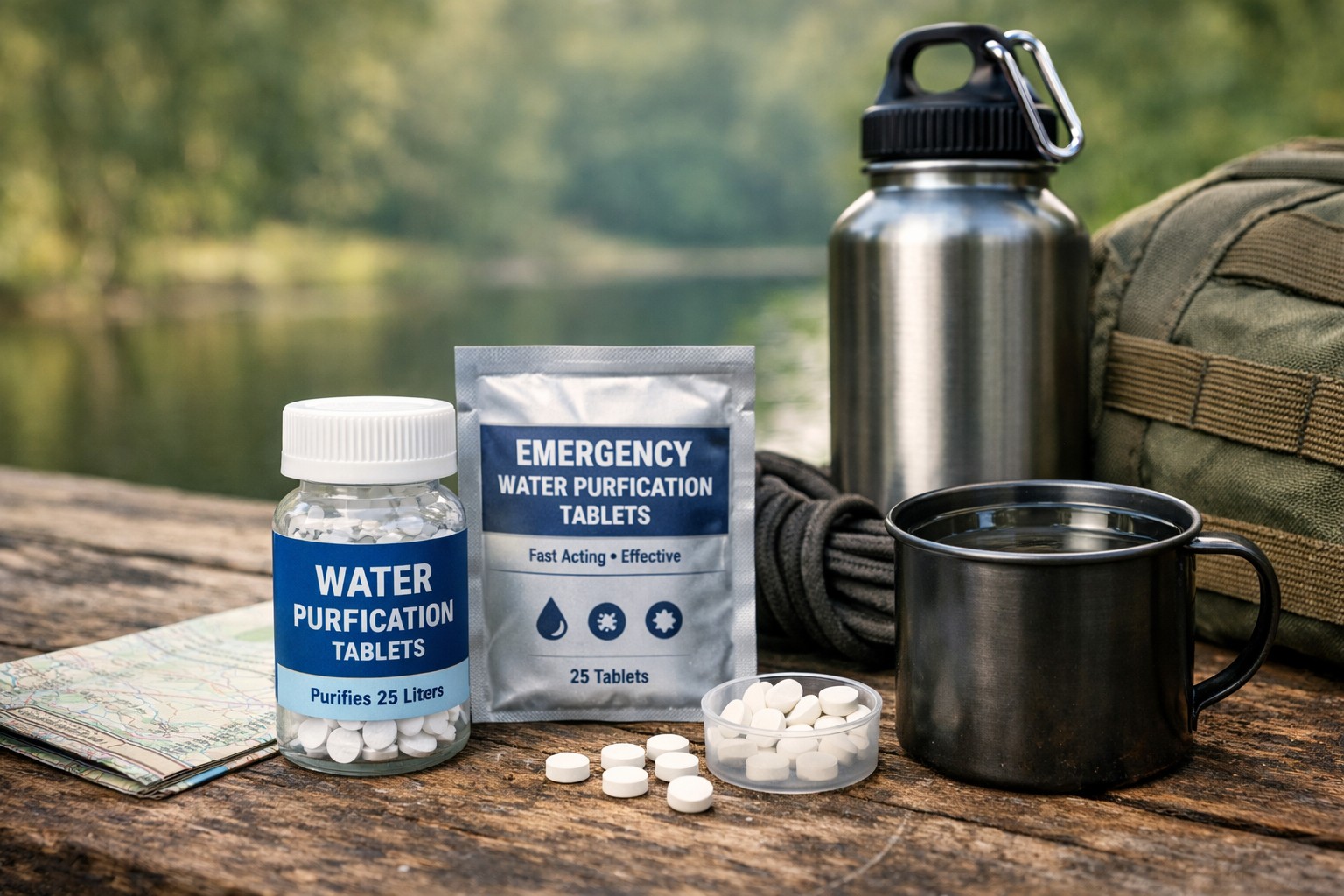
Water purification tablets work by releasing chemicals such as iodine or chlorine into untreated water. These chemicals kill or deactivate harmful microorganisms, including bacteria and viruses, making the water safer to drink.
After adding a tablet, the water must sit for a specified amount of time to allow the disinfection process to complete. While effective against many biological contaminants, purification tablets may not remove sediment or certain chemicals, so they are often used alongside filtration methods when possible.
Key Features to Look for in Water Purification Tablets
When selecting water purification tablets for emergency preparedness, several factors should be considered. Effectiveness against bacteria, viruses, and parasites is one of the most important considerations. Treatment time, ease of use, and shelf life also play a role in how practical a product is during an emergency.
Some tablets are designed for rapid treatment, while others may require longer wait times to ensure proper disinfection. Understanding these differences helps households choose tablets that match their preparedness needs and expected usage scenarios.
Top Water Purification Tablets for Emergency Preparedness
The following water purification tablets represent common options used in emergency preparedness, each offering different treatment methods, wait times, and levels of effectiveness depending on the situation.
• Effectiveness against bacteria, viruses, and parasites
• Treatment time required before water is safe to drink
• Shelf life and storage stability
• Taste impact after treatment
• Ease of use in emergency situations
Chlorine-Based Water Purification Tablets
Chlorine-based water purification tablets are widely used for emergency water treatment. These tablets are effective against many bacteria and viruses and are commonly included in preparedness kits due to their reliability and long shelf life.
They are generally easy to use and require a moderate waiting period before the water is safe to drink. Chlorine-based treatments may leave a noticeable taste, but they provide a practical and dependable option for disinfecting water in emergency situations.
Iodine-Based Water Purification Tablets
Iodine-based water purification tablets are another common option for emergency water treatment. These tablets are effective against many microorganisms and are valued for their compact size and ease of storage, making them suitable for travel and emergency kits.
However, iodine-based treatments may not be appropriate for all users, including individuals with certain health conditions or sensitivities. They can also leave a distinct taste in treated water. Despite these considerations, iodine tablets remain a widely used backup option in emergency preparedness planning.
Choosing the Right Water Purification Tablets
Choosing the right water purification tablets depends on the likely emergency scenario, the size of your emergency kit, and how the treated water will be used. Chlorine-based tablets are a dependable general-purpose option, while iodine-based tablets may serve as a compact backup for certain preparedness situations.
Many households include water purification tablets as part of a layered water plan alongside filtration systems and stored water. By combining multiple purification methods, it is easier to maintain safe drinking water in a wider range of emergency conditions.
Return to the Water Systems for Long-Term Disruption Planning overview to keep your emergency water planning aligned with the rest of your preparedness system