Best Water Storage Containers for Emergencies
Choosing the right containers is an important part of emergency water storage planning. Water must be stored in containers that are safe, durable, and designed to prevent contamination. Using appropriate storage containers helps ensure that stored water remains clean and usable during emergencies.
A variety of container types are commonly used in preparedness planning, including bottled water, portable water jugs, stackable containers, and large storage barrels. Understanding the advantages of each option helps households select the best water storage solution for their needs.
This page expands the Water Systems plan by comparing common types of water storage containers used in emergency preparedness. Understanding the strengths and limitations of different container options helps households build water storage systems that are reliable, scalable, and suited to their available space.
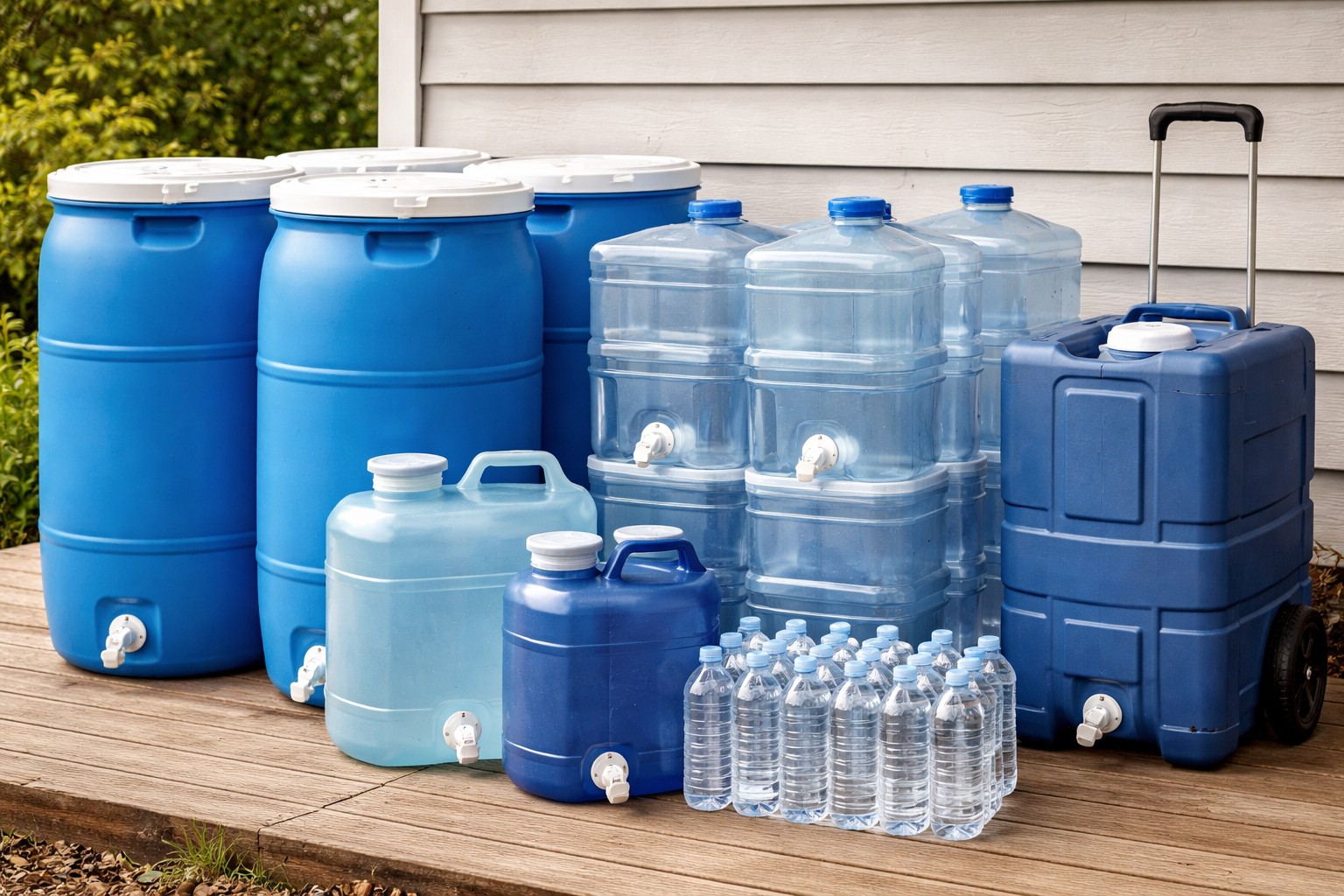
Types of Water Storage Containers
Emergency water storage containers come in several common forms, each designed for different storage needs. Some containers are intended for short-term storage and portability, while others are designed for long-term storage and larger water volumes.
Common container types include bottled water, portable water jugs, stackable containers, and large storage barrels. Each option offers different advantages depending on available space, budget, and how the water will be used during an emergency.
Bottled Water
Bottled water is one of the simplest and most accessible options for emergency water storage. It is widely available, requires no preparation, and can be stored immediately. Bottled water is also convenient for short-term emergencies and can be easily transported if evacuation becomes necessary.
However, bottled water may not be the most efficient solution for storing large volumes of water. It takes up more space compared to larger containers and can become costly when storing long-term supplies. Many households use bottled water as part of a layered storage strategy alongside larger containers.
Portable Water Jugs
Portable water jugs are commonly used for emergency water storage because they are designed for both storage and transport. These containers are typically made from durable, food-grade plastic and often include built-in handles or spouts for easier use.
They provide a good balance between capacity and portability, making them useful for both home storage and evacuation scenarios. However, they require more space than bottled water and must be properly cleaned and sealed to maintain water quality over time.
Stackable Water Containers
Stackable water containers are designed to maximize storage efficiency by allowing multiple containers to be safely stacked on top of one another. This makes them a popular choice for households with limited storage space.
These containers are often made from durable, food-grade materials and can hold moderate amounts of water while remaining relatively easy to handle. Their uniform shape helps keep storage areas organized and accessible, which is especially useful when maintaining larger emergency water supplies.
Large Water Storage Barrels
Large water storage barrels are commonly used for long-term emergency water storage. These containers can hold significant volumes of water, often ranging from 30 to 55 gallons or more, making them an efficient solution for storing larger household reserves.
Because of their size and weight, these barrels are typically stored in fixed locations such as garages or storage rooms. While they are less portable than smaller containers, they provide a reliable way to maintain a substantial emergency water supply over extended periods.
Return to the Water Systems for Long-Term Disruption Planning overview to keep your emergency water planning aligned with the rest of your preparedness system.