Emergency Communication Failure Scenarios
Communication systems do not always work as expected during emergencies. Power outages, equipment failure, interference, and user error can all disrupt the ability to send and receive messages.
When communication breaks down, even simple coordination can become difficult. Missed messages, unclear signals, or complete loss of contact can create confusion at the exact moment clear information is needed most.
Understanding common emergency communication failure scenarios allows households to respond quickly, identify the problem, and take practical steps to restore communication.
Within a structured preparedness plan, anticipating communication failures is just as important as having the right equipment. Radios, phones, and other systems are only effective when they are functioning properly and used correctly.
This guide outlines the most common communication failure scenarios and provides clear, practical actions to help restore or maintain contact. The goal is to reduce confusion, improve response time, and ensure your household can stay connected even when systems fail.
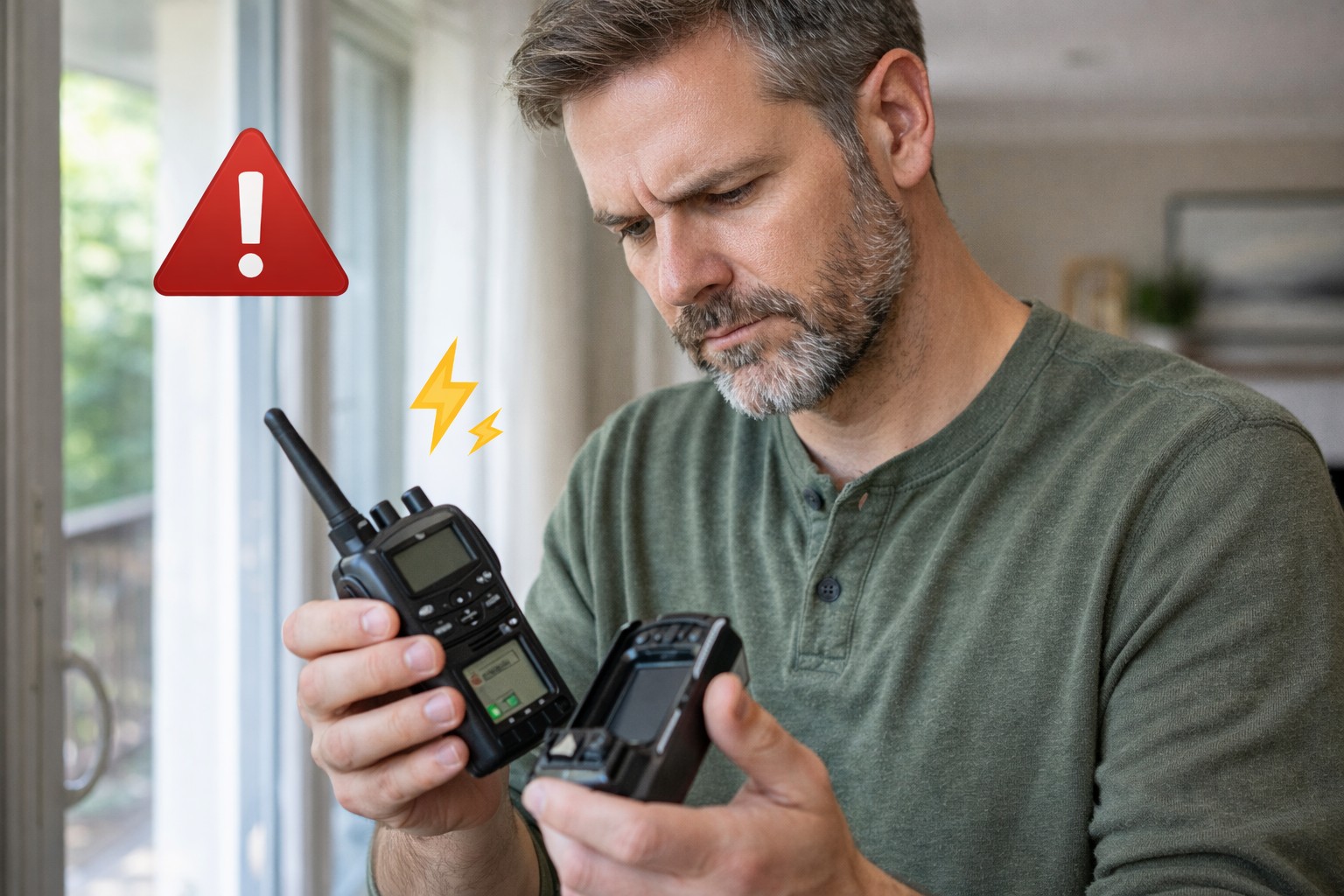
Common Emergency Communication Failure Scenarios
Communication failures can occur for a variety of reasons, often without warning. Understanding the most common scenarios helps you quickly identify the issue and take corrective action.
Each of the following situations represents a typical failure point and includes practical steps to restore or maintain communication.
Radio Will Not Power On
If a radio does not turn on, the most common cause is a power issue. Batteries may be depleted, improperly installed, or no longer functioning.
Check that the battery is fully charged or replace it with a fresh set. If the radio uses rechargeable packs, confirm that they are seated correctly in the charging base. Keeping spare batteries available ensures that communication can be restored quickly.
No Response from Other Radios
If you are able to transmit but receive no response, the issue is often related to channel settings or distance. Radios must be set to the same channel and privacy code to communicate.
Confirm that all radios are using identical settings. If settings are correct, reduce the distance between users or move to a location with fewer obstacles. Attempting communication from different positions can help re-establish contact.
Signal Is Weak or Unclear
Weak or unclear signals are often caused by obstacles, distance, or interference. Buildings, walls, and terrain can significantly reduce signal strength and clarity.
To improve communication, try moving to a higher location or near a window. Reducing background noise and speaking clearly into the radio can also improve message quality. Testing communication from multiple locations helps identify the most reliable positions.
Interference or Channel Congestion
Interference can occur when multiple users are operating on the same channel or when electronic devices disrupt the signal. This may result in static, overlapping conversations, or difficulty understanding messages.
If interference is present, switch to a different channel and ensure all radios are updated to match. Using privacy codes can help reduce unwanted transmissions, but they do not eliminate interference entirely.
Incorrect Use or Miscommunication
Communication failures are not always caused by equipment. Incorrect use—such as speaking too quickly, failing to press the push-to-talk button properly, or using unclear language—can prevent messages from being understood.
Review basic communication practices and ensure that all users are familiar with proper radio operation. Clear, simple communication reduces the likelihood of errors and improves overall reliability.
How This Fits Into Your Emergency Communication System
Communication failures are a normal part of emergency situations. Planning for these scenarios ensures that your household can respond quickly and maintain coordination when systems do not work as expected.
When combined with proper radio use, clear communication habits, and routine testing, understanding failure scenarios helps create a more reliable and resilient communication system.