How to Identify Weak Points in Your Home Before an Emergency
Most households do not know where they are truly vulnerable until something fails. A power outage, water interruption, communication breakdown, or security problem exposes weaknesses that were easy to ignore when normal routines were working. By then, decisions become more expensive and far more stressful.
Strong preparedness starts before disruption. The goal is not to guess what might go wrong—it is to identify which household system creates the fastest instability and fix that weakness before it becomes a real emergency.
Most preparedness failures are hidden behind normal convenience. A refrigerator works because power is stable. Water feels secure because the tap runs. Communication feels reliable because phones stay charged and networks stay available. These systems look strong until disruption removes the support behind them.
Identifying weak points means asking what fails first when normal services stop. The fastest failure usually reveals the real vulnerability. Households that find that point early make better decisions, avoid wasted spending, and strengthen preparedness where it matters most.
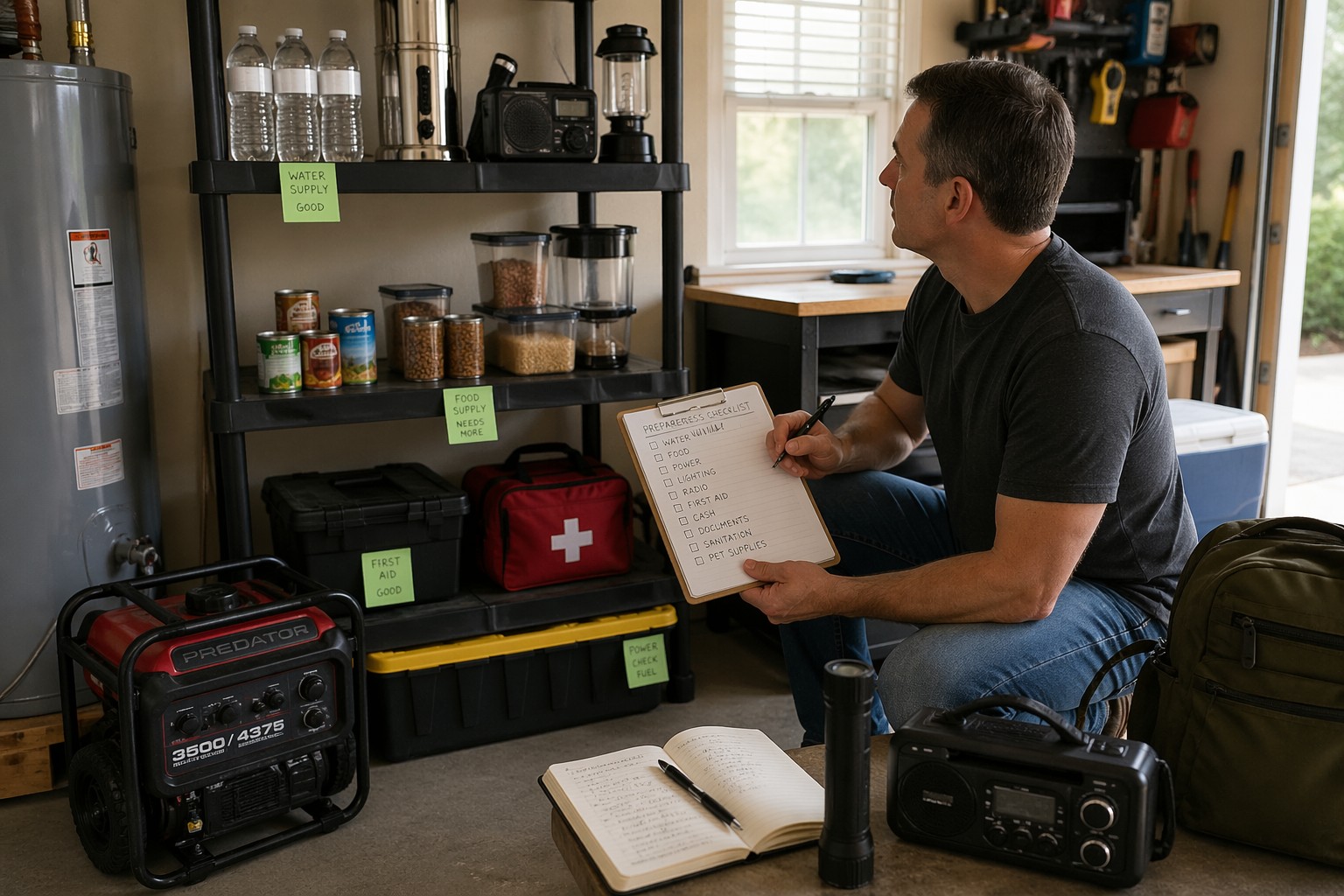
The First Failure Point Tells the Truth
Most households think they are prepared because normal life is still working. The refrigerator is cold, the water runs, phones stay charged, and daily routines feel stable. But those systems are often supported entirely by outside infrastructure, not true household readiness.
The first system that fails when normal services stop reveals the real vulnerability. It may be refrigeration during a power outage, drinking water during a service interruption, medication storage during extreme heat, or communication during evacuation pressure. That first failure point shows where preparedness is weakest and where improvement should begin first.
Follow the Failure Chain
Most household failures do not happen alone. One weak system usually creates the next problem. Power loss affects refrigeration, device charging, well pumps, medication storage, and communication. Water disruption affects cooking, sanitation, hygiene, and household routine. Small failures become larger because people only react to the first visible problem.
Preparedness improves when households follow the chain instead of treating each problem separately. The goal is not asking “What broke?” but asking “What fails next if this continues?” That question reveals hidden weaknesses before disruption turns them into expensive emergencies.
Power Failure → Water Failure
Many households assume power loss only affects lighting and convenience, but homes with well pumps, electric water heaters, refrigeration, medical devices, and charging dependence often discover that power failure quickly becomes a water and health problem.
The correct question is not “Do we have flashlights?” but “What stops working when power stays off for 12 hours?” Prepared households identify those dependencies before the outage happens and protect the highest-risk systems first.
A common mistake is preparing for visible inconvenience while missing the hidden system collapse behind it.
Water Failure → Sanitation Failure
Water shortages create far more than drinking problems. Cooking, hygiene, toilet function, dishwashing, pet care, and basic household routine all begin failing quickly once reliable water access becomes uncertain.
Prepared households calculate how long real daily function can continue—not just how many bottles are stored. A common mistake is thinking stored water solves the problem without understanding how fast sanitation and routine collapse when normal supply disappears.
Water weakness often reveals the true readiness level of the entire home.
Communication Failure → Decision Failure
When phones die, networks fail, or evacuation pressure increases, households often realize too late that no real communication plan exists. Family members make separate decisions, important updates are missed, and small disruptions become larger because nobody knows the actual next step.
Prepared households use written contacts, meeting locations, charging discipline, and simple check-in routines before disruption happens. A common mistake is assuming phones are the plan instead of understanding that communication is really a decision-making system.
Test Systems Before You Need Them
Preparedness that has never been tested is often just assumption. A generator that has never powered the refrigerator, stored water that has never been rotated, backup lighting with dead batteries, or a family communication plan nobody remembers creates false confidence instead of readiness.
Strong households test systems under normal conditions so failure happens during practice, not during disruption. The goal is to discover weak points while solutions are easy, not during the emergency when every mistake becomes more expensive.
Run the Power Test
If backup power exists, test it under real household load. Run the refrigerator, check charging routines, confirm lighting coverage, and understand exactly how long fuel or battery capacity actually lasts. Ownership without testing is not readiness.
The real question is not whether backup power starts—it is whether the household can protect critical systems for the full outage window. If refrigeration fails after eight hours, fuel runs out overnight, or charging routines break down, the weak point has been identified and must be solved before the emergency happens.
A common mistake is assuming a generator solves the problem without knowing what it can realistically support. Prepared households test critical loads first and remove convenience assumptions before the outage happens.
Follow Water to the Breaking Point
Do not ask how much water is stored—ask how long normal life continues if refill access stops. Drinking, cooking, sanitation, hygiene, pets, and medical needs all compete for the same supply. Water weakness usually appears faster than expected.
The real test is identifying when normal household function starts breaking down. If stored water supports drinking but sanitation fails after two days, or cooking becomes difficult long before reserves run out, the weak point is not storage volume—it is continuity planning.
Prepared households identify where the real breaking point happens and solve that first instead of assuming stored water alone creates resilience. A common mistake is measuring gallons instead of measuring how long the home actually functions.
Walk the Communication Plan
Ask every household member what happens if phones stop working tonight. Who needs contact first? Where do people meet? How do devices stay charged? If answers are unclear, the communication plan does not exist yet.
The real test is whether decisions can still happen without normal connectivity. If family members would make separate choices, miss critical updates, or have no clear meeting plan, communication failure becomes decision failure. That weak point must be fixed before disruption creates confusion.
Prepared households use simple written plans, check-in expectations, and backup charging discipline before disruption happens. A common mistake is believing shared assumptions are the same as real planning.
Use the Assessment Checklist Correctly
A checklist is only useful when it exposes weakness instead of creating false confidence. Simply checking boxes for stored food, flashlights, or bottled water does not reveal whether the household can actually maintain stability when disruption lasts longer than expected.
The Household Preparedness Assessment Checklist should be used to identify the first real system failure, not to create the illusion of readiness. The goal is to find what breaks first, what fails next, and what must be strengthened before the next disruption happens.
Return to Household Preparedness Systems