How Much Backup Power Do You Need for Emergency Preparedness?
Many households begin building an emergency power system without knowing how much electricity they actually need. Phones, radios, refrigerators, lighting, medical devices, and other essential equipment all consume power at different rates, and understanding these requirements is the first step in choosing the right backup power solution.
By estimating your household’s critical power needs, you can determine the size of portable power stations, solar generators, and solar panels required to maintain essential devices during outages, disasters, or long-term grid disruptions.
This page helps you estimate the amount of backup power your household may need during an outage. It expands the Emergency Power Systems plan by helping you match real household electricity needs with the portable power stations, solar generators, and solar panels used in a preparedness power system.
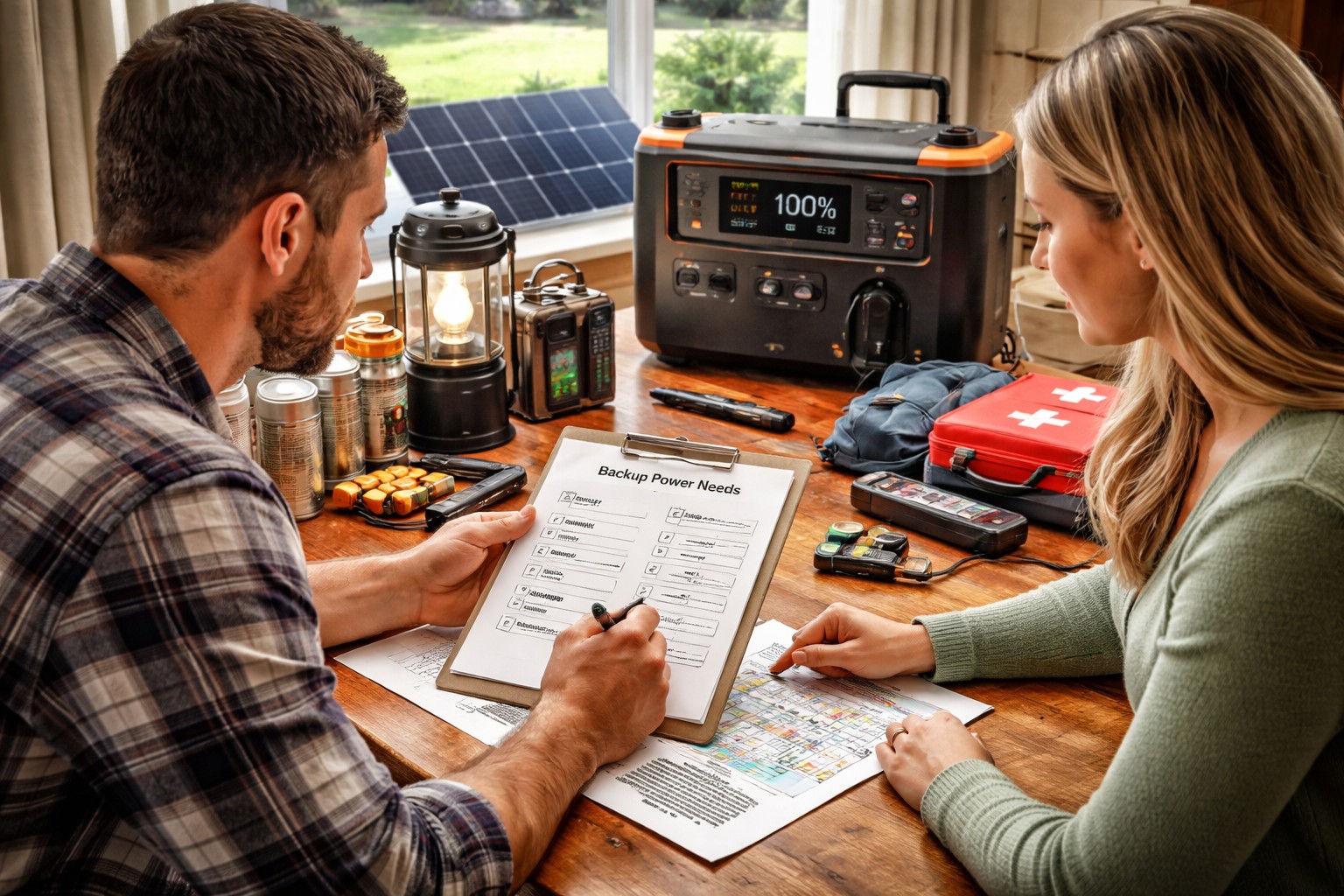
Most households underestimate how quickly power needs add up during an outage. A refrigerator, lighting, and basic communication devices can already require several hundred watts of continuous power, with higher startup demands. Understanding these real-world requirements helps prevent choosing a system that falls short when it matters most.
Understanding Household Power Needs During an Outage
Every device you want to operate during an outage uses a certain amount of electricity. Phones, radios, lights, laptops, refrigerators, CPAP machines, and small appliances all draw different amounts of power, and those differences determine how large your backup power system needs to be. Some devices require only a small amount of electricity over many hours, while others use far more power in shorter periods.
Understanding these usage patterns helps households avoid buying power systems that are too small to support critical equipment or far larger than necessary for their actual needs. A realistic estimate begins with identifying the devices that matter most during an emergency and how long each one may need to run.
Identify the Essential Devices You Need to Power
During an emergency outage, most households do not need to power every device in the home. Instead, preparedness planning focuses on the equipment that supports safety, communication, food storage, and basic comfort. Common priorities include phones, emergency radios, lighting, refrigerators, medical equipment, and small cooking devices.
Listing these essential devices helps you estimate how much electricity your household will realistically require during a disruption. This step is important because backup power systems are typically designed to support critical functions rather than replace the full electrical capacity of a home.
Understanding Watts and Watt-Hours
Backup power systems are typically measured using two key electrical terms: watts and watt-hours. Watts describe how much power a device uses at a given moment, while watt-hours measure how much total energy is stored in a battery or used over time. For example, a 10-watt device running for 10 hours consumes about 100 watt-hours of energy.
Understanding this relationship helps households estimate how long a power station or solar generator can operate essential devices. By comparing the watt-hour capacity of a battery system with the power needs of the devices you plan to run, you can estimate how long your backup power supply will last during an outage.
Choosing the Right Size Backup Power System
Once you estimate the power requirements of your essential devices, it becomes much easier to select an appropriate backup power system. Smaller portable power stations may be sufficient for charging phones, running radios, and powering lights, while larger systems can support refrigerators, medical equipment, and additional household electronics.
Solar generators and portable solar panels can extend the usefulness of these battery systems by allowing them to recharge during extended outages. By matching the power capacity of your backup system to the devices you plan to operate, households can build a practical emergency power solution that supports critical needs during disruptions.
To translate these power requirements into real-world systems, see Best Solar Generators for Emergency Preparedness for a breakdown of current options and capabilities.
Return to the Emergency Power Systems for Home Preparedness overview to keep your household backup power plan aligned with the rest of your preparedness system.