30 Day Emergency Food Supply List
A 30-day emergency food supply is a common preparedness goal for households planning for extended disruptions. Severe storms, supply chain interruptions, infrastructure failures, and other emergencies can make normal food access unreliable for weeks at a time. Maintaining a one-month reserve of food helps households remain self-sufficient during these situations.
Building a 30-day food supply does not require complicated systems or expensive specialty products. By focusing on shelf-stable staples that provide calories, nutrition, and flexibility for meal preparation, households can assemble a practical emergency food reserve that supports everyday living during disruptions.
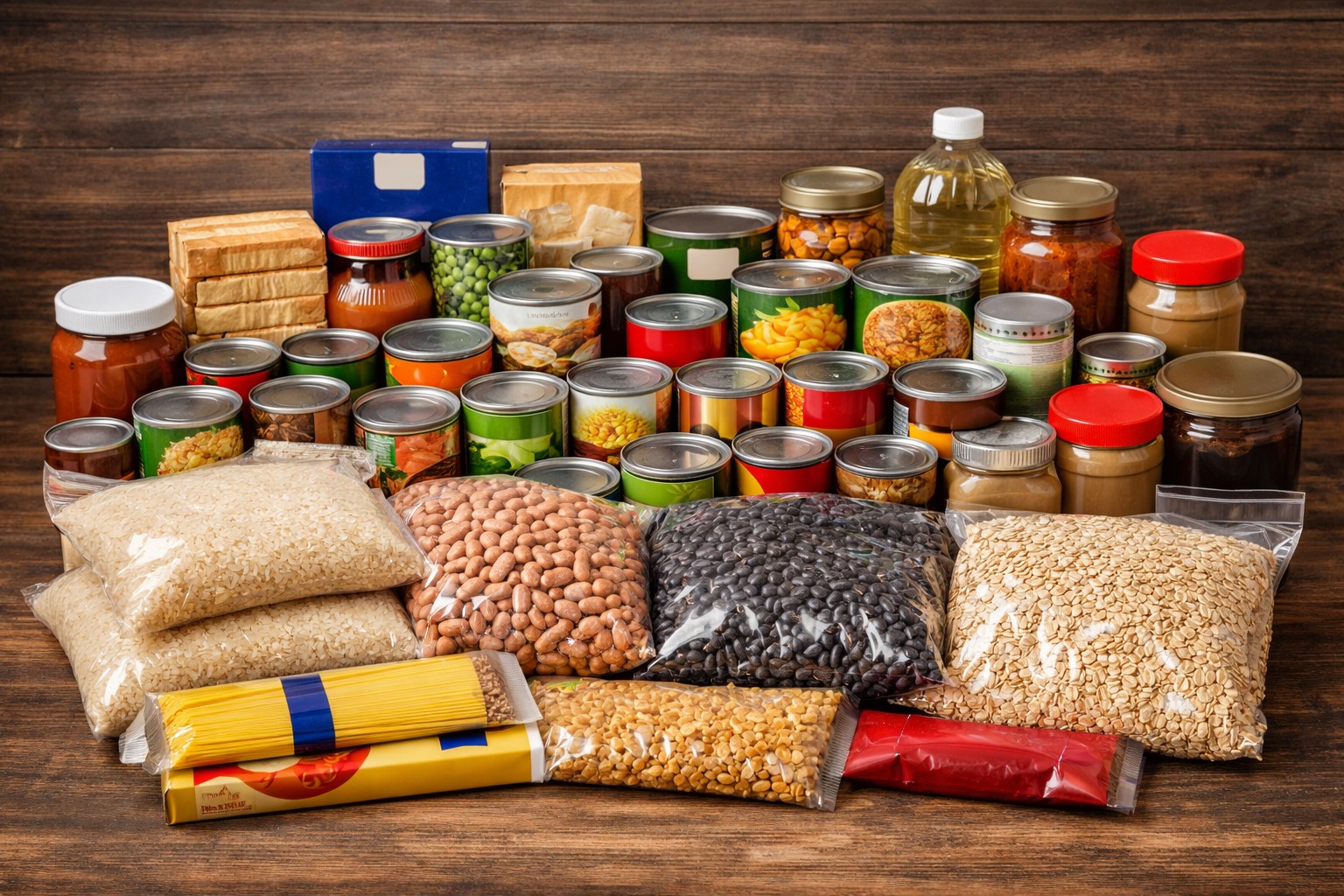
This page expands the Food Systems plan by providing a practical example of how households can assemble a one-month emergency food reserve. By combining staple grains, protein foods, canned goods, and calorie-dense ingredients, families can build a balanced food supply designed to support daily meals during a 30-day disruption.
Staple Grains and Carbohydrates
Grains and other carbohydrate foods typically form the foundation of a 30-day emergency food supply because they provide reliable calories and are easy to store in large quantities. Foods such as rice, oats, pasta, flour, and other grain products can serve as the primary calorie source in many emergency meals.
These foods are widely available, relatively inexpensive, and versatile in meal preparation. When stored properly in sealed containers or packaging designed for long-term storage, many grain-based foods can remain usable for extended periods while supporting a wide range of meal options.
Recommended Grain Foods for a 30-Day Supply
White rice
• Rolled oats
• Pasta
• Flour
• Dry cereal
• Cornmeal
• Crackers
• Instant potatoes
Protein Foods for a 30-Day Emergency Supply
Protein foods help support energy levels, muscle function, and overall nutrition during emergencies. Including a variety of shelf-stable protein sources helps balance meals built around grain staples and provides essential nutrients needed during extended disruptions.
Many protein foods used in preparedness plans are canned, dried, or shelf-stable products that store well and are easy to prepare with limited cooking resources.
Recommended Protein Foods for a 30-Day Supply
• Canned tuna
• Canned chicken
• Canned salmon
• Dried beans
• Lentils
• Peanut butter
• Canned chili
• Shelf-stable tofu or meat substitutes
Fats and Calorie-Dense Foods
Fats and calorie-dense foods help increase the overall energy value of emergency meals and make stored foods more satisfying. Including a small selection of high-calorie foods can improve meal variety and help households maintain adequate calorie intake during disruptions.
Many preparedness plans include shelf-stable fats and calorie-dense foods that can be easily combined with grains and proteins to create balanced meals.
Recommended Fats and Calorie-Dense Foods
• Cooking oil
• Olive oil
• Peanut butter
• Nuts and trail mix
• Honey
• Shelf-stable butter or ghee
• Powdered milk
Building a Practical 30-Day Food Supply
A practical 30-day emergency food supply usually combines grains, protein foods, and calorie-dense ingredients to create balanced meals during disruptions. By storing staple foods that are easy to prepare and widely used in everyday cooking, households can maintain a dependable food reserve that supports both nutrition and meal flexibility.
Many preparedness plans begin with simple shelf-stable foods that require minimal cooking or preparation. Over time, households can expand and refine their food reserves to include a wider variety of ingredients that support long-term resilience.
Return to the Food Systems for Long-Term Infrastructure Disruptions overview to keep your emergency food planning aligned with the rest of your preparedness system.