How To Store Water
Water is one of the most critical resources during emergencies. Natural disasters, infrastructure failures, and other disruptions can interrupt normal water supplies, leaving households without safe drinking water for extended periods. Maintaining a stored water supply helps ensure that basic hydration and sanitation needs can be met during these situations.
Because water systems rely on pumps, treatment facilities, and distribution networks, they are vulnerable to power outages and other disruptions. Storing emergency water allows households to remain self-sufficient while normal water services are restored.
Proper storage methods are part of a larger system—learn how to build a complete water storage plan before selecting containers and locations.
This page expands the Water Systems plan by explaining practical methods households can use to store emergency water safely. Understanding storage containers, storage locations, and basic water management practices helps ensure that stored water remains clean and usable during disruptions.
How Much Water to Store for Emergencies
Emergency preparedness guidelines commonly recommend storing at least one gallon of water per person per day. This amount provides a basic supply for drinking and limited sanitation needs during short-term disruptions. For longer emergencies, households often store additional water to maintain comfort and hygiene.
Water needs may vary depending on climate, household size, and personal health conditions. Storing a slightly larger reserve can help ensure that adequate water remains available if disruptions last longer than expected.
Common Containers for Emergency Water Storage
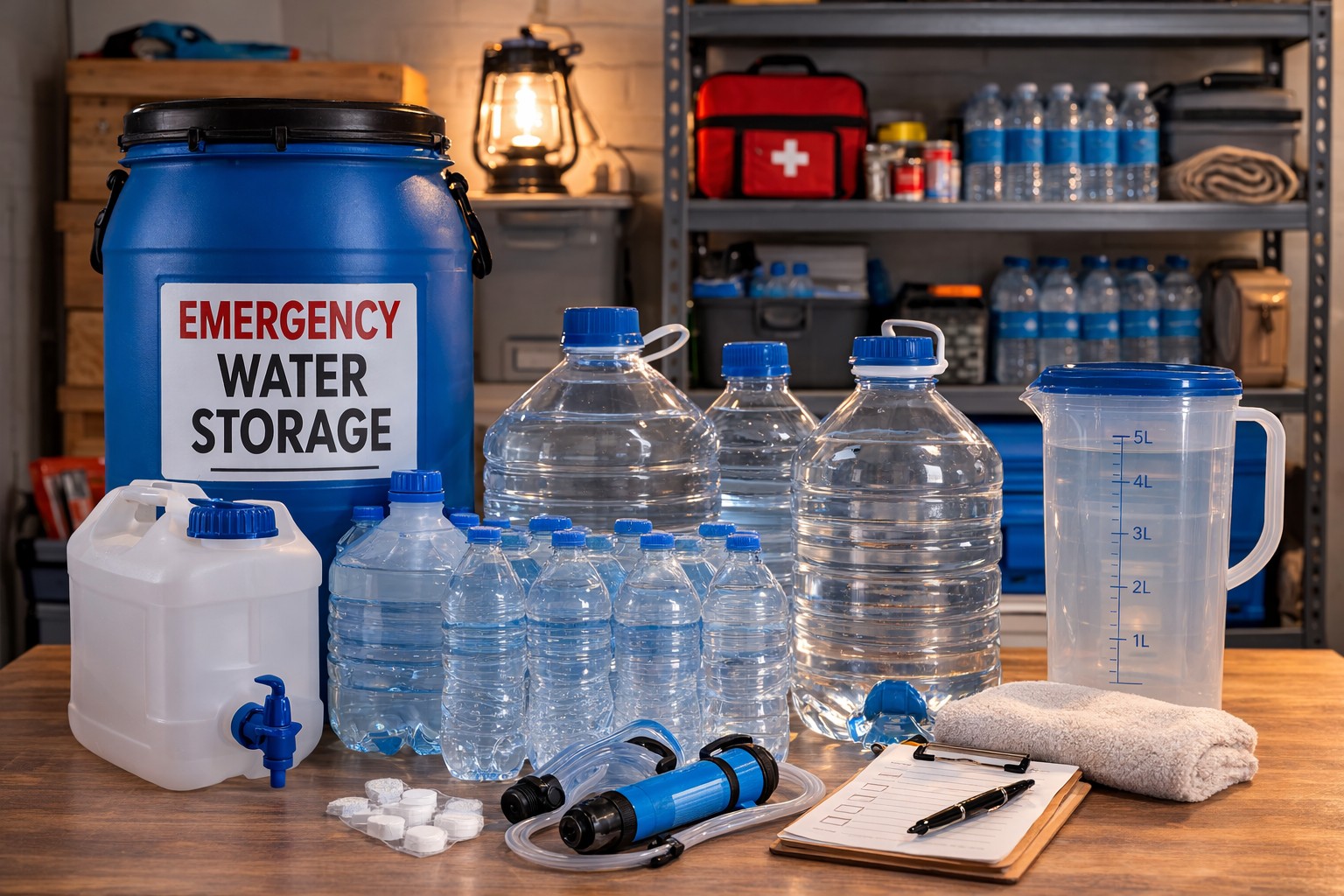
Water can be stored using a variety of containers designed for safe, long-term storage. Common options include commercially bottled water, food-grade water jugs, stackable water containers, and large storage barrels designed specifically for emergency preparedness.
When selecting storage containers, it is important to use containers that are labeled as food-grade and intended for potable water. Properly sealed containers stored in cool, dark locations help prevent contamination and maintain water quality for longer periods.
Water should also be purified if there is any risk of contamination, using reliable emergency purification methods.
Choosing the right containers is critical—compare the best options for durability, capacity, and long-term storage.
Where to Store Emergency Water
Emergency water should be stored in cool, dark locations where containers are protected from heat, sunlight, and potential contamination. Basements, storage rooms, closets, and garage shelving areas are common locations used for household water storage.
It is also helpful to distribute water supplies in more than one location. Storing some water indoors and some in alternate storage areas can help ensure access if part of the home becomes inaccessible during an emergency.
Rotating Stored Water
Stored water should be checked and rotated periodically to maintain quality. Commercially bottled water can often remain usable for long periods, while water stored in household containers may benefit from occasional replacement depending on storage conditions.
Many households choose to review their emergency water supplies every six to twelve months. During these checks, containers can be inspected for leaks or contamination, and water can be replaced if necessary to maintain a dependable emergency supply.
Stored water must be maintained over time—implement a simple rotation and maintenance system to keep your supply safe and ready.
Once your storage system is set up, the next step is ensuring your water remains safe and usable over time. Continue building your system by integrating purification methods and long-term maintenance practices.
Return to the Water Systems for Long-Term Disruption Planning overview to keep your emergency water planning aligned with the rest of your preparedness system.