Home Perimeter Security Strategy for Emergency Preparedness
A strong perimeter security strategy is one of the most effective ways to protect your home during emergencies, grid failures, and civil unrest. By securing the outer boundary of your property, you create distance, visibility, and time—three critical advantages when normal security systems and emergency services are unavailable.
This guide outlines a layered perimeter security approach using lighting, surveillance, detection, and physical deterrents. Each layer works together to reduce risk, improve awareness, and strengthen your ability to protect your household during extended disruptions.
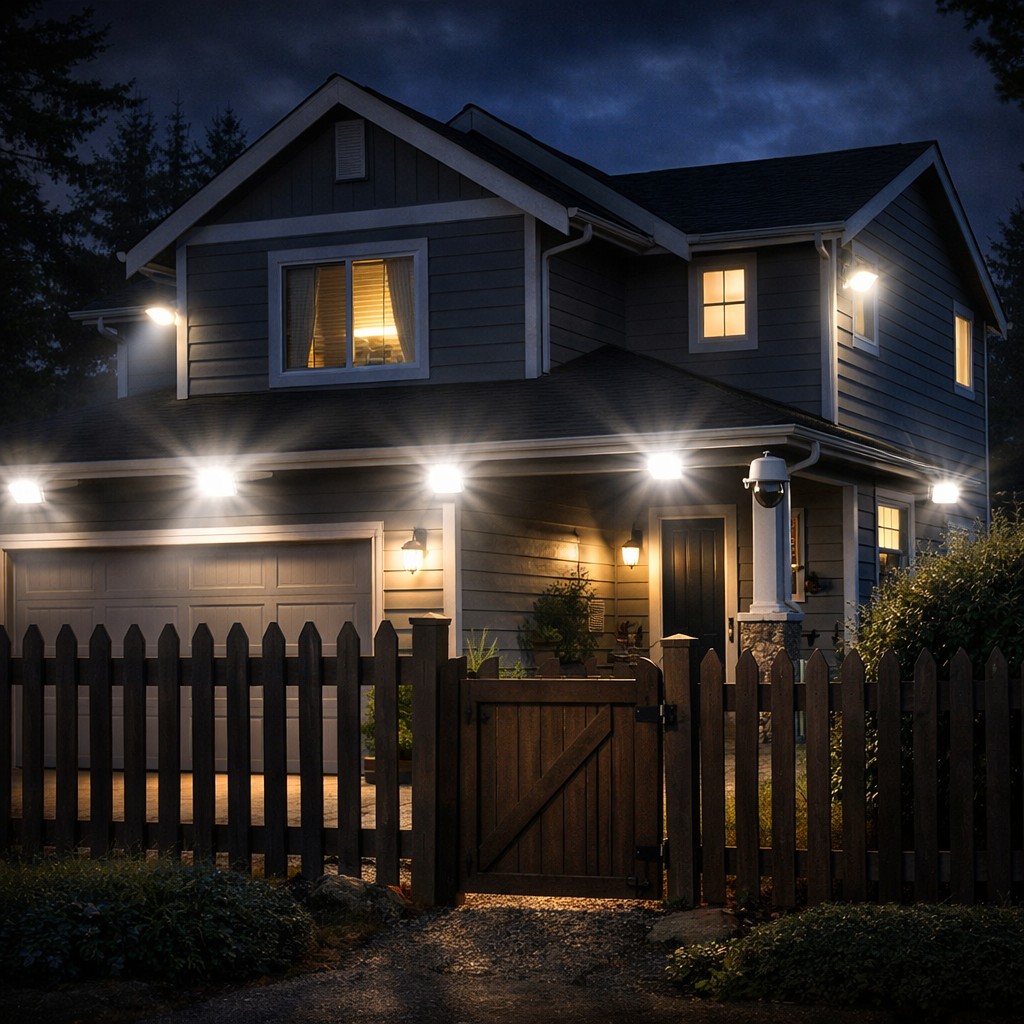
Layered Perimeter Security Strategy
Effective perimeter security is built in layers rather than relying on a single solution. Lighting, surveillance, detection, and physical barriers all serve different roles. When combined, they create a system that deters threats, identifies activity, and gives you time to respond appropriately.
Perimeter Lighting for Visibility and Deterrence
Strategic lighting should focus on entry paths, corners of the home, and areas with limited natural visibility. Motion-activated lighting is especially effective because it immediately draws attention to movement while conserving energy. A well-lit perimeter reduces hiding spots and increases overall awareness of activity around your home.
Surveillance and Monitoring Systems
Surveillance systems provide continuous visibility around your property. Cameras allow you to monitor activity in real time or review recorded footage, helping you identify patterns and detect potential threats before they escalate.
Camera Placement and Coverage
Proper camera placement is critical for effective monitoring. Focus on entry points, driveways, and areas where visibility is limited. Overlapping coverage helps eliminate blind spots and improves overall awareness.
Real-Time Monitoring vs Recording
Some systems provide live monitoring, while others focus on recording activity for later review. Combining both approaches ensures that you can respond immediately while also maintaining a record of events.
Detection and Early Warning Systems
Detection systems provide alerts when activity occurs around your property. This layer acts as an early warning system, allowing you to respond before a situation develops further.
Motion Sensors and Alerts
Motion sensors can detect movement in key areas and trigger alerts or lighting. These systems are especially useful for monitoring spaces that are not always visible from inside the home.
Audible and Silent Alerts
Some systems use audible alarms to deter intruders, while others send silent notifications directly to your device. Using a combination of both provides flexibility depending on the situation.
Physical Barriers and Property Control
Physical barriers help define and protect the perimeter of your property. These measures increase the effort required to access your home and can deter unwanted activity before it reaches your structure.
Fencing and Gates
Fencing and controlled access points help establish clear boundaries. Even simple barriers can influence movement patterns and reduce direct access to your home.
Landscaping for Security
Landscaping can be used to improve visibility and limit hiding spots. Keeping areas clear around windows, walkways, and entry paths enhances awareness and reduces vulnerability.
Integrating Perimeter Security Into Your Overall System
Perimeter security is the outer layer of your home security system. It works together with entry-point protection and response planning to create a complete and effective defense strategy.
To understand how perimeter security fits into a layered approach, see Home Security Systems for Emergency Preparedness for a complete overview of building a reliable home defense system.