Inverter Generators (2,000–3,500W): Quiet Backup Power for Essential Home Use
Inverter generators provide a quieter and more efficient alternative to traditional fuel generators. They are designed to deliver stable power for essential devices while reducing noise and fuel consumption.
This page supports the Emergency Power Systems plan by explaining how inverter generators fit into a home backup power strategy. Instead of focusing on specific models, this guide shows when and how these systems are most effective during outages.
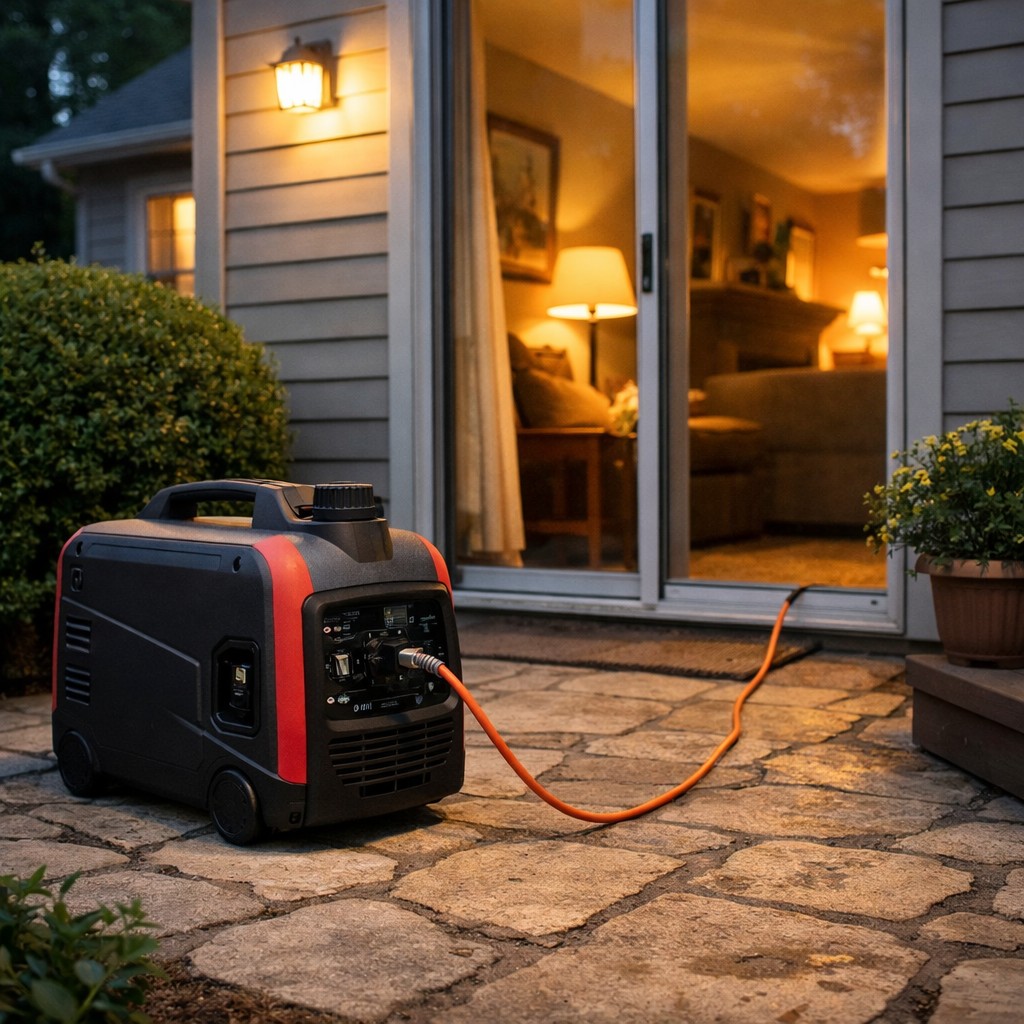
What Is an Inverter Generator?
An inverter generator is a fuel-powered system that produces electricity using a gasoline engine and advanced electronics to deliver stable, consistent power. These systems are designed to safely run sensitive devices such as electronics, appliances, and communication equipment.
Compared to traditional generators, inverter generators adjust their engine speed based on power demand. This results in quieter operation, improved fuel efficiency, and more reliable output for essential household devices.
Inverter generators must always be operated outdoors, away from doors and windows, to prevent dangerous carbon monoxide exposure. They are quieter than traditional generators, but they are not safe for indoor use.
How Inverter Generators Work
Inverter generators produce electricity by first generating AC power, converting it to DC, and then inverting it back to clean, stable AC output. This process allows them to deliver consistent power that is safe for sensitive electronics.
Because they adjust engine speed based on demand, inverter generators run more efficiently and produce less noise than traditional generators. This makes them well suited for residential use where quieter operation is important.
When Inverter Generators Make Sense
Inverter generators are a strong option for households that need reliable power for essential devices while maintaining lower noise levels. They are especially useful in residential areas where traditional generators may be too loud or disruptive.
Best Use Cases
• Powering essential appliances during outages
• Running sensitive electronics safely
• Situations where quieter operation is important
• Supplemental power alongside other backup systems
While quieter and more efficient, inverter generators still rely on fuel and require proper outdoor placement and ventilation to operate safely.
How Inverter Generators Fit Into Your Backup Power Plan
Inverter generators are most effective when used as part of a broader backup power strategy. They can provide reliable power for essential loads while complementing battery-based systems such as solar generators or portable power stations.
For many households, a layered approach works best. Battery systems can handle quiet, indoor power needs, while inverter generators can be used to recharge batteries or support higher-demand devices during extended outages.
To build a complete system, start with the Emergency Power Systems for Home Preparedness overview and evaluate your energy needs using the Solar Generator Capacity Guide.
Choosing the Right Backup Power Strategy
Inverter generators provide a practical balance between portability, efficiency, and performance for essential household power needs. They are particularly effective when noise, fuel efficiency, and stable power output are important considerations.
When combined with battery-based systems and proper planning, inverter generators become part of a resilient, layered approach to maintaining power during outages.
Return to the Emergency Power Systems overview to continue building your complete backup power plan.