Rainwater Collection Basics
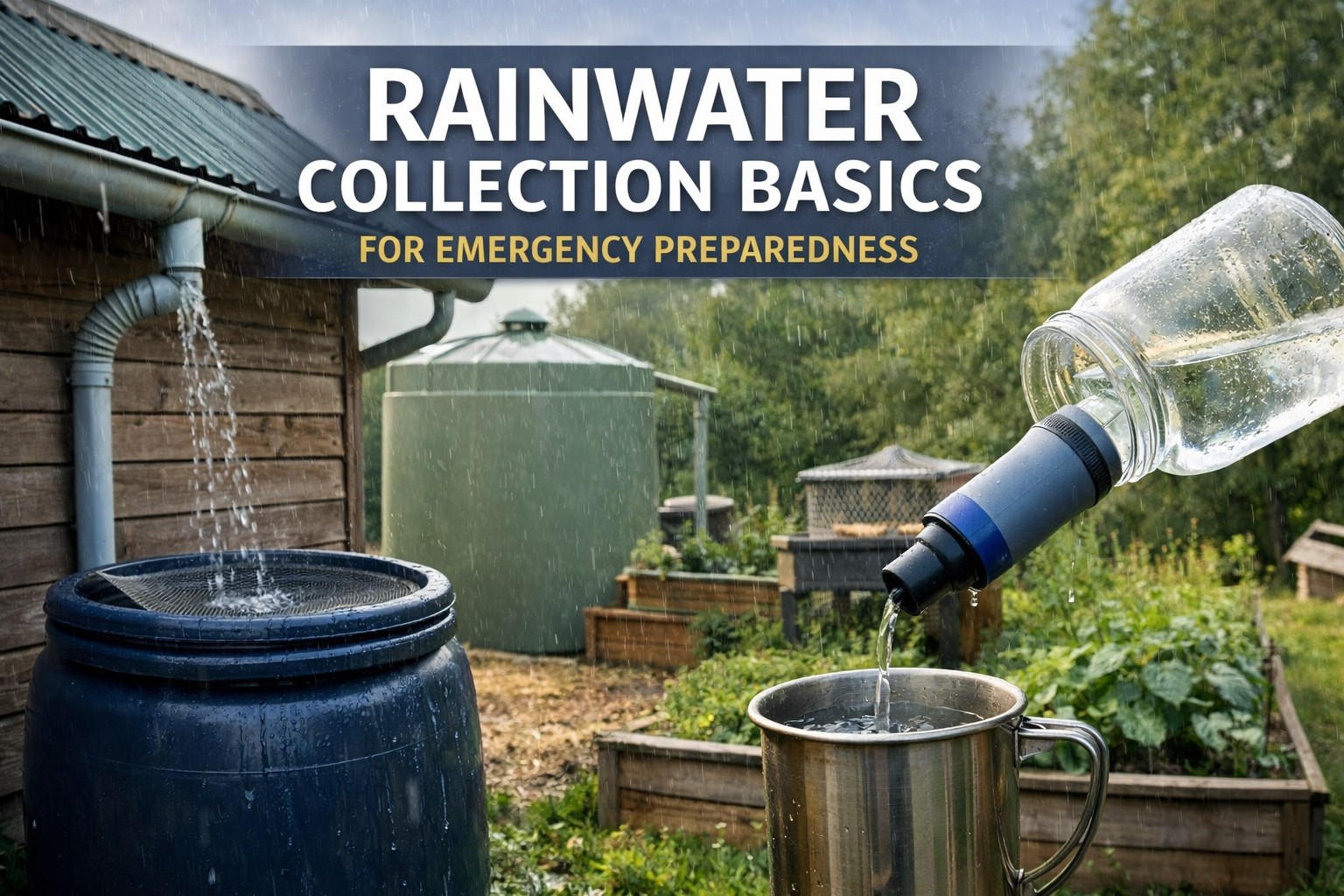
Rainwater collection can supplement stored water and reduce dependence on municipal systems during disruption. While it should not be treated as a guaranteed primary source, it can extend household water continuity when implemented with realistic expectations, proper storage, and appropriate treatment. Collected rainwater must be stored properly to remain usable—learn how to build a complete water storage system to support your collection setup.
Rainwater collection provides a renewable water source when stored supplies run low or become insufficient. As part of a complete household water system, it extends your ability to maintain access to water beyond what you have stored.
This page explains how to capture, store, and integrate rainwater into your preparedness plan safely and effectively.
Why Rainwater Collection Can Support Household Continuity
Rainwater collection provides a decentralized supplemental source that can extend stored water reserves and support non-potable uses. During disruption, it can reduce pressure on stored water supplies and create additional treatment opportunities when combined with filtration and disinfection methods.
Potential benefits include:
• Supplemental water during supply interruptions
• Reduced reliance on stored reserves
• Support for sanitation and non-potable uses
• Ability to treat collected water for drinking when necessary
• Passive collection with minimal energy requirements
Core Rainwater Collection System Components
Catchment & Conveyance (Roof + Gutters)
The catchment surface and gutter system determine how effectively rainwater is collected and directed toward storage. Roof material, cleanliness, and gutter condition influence water quality and collection efficiency.
Key considerations include:
• Roof material and contamination potential
• Gutter cleanliness and debris management
• Downspout routing and collection points
• Seasonal maintenance requirements
• First-flush diversion potential
First-Flush & Debris Control
The first portion of rainwater runoff often contains higher debris and surface contaminants. First-flush and debris-control measures reduce sediment load and improve downstream filtration performance by keeping storage water cleaner.
Common debris-control approaches include:
• Leaf screens and gutter guards
• First-flush diverters
• Sediment traps or inline screens
• Periodic gutter maintenance
• Visual inspection after storms
Storage & Containment
Collected rainwater must be stored in containers that protect water quality and limit contamination. Covered storage, appropriate materials, and controlled access reduce biological growth and improve downstream treatment reliability.
Key storage considerations include:
• Covered containers to limit contamination
• Opaque materials to reduce algae growth
• Overflow management during heavy rainfall
• Mosquito and pest prevention
• Integration with existing water storage systems
Treatment & Safe Use
Rainwater should be treated according to intended use and local conditions. Non-potable uses may require minimal treatment, while drinking water typically requires filtration and disinfection. A layered approach improves safety when source quality is uncertain. Rainwater may contain contaminants depending on collection conditions—implement a reliable purification plan to ensure collected water is safe for use.
Treatment considerations include:
• Intended use (potable vs non-potable)
• Filtration requirements before disinfection
• Storage sanitation after treatment
• Seasonal water quality variation
• Integration with household treatment methods
Realistic Expectations for Rainwater Collection
Rainwater collection is best viewed as a supplemental layer rather than a guaranteed primary supply. Seasonal rainfall patterns, storage capacity, and treatment capability all influence reliability. Households benefit most when rainwater collection is integrated with stored water, filtration, and treatment planning.
Rainwater collection expands your available water supply, but it works best when integrated into a complete system. Continue building your plan by connecting your collection setup to storage, purification, and long-term water management strategies.
For storage and treatment guidance, review the Water Storage Containers and Water Treatment Methods pages within the Water Systems plan.