Portable Power Stations for Emergency Preparedness
Portable power stations provide a compact and versatile way to supply electricity during outages and emergencies. These systems use rechargeable batteries to power devices such as phones, radios, lights, and small appliances without the noise or fuel requirements of traditional generators. For preparedness planning, portable power stations offer a flexible option for maintaining essential electronics and communication equipment when grid power is unavailable.
Portable power stations provide a flexible and portable backup power option for maintaining essential devices during outages. They are especially useful for short-term disruptions, targeted power needs, and situations where mobility or simplicity is important.
This page explains how portable power stations work, when to use them, and how they fit into your overall emergency power system.
How Portable Power Stations Work
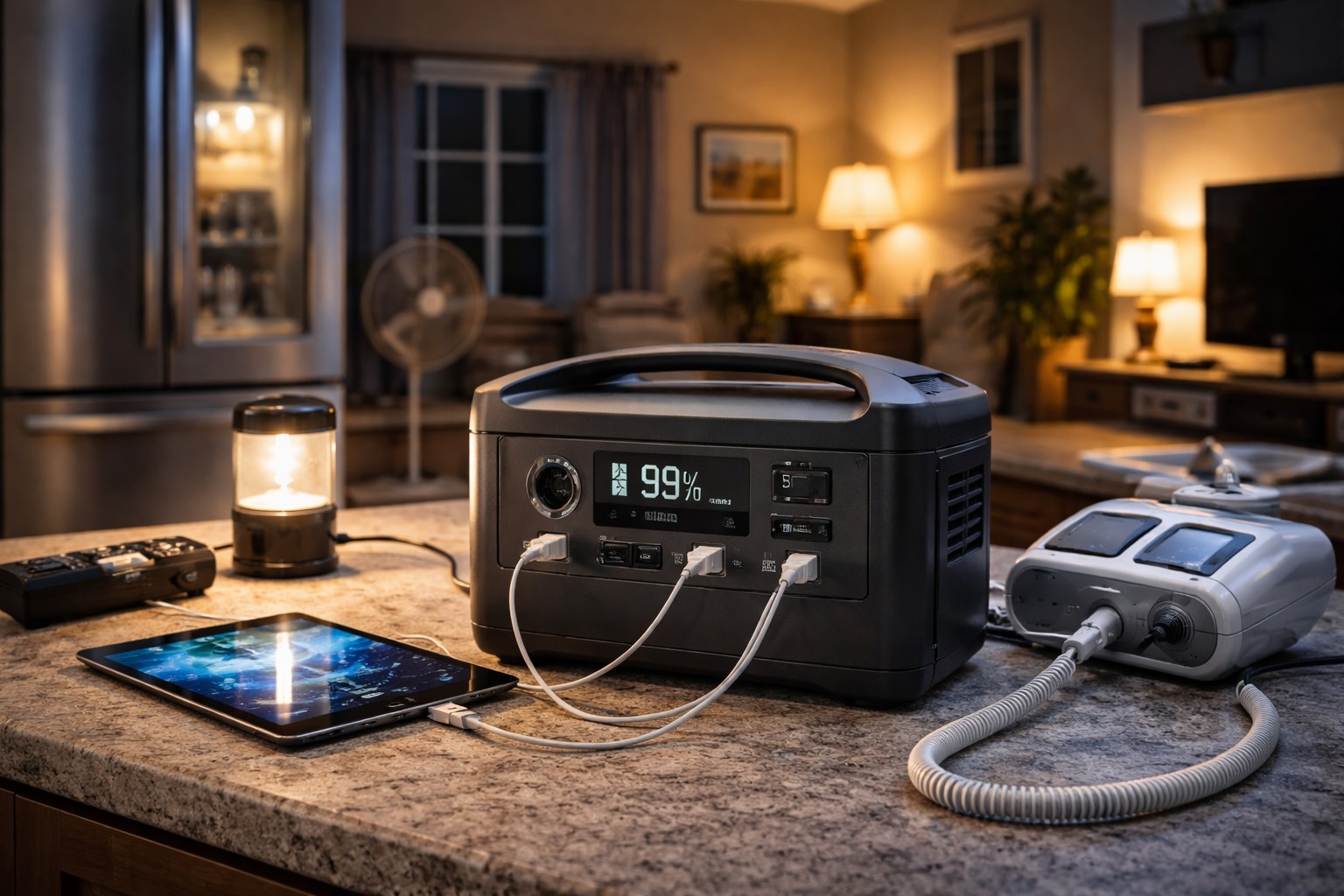
Portable power stations store electrical energy in rechargeable batteries and deliver that energy through built-in outlets and ports. Most units include AC outlets for household devices as well as USB ports for phones, radios, and other small electronics. The batteries can typically be recharged through wall outlets, vehicle chargers, or solar panels, allowing the systems to remain useful during extended outages.
Why Portable Power Stations Are Valuable for Emergency Preparedness
Portable power stations are valuable during emergencies because they provide immediate electricity without requiring fuel or complicated setup. Households can use them to keep phones charged, power emergency radios, run lights, and support other small devices that maintain communication and situational awareness during disruptions. Their portability also allows them to be moved easily between rooms or taken along during evacuations.
Key Features to Evaluate in Portable Power Stations
Battery capacity determines how much energy a portable power station can store and deliver to your devices. It is usually measured in watt-hours (Wh). Larger capacities allow the system to power devices for longer periods, which can be important during extended outages. When planning for emergency use, households should consider how long they need to operate essential devices such as radios, phones, lighting, or medical equipment.
Output Power
Output power describes how much electricity the power station can deliver at one time. This is typically measured in watts. Systems with higher output ratings can operate larger devices such as refrigerators, small appliances, or power tools. When evaluating a portable power station for emergency preparedness, it is important to ensure that the unit can handle the combined power requirements of the devices you plan to run.
Charging Options
Portable power stations can typically be recharged in several ways, including standard wall outlets, vehicle charging ports, and solar panels. Multiple charging options increase flexibility during emergencies because households are not dependent on a single power source. Solar charging can be particularly valuable during extended outages when grid electricity may not be available.
Portability
Portability determines how easily a power station can be moved and positioned where electricity is needed. Smaller units are lightweight and convenient for charging phones, radios, and lighting devices, while larger systems may include handles or wheels to support higher-capacity batteries. Portable designs allow households to move power between rooms or take the system with them during evacuations or outdoor situations.
How to Choose the Right Size Portable Power Station
Choosing the right portable power station depends on how much electricity your household needs and which devices you plan to operate during an emergency. Battery capacity, output power, charging speed, and portability all play important roles in determining which systems will perform best during outages or disruptions.
To explore recommended models and compare their capabilities, continue to our guide on the Best Portable Power Stations for Emergency Preparedness. That page reviews several popular systems and highlights the features that matter most for household preparedness.
Return to the Emergency Power Systems for Home Preparedness guide to continue building a complete household backup power strategy.