Best Foods for Long-Term Emergency Storage
Choosing the right foods is one of the most important decisions when building a long-term emergency food supply. Some foods remain safe and nutritious for years when stored properly, while others spoil quickly or lose quality over time. Understanding which foods store well helps households build a dependable food reserve that can support them during emergencies.
Long-term food storage typically focuses on shelf-stable foods that provide reliable calories, balanced nutrition, and extended shelf life. By selecting foods that store well and are easy to prepare, households can create an emergency food supply that remains practical and usable during disruptions.
This page expands the Food Systems plan by identifying staple foods that store well for long periods of time. Understanding which foods offer long shelf life, strong calorie value, and practical storage characteristics helps households build a reliable emergency food reserve.
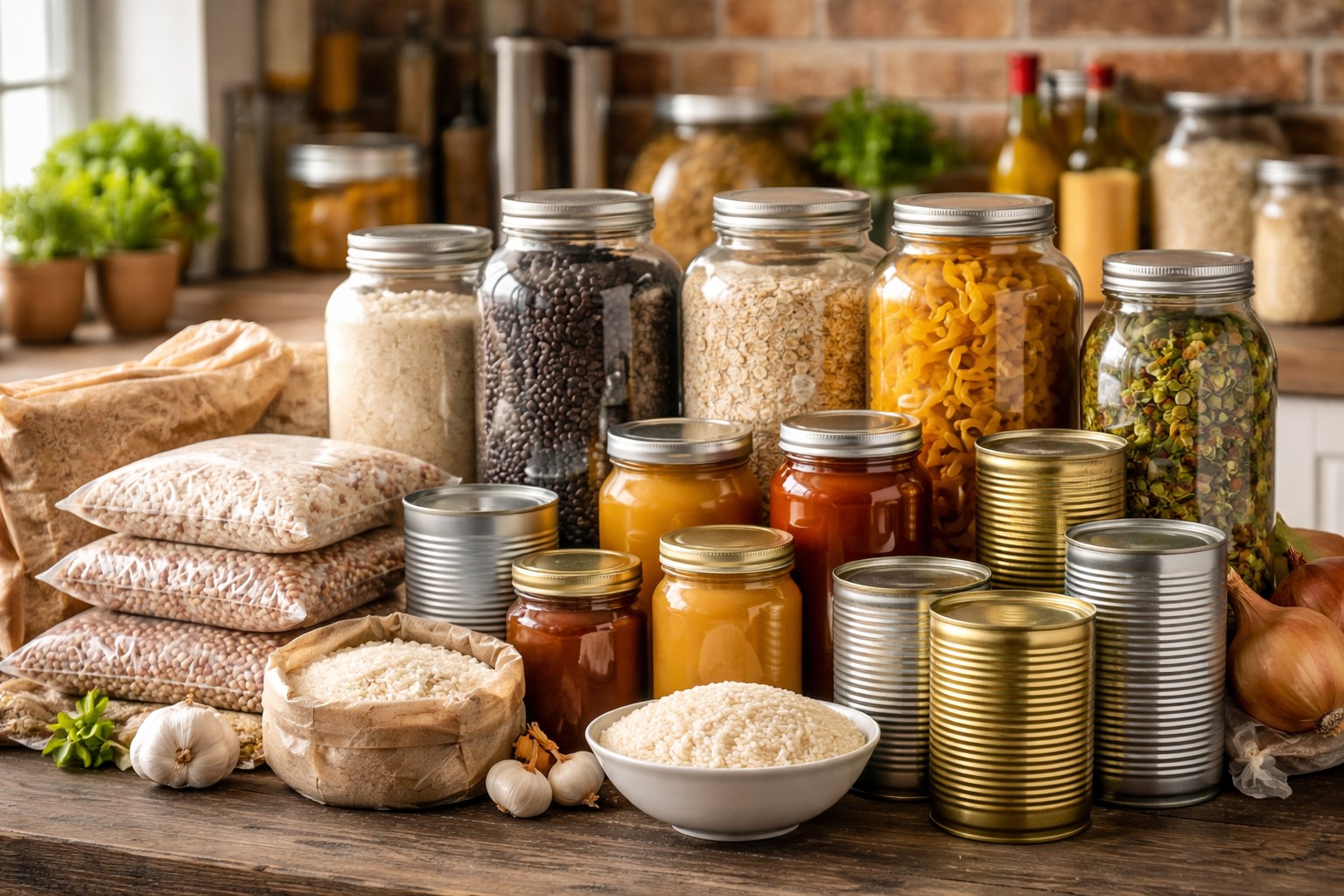
Grains and Carbohydrate Staples
Grains and other carbohydrate staples often form the foundation of long-term emergency food storage because they provide reliable calories and store well for extended periods. Foods such as rice, oats, wheat, pasta, and other grain products are commonly included in preparedness food systems due to their affordability, versatility, and long shelf life when stored properly.
These foods can be used in a wide range of meals and can serve as the primary calorie source in many emergency food plans. When packaged in sealed containers or stored in appropriate conditions, many grain products can remain usable for years.
Protein-Rich Foods for Long-Term Storage
Protein-rich foods play an important role in long-term emergency food storage because they help maintain energy, muscle function, and overall nutrition during disruptions. Common preparedness staples include dried beans, lentils, canned meats, canned fish, peanut butter, and other shelf-stable protein sources.
These foods complement grain-based staples and help create more balanced emergency meals. When stored properly, many protein foods can remain usable for long periods and provide essential nutrients that support health during extended emergencies.
Fats and Calorie-Dense Foods
Fats and calorie-dense foods are important in emergency food storage because they provide concentrated energy and help make stored foods more satisfying and nutritious. Foods such as cooking oils, peanut butter, nuts, honey, and other calorie-dense items are often included in preparedness food reserves.
These foods can enhance the flavor and nutritional balance of meals built around grains and proteins. Although some fats have shorter shelf lives than dry staples, storing moderate amounts of calorie-dense foods can significantly improve the overall quality and energy value of emergency meals.
Combine Food Types for a Balanced Emergency Supply
Building a reliable emergency food supply usually involves combining several types of foods that work together to provide calories, nutrition, and meal flexibility. Grains and carbohydrate staples supply the majority of calories, protein-rich foods support nutrition and energy, and fats help increase calorie density and improve meal satisfaction.
By storing a balanced mix of these food types, households can develop a long-term food reserve that supports both nutrition and practicality during emergencies. A well-rounded food storage system helps ensure that emergency supplies remain useful, nutritious, and adaptable for a variety of situations.
Return to the Food Systems for Long-Term Infrastructure Disruptions overview to keep your emergency food planning aligned with the rest of your preparedness system.