Best Two-Way Radios for Emergency Communication
Two-way radios are one of the most reliable communication tools during emergencies when cellular networks fail or become unreliable. Unlike phones, they allow direct communication between users without relying on external infrastructure.
The challenge is choosing the right radio. Range, power output, battery life, and signal reliability all determine how well a radio performs in real-world conditions. Selecting the wrong model can leave you unable to communicate when it matters most.
This guide compares the best two-way radios for emergency communication and explains how to choose the right system based on your needs.
Use the comparison below to evaluate how different two-way radios perform across range, power output, durability, and real-world communication scenarios. The goal is not to choose the most powerful radio, but the one that will work reliably under your specific conditions.
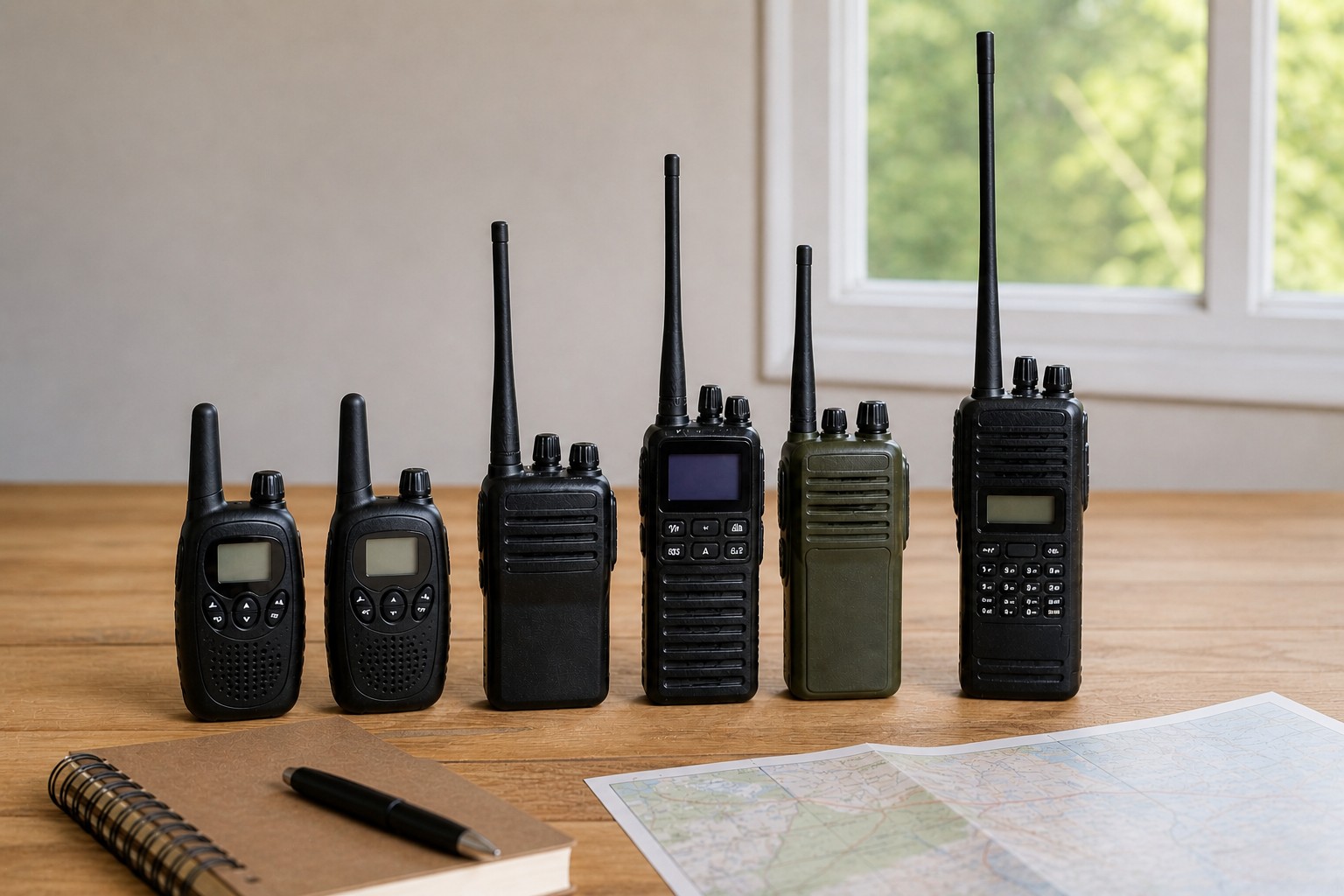
When Two-Way Radios Are Critical in an Emergency
Two-way radios are most effective when direct, local communication is required and other systems are unavailable or unreliable. They allow households to coordinate movement, maintain contact, and share information without relying on cellular networks or internet infrastructure.
They are especially useful during evacuations, search situations, neighborhood coordination, or when family members are separated within a defined area. In these scenarios, radios provide immediate communication without delays or network congestion.
Their strength is not long-distance communication, but reliable communication within a controlled range where coordination is essential.
How Two-Way Radios Work in Real-World Conditions
Two-way radios rely on direct signal transmission, which is affected by terrain, buildings, and environmental conditions. While manufacturers advertise maximum range, real-world performance is often significantly lower.
Urban environments, dense structures, and uneven terrain can reduce range dramatically. Open areas provide better performance, but communication is still limited by line-of-sight and signal interference.
Understanding these conditions is critical when selecting a radio that will perform reliably during an emergency.
How to Choose Two-Way Radios for Emergency Communication
Choosing the right two-way radio starts with understanding how it will be used during an emergency. Range determines communication distance, while power output and environment affect signal reliability.
For most households, the goal is maintaining dependable communication within a local area. This requires radios that balance usability, battery life, and consistent performance rather than focusing on maximum advertised range.
Battery strategy is equally important. Radios must remain operational during extended outages, which requires planning for rechargeable systems, spare batteries, or alternative charging methods.
The best radio is the one that will maintain communication when conditions are unpredictable and systems are under stress.
Limitations of Two-Way Radios in Emergency Scenarios
Two-way radios are not unlimited in range or capability. Most consumer radios rely on line-of-sight transmission, which means obstacles such as buildings, terrain, and environmental conditions can significantly reduce performance.
They are also dependent on battery life. Without a recharge plan, communication can fail during extended outages.
For broader communication needs, radios should be used as part of a layered system that includes additional communication methods and predefined coordination strategies.
Best Two-Way Radios for Emergency Communication
The following two-way radios are selected based on real-world performance, reliability, and suitability for emergency communication scenarios. Each option supports different use cases depending on range, environment, and communication needs.
| Model | Type (FRS / GMRS) | Realistic Range | Battery Type | Durability | Best Use Case |
|---|---|---|---|---|---|
| Midland GXT1000VP4 | GMRS | 1–5 miles typical | Rechargeable + AA backup | Good | Extended range and outdoor coordination |
| Motorola T600 H2O | FRS | 0.5–2 miles typical | Rechargeable | Excellent (water-resistant) | Severe weather and outdoor use |
| BaoFeng UV-5R | GMRS / Amateur-style | 1–5+ miles typical | Rechargeable | Moderate | Advanced users and flexible communication |
| Cobra ACXT645 | FRS | 0.5–2 miles typical | Rechargeable | Good | Simple household communication |
| Radioddity GM-30 | GMRS | 1–5 miles typical | Rechargeable | Good | Balanced performance and affordability |
Models and specifications may vary slightly based on availability. Prices and product details are subject to change. Always review current product information before making a purchase decision.
Recommended Two-Way Radios by Use Case
Midland GXT1000VP4
Best for extended range and outdoor coordination. This radio performs well in semi-rural and outdoor environments where dependable communication over longer distances is important.
Motorola T600 H2O
Best for severe weather and durability. Its water-resistant construction and NOAA weather alerts make it well-suited for storm conditions and harsh environments.
BaoFeng UV-5R
Best for advanced users and flexible communication. This radio offers expanded capability and configuration options for users familiar with radio setup and operation.
Cobra ACXT645
Best for simple household communication. It provides dependable short-range communication with minimal setup, making it practical for family coordination.
Radioddity GM-30
Best for balanced performance and affordability. This radio offers a strong balance between usability, communication range, and overall value.
How Two-Way Radios Fit Into an Emergency Communication Plan
Two-way radios are a critical component of a complete communication plan. They provide direct, reliable communication when cellular systems fail, allowing households to coordinate actions and maintain contact during emergencies.
When combined with emergency radios, backup power systems, and predefined communication strategies, they become part of a layered communication system that improves reliability under a wide range of conditions.
The most effective emergency communication plans do not rely on a single device or method. Instead, they combine multiple systems so communication can continue even when primary methods fail.
FRS radios are often sufficient for short-range neighborhood communication, while GMRS radios are better suited for larger properties, rural areas, or situations where terrain and distance become more challenging. Choosing the correct type depends more on environment and communication needs than advertised range claims.
Return to the Communication Systems for Long-Term Disruption Planning overview to continue building your complete communication strategy.