Household Water Storage Containers for Disruption Planning
Water storage containers for emergency preparedness need to do more than hold water. They need to protect stored water from light, heat, contamination, leaks, poor handling, and forgotten rotation. The right container depends on where it will be stored, how much water the household needs, how often it will be moved, and whether it is meant for daily backup, short outages, or longer supply disruptions.
This guide focuses on choosing practical household water storage containers for disruption planning: small containers for daily access, larger containers for reserve volume, portable containers for short-term movement, and storage methods that make water easy to label, inspect, rotate, and actually use when normal supply is interrupted.
What Makes a Water Storage Container Reliable?
A reliable water storage container protects drinking water before you need it, not after a disruption has already started. The container should be food-grade, easy to clean, simple to fill, strong enough for its storage location, and practical enough that your household can move, dispense, inspect, and rotate the water without turning the job into a yearly wrestling match.
Food-Grade Materials
Use containers made for drinking water or food contact, not random storage bins, utility buckets, trash cans, or repurposed chemical containers. Water can pick up odors, residues, and contaminants from the wrong materials. For household emergency storage, food-grade plastic water containers, sealed water jugs, approved water barrels, and commercially bottled water are usually the safest starting points.
Strong Seals and Secure Lids
A water container is only as dependable as its lid, cap, gasket, or spigot. Weak seals can allow leaks, dust, pests, and contamination, especially when containers are stored in basements, garages, closets, or utility rooms. Before trusting a container for emergency water storage, fill it, close it, wipe it dry, and check it again later. A slow leak is much easier to find before it is sitting above a box of things you did not want watered.
Practical Size and Weight
Water gets heavy quickly. One gallon weighs a little over 8 pounds, which means a 5-gallon container weighs more than 40 pounds before you count the container itself. Smaller containers are easier to carry, pour, and rotate. Larger containers provide better reserve volume but usually need a stable storage spot and a practical dispensing method. Choose container sizes your household can actually move and use, not just sizes that look efficient on a shelf.
Easy Cleaning and Inspection
Good water storage containers should be simple to clean and easy to inspect. Wide openings make cleaning easier, while narrow openings can make it harder to see residue, damage, or growth inside the container. Before storing water, check for cracks, odors, cloudy plastic, damaged threads, weak handles, worn spigots, or anything that would make the container harder to trust later.
Storage Location Compatibility
The best container for a pantry shelf may not be the best container for a basement floor, garage corner, vehicle, apartment closet, or utility room. Match the container to the storage location. Stackable containers need strong sides and stable lids. Large barrels need level floors and room for a pump or spigot. Portable jugs need handles that will not fail when the container is full. A good water plan respects gravity, floor space, and human backs.
Best Types of Water Storage Containers for Emergency Preparedness
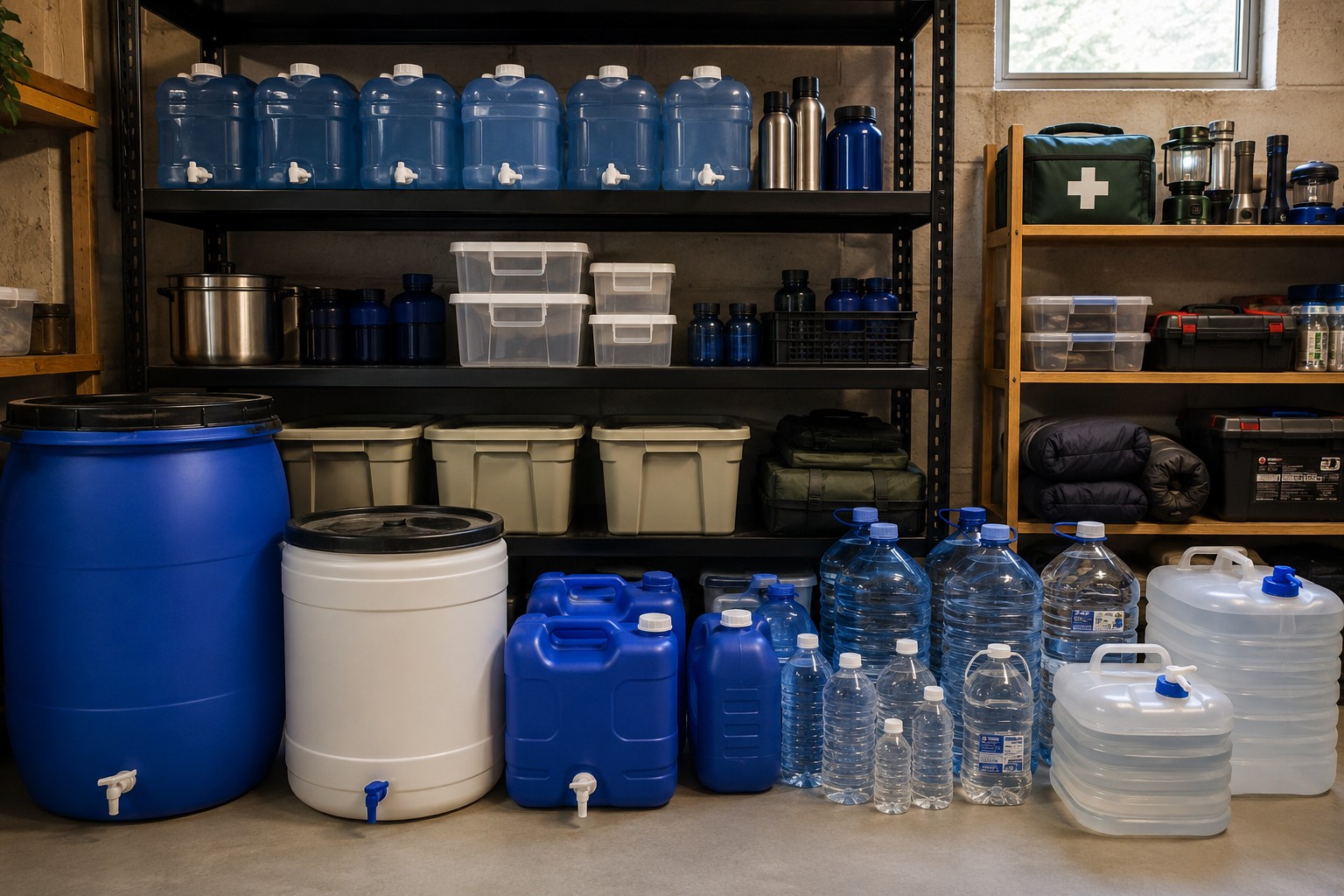
Different water storage containers solve different problems. A strong household water plan usually uses more than one type: small containers for easy daily access, medium containers for practical storage and rotation, large containers for reserve volume, and portable containers for moving water when the situation does not stay politely in one place.
Small Water Bottles and One-Gallon Containers
Small bottles and one-gallon containers are useful for daily access, quick distribution, rotation, and short-term convenience. They fit pantry shelves, closets, vehicles, and grab-and-go areas better than large containers. They are also easier for children, older adults, and anyone with limited strength to carry and pour. Their weakness is volume: they take more shelf space per gallon and create more individual containers to inspect and rotate.
Five-Gallon Water Jugs
Five-gallon water jugs are a practical middle ground for household emergency water storage. They hold enough water to matter, but they are still small enough for many adults to move with care. They work well on sturdy shelves, basement storage racks, utility room floors, or dedicated water storage areas. Use containers with strong handles, tight caps, and a dispensing method that does not require tipping a full jug every time someone needs water.
Stackable Water Storage Containers
Stackable water storage containers can make better use of limited household space, especially in closets, basements, pantries, and utility rooms. They work best when the containers are designed to stack safely when full, not just when empty. Check the manufacturer’s weight limits, keep stacks low enough to remain stable, and avoid placing heavy water containers above anything that would be damaged by a leak.
Large Water Barrels and Drums
Large water barrels and drums provide serious reserve volume, but they are not casual containers. A filled 55-gallon water barrel can weigh more than 450 pounds, so it needs a level floor, a permanent storage location, and a pump or spigot for dispensing. These containers are useful for longer disruptions, larger households, or backup sanitation needs, but they should be placed before filling. Moving one afterward is how people discover new opinions about physics.
Portable Water Containers for Vehicles and Short-Term Movement
Portable water containers are useful when water may need to move with the household, vehicle, campsite, work crew, or temporary shelter setup. Choose containers with strong handles, tight caps, stable shapes, and sizes that can be lifted safely when full. These containers are not usually the best choice for storing large household reserves, but they are valuable for flexibility when a disruption changes location or routine.
How Much Water Storage Container Capacity Do You Need?
Start with water needs before choosing containers. A household can own good containers and still store too little water if the plan is based on shelf space instead of people, days, pets, cooking, hygiene, and basic sanitation. As a simple baseline, plan for at least one gallon per person per day for drinking and basic needs, then add more where heat, medical needs, pets, infants, stored dry food, or cleanup demands make water use higher.
Start With People and Days
Multiply the number of people in the household by the number of days you want to cover, then use that number as your minimum stored-water target. A two-person household planning for seven days needs at least 14 gallons before adding pets, cooking, hygiene, or extra margin. A four-person household planning for 14 days needs at least 56 gallons. The math is simple. Finding the space is usually where the discussion gets interesting.
Add Capacity for Pets, Cooking, and Hygiene
The one-gallon-per-person baseline is a starting point, not a complete household water plan. Pets need their own supply. Dry emergency foods may require water for cooking. Basic hygiene, handwashing, dish cleanup, and sanitation can increase demand quickly. If your household depends on powdered formula, medical equipment, humidification, wound care, or regular medication routines, add extra water capacity before calling the plan complete.
Mix Small and Large Containers
Use small containers for easy access and larger containers for reserve volume. One-gallon jugs, small bottles, and portable containers are easier to carry, pour, share, and rotate. Larger containers reduce clutter and increase total storage, but they need stable placement and a way to dispense water without lifting the full weight. A balanced setup is usually more useful than relying on only one container size.
Where to Store Household Water Containers
Stored water lasts longer and stays more dependable when containers are kept in the right location. Choose cool, dark, stable storage areas away from direct sunlight, heat sources, fuel, chemicals, pesticides, cleaning products, and anything with strong odors. Water containers should also be easy to inspect, reach, and rotate. If the only way to check them is to move three boxes, a treadmill, and an old paint can, they will not get checked.
Keep Containers Cool and Dark
Heat and light can weaken containers, reduce water quality, and shorten the useful life of stored water. Basements, interior closets, utility rooms, and shaded pantry areas usually work better than hot garages, sheds, attic spaces, or sunny windows. If a storage location gets hot enough to make you avoid standing there in August, it is probably not doing stored water any favors.
Keep Water Away From Chemicals and Fuel
Do not store drinking water next to gasoline, paint, pesticides, solvents, cleaners, pool chemicals, fertilizers, or anything with strong fumes. Containers can absorb odors or become contaminated if they leak, degrade, or sit in a poor storage environment. Clean water storage should be boring, separate, and protected. That is the point.
Store Heavy Containers Low and Stable
Large water containers should be stored low, level, and stable. Water is too heavy to trust to weak shelving, wobbly racks, or awkward overhead storage. Keep barrels, drums, and heavy jugs on solid floors or sturdy lower shelves where they cannot fall, tip, or crush anything below them. A leaking container is annoying. A falling container is a different conversation.
Keep Containers Accessible for Rotation
Water storage should be easy to inspect, label, drain, refill, and rotate. Do not bury containers behind seasonal decorations, heavy boxes, or equipment that turns a simple check into a half-day excavation. If stored water is hard to reach, it will probably be ignored until the one day you need it. That is not planning. That is just hiding water from yourself.
How to Label, Clean, and Rotate Water Storage Containers
Water storage containers need a simple maintenance routine. Labeling, cleaning, and rotation keep stored water from becoming a mystery project in the back of the house. The routine does not have to be complicated, but it does need to be clear enough that someone else in the household could understand it without a lecture and a flashlight.
Label Fill Dates Clearly
Every refillable water container should have a visible fill date. Use waterproof labels, painter’s tape, or a marker that will not disappear the first time the container sweats or gets handled. Labeling helps you know what needs rotation, what was filled most recently, and which containers should be checked first during routine maintenance.
Clean Containers Before Refilling
Refillable containers should be cleaned before new water is stored, especially if they have been opened, handled, drained, or sitting empty. Follow the container manufacturer’s instructions when available. Use clean tools, clean hands, and a clean filling area. If a container smells strange, has visible residue, or cannot be cleaned properly, do not trust it for drinking water storage.
Rotate Stored Water on a Schedule
Follow the storage guidance for the water and containers you are using. Commercially bottled water should be kept sealed and stored properly. Refillable household water containers should be checked and rotated on a schedule, commonly every six months unless the container manufacturer or local guidance recommends otherwise. Rotation is not glamorous, but neither is discovering questionable water when the tap is already off.
Inspect Containers During Rotation
Each time water is rotated, inspect the container before refilling it. Look for cracks, leaks, cloudy plastic, damaged caps, worn threads, loose spigots, bad odors, discoloration, or anything that suggests the container is no longer dependable. A container that cannot be trusted should be retired from drinking water storage instead of being given one more chance to disappoint you later.
Mistakes to Avoid With Emergency Water Storage Containers
Most water storage problems come from small decisions that seemed harmless at the time: using the wrong container, storing water in a bad location, forgetting rotation, or choosing containers that are too heavy to move safely. Avoiding these mistakes keeps the water plan practical instead of impressive for one afternoon and useless six months later.
Using Non-Food-Grade Containers
Do not store drinking water in containers that were not designed for food or water use. Utility buckets, trash cans, fuel cans, chemical containers, paint buckets, storage totes, and mystery containers from the garage are not drinking water containers. Even if they look clean, residues and odors can remain in the material. Water is good at finding problems people thought they had rinsed away.
Storing Too Much Water in Containers You Cannot Move
Large water containers are useful only if the household can use them safely. A container that is too heavy to lift, pour, clean, or drain can become a problem instead of a reserve. Use large containers for stationary storage, but pair them with smaller containers, a pump, spigot, or transfer method so water can be accessed without wrestling the full weight.
Forgetting a Dispensing Method
Every large or medium water container needs a realistic way to get water out. Spigots, siphon pumps, hand pumps, transfer pitchers, or smaller refill containers can make stored water usable without lifting the full container. A 55-gallon barrel without a pump is not a water system. It is a very heavy promise.
Storing Water Near Heat, Sunlight, or Chemicals
Poor storage locations can shorten container life and reduce water quality. Avoid sunny windows, hot garages, attic spaces, furnace rooms, fuel storage, cleaning products, pesticides, paint, solvents, and strong-smelling materials. Stored drinking water should be kept cool, dark, separate, and boring. Boring is good. Boring means nothing weird is happening in the container.
Failing to Label and Rotate Stored Water
Unlabeled water containers create unnecessary uncertainty. Without fill dates, rotation reminders, or a clear storage routine, nobody knows what is current, what needs to be used, or what should be drained and refilled. Label containers when they are filled, check them on a schedule, and make rotation part of normal household maintenance instead of a mystery for future-you to solve.
Where This Fits in Your Water Preparedness Plan
Water storage containers are the stored-water layer of a broader household water system. They give the household immediate reserves when normal water service is interrupted, while filtration, purification, collection, and conservation methods provide additional support when disruptions last longer or water quality becomes uncertain. Stored water should come first because it is available immediately. Everything else works better when the household is not starting from empty.
Return to Water Systems to continue building a complete household water preparedness plan.