Long-Term Food Storage for Beginners
Long-term food storage is one of the most important parts of emergency preparedness. Natural disasters, supply chain disruptions, economic instability, and other emergencies can interrupt normal food availability, making it essential for households to maintain a reliable reserve of shelf-stable food.
For beginners, building a food storage system can feel overwhelming at first. By starting with basic staples, understanding proper storage methods, and gradually expanding supplies over time, households can create a dependable long-term food reserve that supports both short-term emergencies and extended disruptions.
This page expands the Food Systems plan by introducing the basic methods households use to store food safely for long periods of time. Understanding how to choose the right foods, store them properly, and rotate supplies helps ensure that emergency food reserves remain usable when they are needed most.
Start With Shelf-Stable Staple Foods
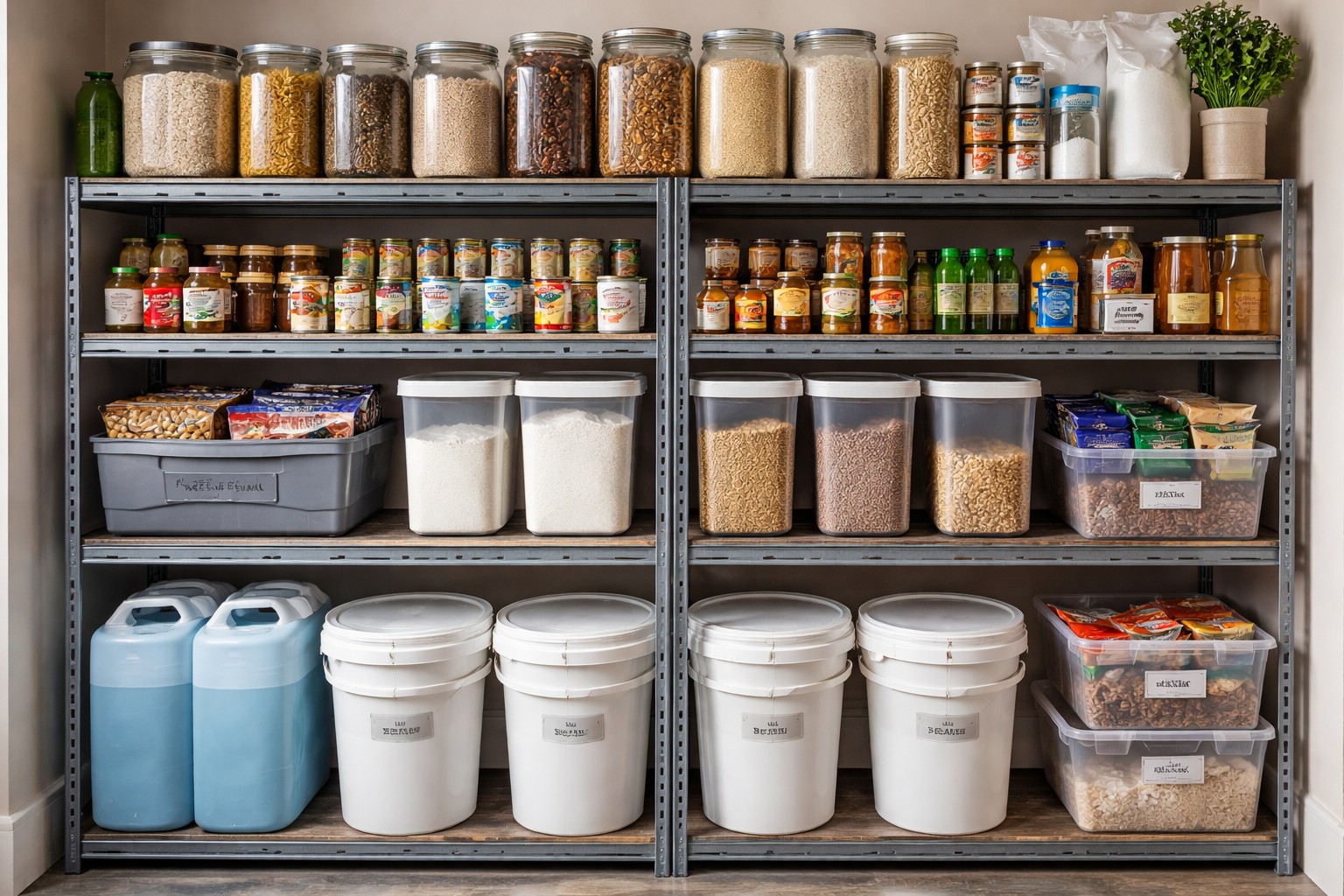
Long-term food storage usually begins with shelf-stable staple foods that provide reliable calories and long storage life. Common examples include rice, beans, oats, pasta, wheat, canned vegetables, canned meats, and other preserved foods that can remain safe to eat for extended periods when stored properly.
These foods are often chosen because they are widely available, relatively inexpensive, and easy to rotate as part of normal household meals. Building a food storage system around staple foods helps households maintain a practical and sustainable emergency food supply.
Use Proper Containers for Long-Term Storage
Proper storage containers help protect food from moisture, oxygen, light, and pests that can shorten shelf life. Many preparedness systems use food-grade buckets, sealed containers, or specialized packaging such as mylar bags combined with oxygen absorbers to extend the storage life of dry foods.
Using appropriate storage methods helps maintain food quality and reduces the risk of spoilage. When combined with proper storage conditions such as cool temperatures and low humidity, these containers allow staple foods to remain usable for many years.
Rotate Stored Food to Maintain Freshness
Food storage systems work best when stored foods are regularly rotated and used as part of normal household meals. Rotation simply means using older stored foods first and replacing them with fresh supplies. This practice helps ensure that emergency food reserves remain safe, fresh, and familiar to the household.
By incorporating stored foods into everyday cooking, households can maintain their food reserves without allowing supplies to expire or spoil. This approach also helps families become comfortable preparing meals from their emergency food supplies before a crisis occurs.
Build Your Long-Term Food Supply Gradually
For beginners, long-term food storage is usually built over time rather than all at once. Many households start with a small reserve of staple foods and gradually expand their supplies as they become more comfortable with food storage methods and meal planning.
Adding a few extra shelf-stable foods during regular shopping trips can steadily increase emergency reserves without placing a large burden on the household budget. Over time, this gradual approach can develop into a dependable long-term food supply that supports preparedness for a wide range of disruption
Return to the Food Systems for Long-Term Infrastructure Disruptions overview to keep your long-term food storage plan aligned with the rest of your preparedness system.