72-Hour Emergency Food Supply List
A 72-hour emergency food supply list is one of the most practical preparedness tools for households because it turns a broad three-day recommendation into specific meals, water, snacks, and backup food choices. Emergency management organizations often suggest maintaining at least three days of food and water in case disasters temporarily disrupt access to grocery stores, transportation systems, or utilities.
Short-term emergencies such as severe storms, power outages, earthquakes, or evacuations can make normal food access difficult. A small supply of shelf-stable foods helps ensure that households can maintain basic nutrition and energy during these situations.
This page expands the Food Systems plan by outlining the types of foods that are commonly included in a three-day emergency supply. By choosing simple shelf-stable foods that require little preparation, households can quickly assemble a basic emergency food kit designed to support short-term disruptions.
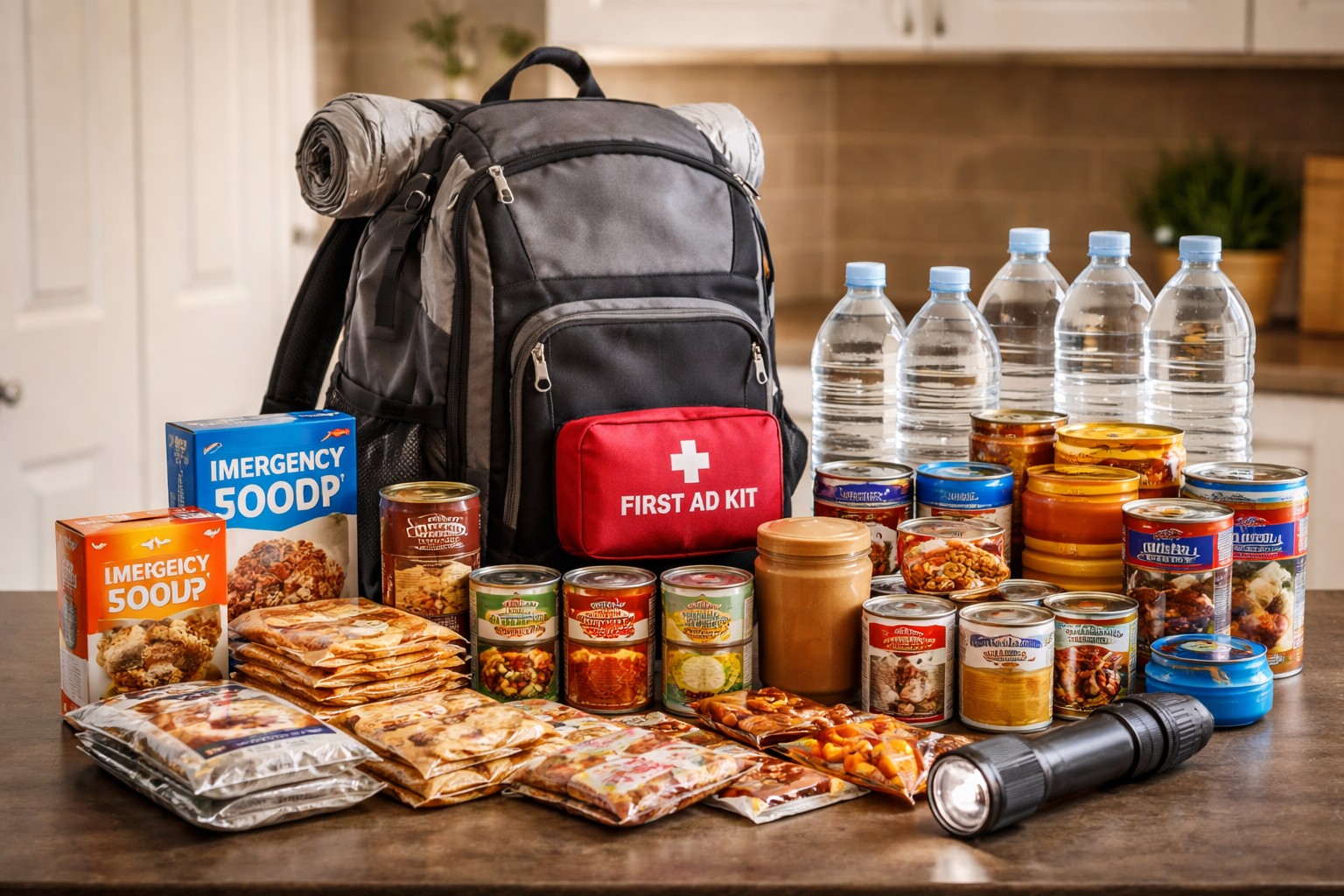
Simple Foods for a 72-Hour Emergency Supply
Foods included in a 72-hour emergency supply should be simple, shelf-stable, and easy to prepare. During short-term emergencies, access to cooking equipment, refrigeration, or full kitchen facilities may be limited. Because of this, many emergency kits include foods that can be eaten with little or no preparation.
Preparedness plans often focus on compact, calorie-dense foods such as canned goods, ready-to-eat meals, energy bars, crackers, peanut butter, and other shelf-stable items. These foods provide reliable energy while remaining easy to store and transport if evacuation becomes necessary.
Ready-to-Eat Foods
• Canned soup
• Canned pasta meals
• Canned vegetables
• Canned fruit
• Canned beans
• Ready-to-eat rice or grain packets
• Shelf-stable meal pouches
Snack and Quick-Energy Foods
Snack foods and quick-energy foods are commonly included in 72-hour emergency kits because they provide calories that can be eaten quickly with little preparation. During stressful situations or evacuations, these foods help maintain energy levels while requiring minimal effort to prepare or consume.
Many preparedness kits include compact foods such as energy bars, trail mix, crackers, peanut butter packets, and other shelf-stable snacks. These foods are lightweight, easy to store, and convenient for short-term emergencies.
Recommended Snack Foods for a 72-Hour Kit
• Energy bars
• Granola bars
• Trail mix
• Nuts
• Crackers
• Peanut butter packets
• Dried fruit
Assembling a Simple 72-Hour Food Supply
A simple 72-hour emergency food supply typically includes a combination of ready-to-eat meals, shelf-stable snacks, and calorie-dense foods that require little preparation. These foods help maintain energy levels during short-term disruptions when cooking equipment or normal kitchen facilities may not be available.
By assembling a small supply of easy-to-store foods and rotating them occasionally, households can maintain a dependable emergency food kit that supports basic nutrition during disasters, evacuations, or temporary supply interruptions.
72-Hour Emergency Food Supply Checklist
A 72-hour emergency food supply list should be practical enough to shop from, store, and use without confusion. For most households, that means planning three days of meals, snacks, drinks, and special-use items for every person in the home, then adding the tools needed to open, serve, and clean up after those foods.
Core Food Items
- Ready-to-eat meals such as canned chili, stew, soup, pasta, meal pouches, or shelf-stable bowls
- Protein foods such as tuna packets, chicken packets, salmon, peanut butter, jerky, canned beans, or protein bars
- Carbohydrate foods such as crackers, tortillas, rice cakes, granola, instant oatmeal, or shelf-stable bread
- Fruit and side items such as fruit cups, applesauce, canned fruit, pudding cups, or ready-to-eat vegetables
- Breakfast foods such as oatmeal packets, granola bars, shelf-stable milk, nut butter, or breakfast bars
- Comfort foods such as tea, coffee, cocoa, hard candy, cookies, or familiar snacks
Water and Drink Support
- Stored drinking water for each person for three days
- Extra water for pets, hygiene, and food preparation
- Shelf-stable drinks such as milk boxes, juice boxes, or electrolyte drinks
- Drink mixes such as electrolyte packets, cocoa, tea, or instant coffee
- A way to pour, label, and keep water accessible during an outage or disruption
Tools and Serving Supplies
- Manual can opener
- Disposable plates, bowls, cups, and utensils
- Napkins, paper towels, and wet wipes
- Small trash bags
- Food storage bags or containers
- Basic seasoning packets such as salt, pepper, hot sauce, or bouillon
- A printed copy of the meal plan or food checklist
Household-Specific Items
- Infant formula, baby food, bottles, or feeding supplies
- Pet food, pet water, bowls, and cleanup bags
- Medical diet foods or nutrition drinks
- Allergy-safe foods for household members who need them
- Low-sodium, diabetic-friendly, gluten-free, or other special-diet items
- Extra snacks for children, older adults, or anyone with higher calorie needs
Sample 72-Hour Emergency Food Plan
A sample 72-hour emergency food plan helps turn the checklist into real meals. The goal is not to create a perfect menu. The goal is to make sure each day includes breakfast, lunch, dinner, snacks, water, and enough familiar food that people can eat without turning a three-day disruption into a pantry negotiation.
Three-Day Meal Example
Day 1
Breakfast: Oatmeal, shelf-stable milk, fruit cup
Lunch: Tuna kit, crackers, applesauce
Dinner: Canned chili, tortillas, bottled water
Snacks: Trail mix, granola bar
Day 2
Breakfast: Protein bar, fruit cup, juice box
Lunch: Peanut butter, crackers, shelf-stable milk
Dinner: Canned stew, rice cakes, bottled water
Snacks: Jerky, pudding cup
Day 3
Breakfast: Instant oatmeal, nut butter, bottled water
Lunch: Chicken packet, tortillas, fruit cup
Dinner: Soup or shelf-stable meal pouch, crackers, bottled water
Snacks: Nuts, applesauce pouch
This sample plan is only a starting point. Adjust the foods for appetite, allergies, medical needs, children, pets, climate, and the kind of disruption your household is most likely to face. A useful 72-hour food plan should feel boringly workable, not impressive on paper and miserable by the second lunch.
How Much Food to Store for 72 Hours
For a basic 72-hour emergency food supply, plan for three days of meals for each person in the household. A simple starting rule is 3 breakfasts, 3 lunches, 3 dinners, and 3 to 6 snacks per person, plus water and any special-use foods your household needs. That gives you a real planning number instead of a vague shelf of “emergency food” that may or may not become meals.
Simple 72-Hour Food Quantity Formula
Household size × 3 days × 3 meals = minimum meal count
Example: A 4-person household needs at least 36 meals for 72 hours: 4 people × 3 days × 3 meals = 36 meals. Add snacks, drinks, pet food, infant food, medical diet items, and a small cushion for appetite, stress, weather, and plain old human unpredictability.
Quick Quantity Reference
1 Person
Minimum meals: 9
Suggested snacks: 3 to 6
2 People
Minimum meals: 18
Suggested snacks: 6 to 12
3 People
Minimum meals: 27
Suggested snacks: 9 to 18
4 People
Minimum meals: 36
Suggested snacks: 12 to 24
5 People
Minimum meals: 45
Suggested snacks: 15 to 30
6 People
Minimum meals: 54
Suggested snacks: 18 to 36
These numbers are minimums. They do not include extra water, drinks, pet food, infant formula, special diets, comfort foods, or backup meals for a delayed return home. For most households, a small cushion is smart. Emergencies have a way of ignoring the spreadsheet.
What to Avoid in a 72-Hour Emergency Food Supply
A 72-hour emergency food supply should make the first three days easier, not create new problems. Avoid foods that require long cooking, lots of water, refrigeration after opening, complicated preparation, fragile packaging, or ingredients your household normally refuses to eat. A disruption is a poor time to discover that your emergency menu was designed by someone who has never met your family.
Avoid Foods That Need Too Much Cooking
Dry beans, plain rice, pasta, pancake mix, and many dehydrated meals can be useful in a larger emergency pantry, but they are not always ideal for the first 72 hours. If a food needs long cooking, careful measuring, boiling water, steady heat, or extra cleanup, it belongs in a deeper food layer unless you already have a reliable backup cooking plan.
Avoid Foods That Need Refrigeration After Opening
Large cans, jars, dips, sauces, and multi-serving containers can become a problem if they must be refrigerated after opening. For a 72-hour emergency food supply, smaller packages and meal-sized portions are usually easier to manage. They reduce waste, avoid food safety guesswork, and keep the meal plan usable when the refrigerator is not part of the conversation.
Avoid Foods Your Household Will Not Eat
A 72-hour emergency food supply should be built from foods your household already understands. This is not the moment to introduce unfamiliar meal bars, strange canned entrées, or bulk foods nobody normally eats. Store the foods people will actually use when they are tired, stressed, cold, hot, rushed, or annoyed by the simple fact that dinner now requires planning.
How to Store a 72-Hour Emergency Food Supply
Store a 72-hour emergency food supply where it is easy to find, easy to inspect, and easy to move if needed. A dedicated shelf, tote, pantry section, or first-food bin works better than scattering meals across the kitchen and hoping future-you remembers the system. Future-you will have enough to do. Be kind to that person.
Keep the First 72 Hours Separate
Keep the first three days of food separate from deeper pantry storage. Label it clearly, keep the meal plan with it, and make sure every adult in the household knows where it is. The goal is quick access, not a household treasure hunt with canned soup as the prize.
Store Tools With the Food
Store the manual can opener, utensils, napkins, wet wipes, trash bags, and meal plan with the food itself. Do not store the food in one place and the tools somewhere “obvious.” Obvious has a way of disappearing during outages, usually into the same drawer as the dead batteries and mystery keys
Rotate the Food Into Normal Use
Rotation works best when the 72-hour food supply is made from foods your household already uses. Put older items into lunches, busy-night meals, road trips, storm-watch weekends, or regular pantry rotation, then replace them. Food that never gets eaten eventually becomes a dated collection of good intentions.
Check Dates Twice a Year
Check the 72-hour food supply at least twice a year. Look for expired items, damaged packaging, dented cans, moisture, pests, missing tools, and foods that no longer match the household’s needs. Rotation is not glamorous, but neither is opening a food bin during an outage and finding out it has quietly become a museum.
Where a 72-Hour Food Supply Fits in Your Emergency Plan
A 72-hour emergency food supply is the first food layer, not the whole food plan. It helps cover the first three days of a disruption with simple meals, snacks, water, and familiar foods while the household figures out what still works. Longer disruptions need deeper pantry storage, backup cooking, water planning, and rotation habits, but the first 72 hours should be easy enough to use without thinking too hard.
Think of it as the bridge between normal pantry food and longer-term emergency storage. It should be simple, reachable, and realistic. If the plan requires perfect weather, a clean kitchen, calm children, full batteries, and someone remembering where the can opener went, it is not a plan yet.
Related Food Systems Guides
A 72-hour emergency food supply works best as the first food layer in a larger household system. These related guides help connect three-day food planning to shelf-stable storage, no-cook meals, water needs, food quantities, and compact pantry organization.
- Food Systems
- Best Shelf-Stable Foods for a 14–30 Day Emergency Supply
- Ready-to-Eat Emergency Meal Options That Require No Prep
- No-Cook Emergency Foods for Power Outages
- How Much Water To Store For Emergencies
- How to Calculate Emergency Food Quantities for Your Household
- How to Store Emergency Food in Small Spaces
Return to the Food Systems for Long-Term Infrastructure Disruptions overview to keep your emergency food planning aligned with the rest of your preparedness system.