Ready-to-Eat Emergency Meal Options That Require No Prep
Ready-to-eat emergency meal options are the foods you can open and eat without cooking, mixing, boiling water, or building a meal from scratch. They matter during power outages, evacuation delays, illness, storms, boil-water notices, and any disruption where the household needs food quickly without depending on refrigeration, fuel, or a working kitchen.
This guide focuses on practical no-prep meal options for households: canned meals, meal pouches, protein kits, shelf-stable sides, bars, fruit cups, drink options, and simple combinations that can feed people when cooking is unavailable or not worth the effort. The goal is not to replace a full emergency pantry. The goal is to create a dependable first-meal layer that works when the kitchen is not cooperating.
Why Ready-to-Eat Emergency Meal Options Matter
Ready-to-eat emergency meal options matter because they give the household immediate food without depending on cooking, fuel, refrigeration, or extra cleanup. They help during the first hours of a disruption, reduce pressure on the kitchen, and make it easier to feed people when the day is already complicated enough.
They Give You a First-Meal Layer
A first-meal layer gives the household something useful to eat before anyone has to decide whether to cook, open the refrigerator, set up backup power, or start sorting through the pantry. Ready-to-eat meals are especially helpful during the first day of a disruption, when people are still figuring out what happened, what still works, and how long the interruption may last.
They Reduce Cooking and Cleanup Problems
Cooking sounds simple until the power is out, the stove is unavailable, the water situation is uncertain, or the sink is already full of dishes from a normal day that stopped being normal. Ready-to-eat meals reduce those small friction points. That matters because household disruptions rarely arrive when the kitchen is clean, everyone is rested, and the can opener is sitting politely in plain sight.
They Help When People Are Tired, Sick, or Rushed
Not every emergency looks dramatic. Sometimes the household problem is a stomach bug, a long outage, a delayed return home, a storm cleanup day, or one adult trying to feed everyone while also finding flashlights, charging phones, and answering the same question six times. Ready-to-eat meals give you food that does not require much judgment when judgment is already in short supply.
What Counts as Ready-to-Eat Emergency Meal Options?
Ready-to-eat emergency meal options are foods that can be eaten safely without cooking, boiling water, refrigeration, or complicated assembly. It may still need a can opener, spoon, napkin, or common sense, but it should not depend on a working stove, microwave, freezer, or clean sink.
It Must Be Safe to Eat Without Heating
Some shelf-stable foods are ready-to-eat. Others are only shelf-stable ingredients. Canned chili, tuna pouches, chicken salad kits, fruit cups, crackers, nut butter, and meal bars can usually be eaten as they are. Dry rice, pasta, oats, beans, pancake mix, and many dehydrated meals still need cooking, water, or preparation. That difference matters when the power is out and the kitchen has stopped being helpful.
It Should Work as a Meal, Not Just a Snack
A handful of crackers or a single granola bar may help for an hour, but it is not a dependable emergency meal by itself. A better ready-to-eat meal includes enough calories, protein, carbohydrates, and fluids to keep someone functional. The goal is not fine dining. The goal is to avoid turning a power outage into a household-wide snack investigation.
It Should Be Easy to Open and Portion
Ready-to-eat meals should not require a scavenger hunt for tools. Pop-top cans, tear-open pouches, single-serve packets, and meal kits are easier to use under stress than oversized containers or packaging that needs a knife, scissors, or unusually optimistic fingernails. If a food needs a can opener, store the can opener with the food.
Best Ready-to-Eat Emergency Meal Options for Households
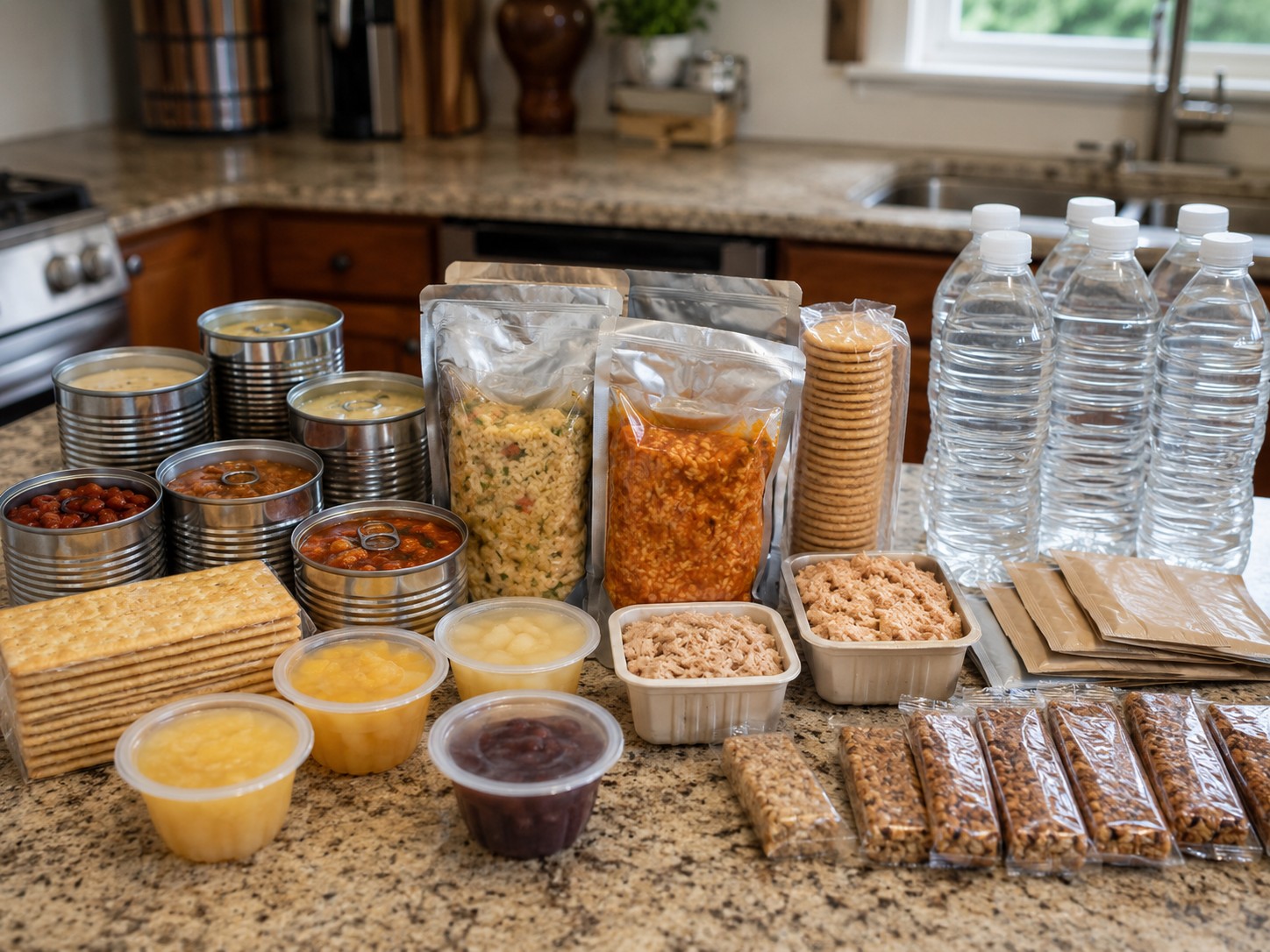
The best ready-to-eat emergency meal options are ordinary foods that already make sense in a household pantry. They should be shelf-stable, filling, familiar, easy to serve, and useful without heating. A good mix gives you protein, carbohydrates, fats, fluids, and some variety so people are not trying to build dinner out of crackers and regret.
Canned Meals and Stews
Canned chili, beef stew, chicken stew, ravioli, tamales, hearty soups, and canned pasta are useful because they are already cooked, portionable, and filling. Many can be eaten cold if necessary, though most people will be happier if they can warm them. Check whether the can has a pull tab, and keep a manual can opener with this food layer. Nothing improves morale quite like owning dinner you cannot open.
Tuna, Chicken, and Salmon Meal Kits
Tuna, chicken, and salmon meal kits are some of the most useful ready-to-eat emergency meal options because they provide protein, portion control, and built-in simplicity. Kits with crackers, spread, and a small utensil are easy to hand to one person without opening half the pantry. Pouches are lighter than cans, but cans usually tolerate rough storage better. Both have a place if you rotate them before they become pantry fossils.
Shelf-Stable Meal Pouches and Bowls
Shelf-stable meal pouches and bowls can be useful when they are fully cooked and safe to eat without heating. Look closely at the package language before counting them as no-prep meals. Some are truly ready-to-eat, while others are really microwave meals wearing a shelf-stable disguise. If the instructions depend on heat, boiling water, or refrigeration after opening, plan for that before the lights go out.
Protein Bars and Emergency Food Bars
Protein bars and emergency food bars are useful because they are compact, shelf-stable, and easy to hand out quickly. They work well for breakfast, travel, evacuation delays, car kits, and the first day of a disruption. Just do not mistake every bar for a full meal. Some are little more than candy with better manners, so check calories, protein, sugar, fiber, and whether your household will actually eat them.
Nut Butters, Crackers, and Tortillas
Nut butter packets, crackers, flatbreads, tortillas, and similar pantry foods are simple building blocks for no-prep meals. They add calories, fat, carbohydrates, and familiar texture without cooking. Pair peanut butter with crackers, tuna with tortillas, or hummus-style shelf-stable spreads with flatbread if your household already eats them. Emergency food works better when it does not require everyone to become a different person at lunchtime.
Fruit Cups, Applesauce, and Ready-to-Eat Sides
Fruit cups, applesauce pouches, canned fruit, shelf-stable pudding, ready-to-eat vegetables, and similar sides help round out emergency meals. They add moisture, variety, and something easier to eat when people are tired or not especially hungry. A meal made only of dry crackers and bars may keep someone alive, but it will also make them deeply interested in complaining.
Shelf-Stable Drinks and Hydration Support
Shelf-stable drinks can support ready-to-eat meals, especially when food is salty, dry, or protein-heavy. Bottled water should still be the priority, but shelf-stable milk, juice boxes, electrolyte drinks, and drink mixes can add calories, comfort, and variety. Just remember that drinks are not a substitute for stored water. A shelf full of juice boxes will not wash hands, clean utensils, or help much with a thirsty dog.
How to Build No-Prep Ready-to-Eat Emergency Meals
A no-prep emergency meal should be simple enough to assemble in under a minute. Think in combinations instead of single items: one protein, one carbohydrate, one side, and enough fluid to make the meal usable. That structure keeps the food practical instead of turning the pantry into a guessing game while everyone is already standing around hungry.
Start With Protein
Protein is the anchor of a useful no-prep meal. Tuna, chicken, salmon, jerky, nut butter, shelf-stable hummus-style spreads, canned beans, and meal kits help keep people full longer than crackers or fruit alone. Protein also matters when someone is doing physical work after a storm, hauling water, moving branches, cleaning up, or just trying not to become unpleasant before dinner.
Add a Carbohydrate
Carbohydrates make the meal feel like food instead of a protein assignment. Crackers, tortillas, flatbread, granola, rice cakes, ready-to-eat grain pouches, and sturdy snack mixes can help stretch protein into a real meal. Choose items that store well and do not crumble into expensive pantry dust after two months.
Add Moisture, Fruit, or a Side
Moisture and sides make ready-to-eat meals easier to finish. Fruit cups, applesauce, canned fruit, ready-to-eat vegetables, pudding cups, shelf-stable milk, or juice boxes can balance dry foods and add some comfort. This matters more than people think. A meal that is technically adequate but miserable to eat will sit there while everyone circles back to the crackers.
Include Something to Drink
Ready-to-eat meals need fluid support. Dry, salty, or protein-heavy foods become harder to eat when water is limited or people are already thirsty. Store bottled water with this food layer, and treat shelf-stable drinks as helpful extras instead of your main water plan. Food is important, but dehydration will move to the front of the line quickly if you ignore it.
Sample Ready-to-Eat Emergency Meal Options and Combinations
Ready-to-eat emergency meals work best when they are planned as combinations instead of random pantry items. These examples are not fancy. They are meant to be usable when the stove is off, the refrigerator is questionable, and nobody is in the mood to debate nutrition theory by flashlight.
Simple Meal Combination Examples
| Meal Type | Ready-to-Eat Combination |
|---|---|
| Breakfast | Protein bar, applesauce pouch, shelf-stable milk |
| Lunch | Tuna kit, crackers, fruit cup, bottled water |
| Dinner | Canned chili, tortilla chips, applesauce, bottled water |
| Light meal | Peanut butter packet, tortillas, juice box |
| Higher-protein meal | Chicken salad kit, crackers, jerky, electrolyte drink |
| Kid-friendly meal | Applesauce, crackers, shelf-stable pudding, shelf-stable milk |
| Storm cleanup meal | Salmon pouch, tortillas, fruit cup, bottled water |
These meals are intentionally simple. In a real disruption, the winning meal is the one someone can open, hand out, eat, and clean up without creating another household problem. You can improve the combinations over time, but start with meals your household will actually use.
What to Watch For Before Buying Ready-to-Eat Emergency Meal Options
Ready-to-eat does not automatically mean useful. Some products are too small, too salty, too expensive, too hard to open, or too dependent on heating to count as dependable emergency meals. Before buying a case of anything, look at how it will actually be eaten in your house on a difficult day. That usually tells the truth faster than the front label.
Watch the Sodium
Many ready-to-eat meals are salty, especially canned soups, chili, jerky, shelf-stable kits, and packaged meal bowls. Sodium is not automatically bad, especially when people are sweating or doing cleanup work, but very salty food increases thirst and can make stored water disappear faster. Balance salty meals with fruit cups, applesauce, shelf-stable drinks, and plenty of plain water.
Check the Calories Per Serving
Serving sizes can be misleading. A pouch, bowl, or bar may look like a meal but only provide a few hundred calories. That might be fine for a light snack, but it will not carry someone through storm cleanup, cold weather, stress, or a long day without normal meals. Check calories per package, not just calories per serving, because labels enjoy making simple things just a little more annoying.
Confirm Whether It Needs Heating
Some shelf-stable meals are fully cooked and safe to eat cold. Others assume you have a microwave, stove, boiling water, or at least enough power to warm the package. That does not make them useless, but it does change where they belong in the plan. A true ready-to-eat emergency meal should still work when heating is unavailable.
Look for Refrigeration After Opening
Some foods are shelf-stable only until the package is opened. Large cans, jars, dips, spreads, sauces, and multi-serving containers may need refrigeration once opened, which becomes a problem during an outage. For ready-to-eat emergency meal planning, single-serve or meal-sized packaging is often safer and less wasteful than opening a large container nobody can keep cold.
Avoid Foods Your Household Will Not Eat
Emergency food is not the time to discover that nobody likes the “healthy” bars, the strange canned entrée, or the bargain-case meal pouches bought during a moment of optimism. Store foods your household already understands and will eat under stress. A disruption is hard enough without turning dinner into a committee meeting.
Storage and Rotation for Ready-to-Eat Emergency Meal Options
Ready-to-eat emergency meals should be stored where they can be found quickly, opened easily, and rotated before they age into mystery food. This layer works best when it is organized as usable meals, not scattered across five shelves behind baking supplies, holiday paper plates, and a jar of something nobody is ready to identify.
Keep a First-Meal Bin
A first-meal bin holds the foods you want available before anyone starts digging through the larger pantry. Include a few complete no-prep meals, utensils, napkins, wet wipes, a manual can opener, and bottled water. Label it clearly and keep it somewhere reachable, because emergency food stored behind three storage totes is mostly a test of patience.
Store Opening Tools With the Food
Store the tools with the meals, not somewhere nearby in theory. Add a manual can opener, disposable utensils, napkins, wet wipes, small trash bags, and anything needed to open the specific foods you store. The best emergency meal in the house loses some charm when everyone is searching drawers by flashlight.
Rotate Through Normal Meals
Rotation works best when the stored food is part of normal household life. Use the oldest bars, pouches, kits, crackers, fruit cups, and canned meals during regular lunches, busy nights, road trips, or storm-watch weekends, then replace them. Food that never gets used usually becomes an archaeological project.
Keep Water With the Meal Layer
Ready-to-eat meals still need water nearby. Store bottled water with the first-meal bin, especially if the foods are salty, dry, or protein-heavy. This does not replace your larger household water plan, but it prevents the small dumb problem where the food is ready and the water is stored somewhere else entirely.
Where Ready-to-Eat Emergency Meal Options Fit in Your Food Plan
Ready-to-eat meals are the quick-access layer of an emergency food plan. They are not meant to replace your full pantry, longer-term food storage, water planning, or backup cooking options. They are there to cover the first meals, tired moments, short disruptions, evacuation delays, and times when cooking is possible in theory but not worth adding one more moving part.
Use ready-to-eat meals alongside deeper food planning: shelf-stable pantry foods, no-cook meal options, backup cooking methods, stored water, and household rotation habits. A strong Food Systems plan has layers. This is the layer that feeds people when the day is sideways and nobody wants to assemble dinner from dry beans and hope.
Related Food Systems Guides
Ready-to-eat meals work best as part of the larger Food Systems plan, not as a separate pile of emergency food. These related guides help build the deeper layers around storage, water, quantities, no-cook meals, and longer household disruptions.
Return to Food Systems to continue building your household emergency food plan.