Text: How to Store Emergency Food in Small Spaces
Learning how to store emergency food in small spaces starts with choosing foods that earn their shelf space. Apartments, small homes, rentals, shared houses, and limited pantries do not have room for bulky supplies that never turn into meals. A good small-space food plan uses compact, shelf-stable foods that are easy to rotate, simple to prepare, and organized well enough that the household can actually find them when normal routines get interrupted.
This guide focuses on building a practical small-space emergency food system: what to store, what to avoid, where to put it, how to rotate it, and how to keep enough usable food on hand without turning a closet, cabinet, or bedroom corner into a cluttered supply dump.
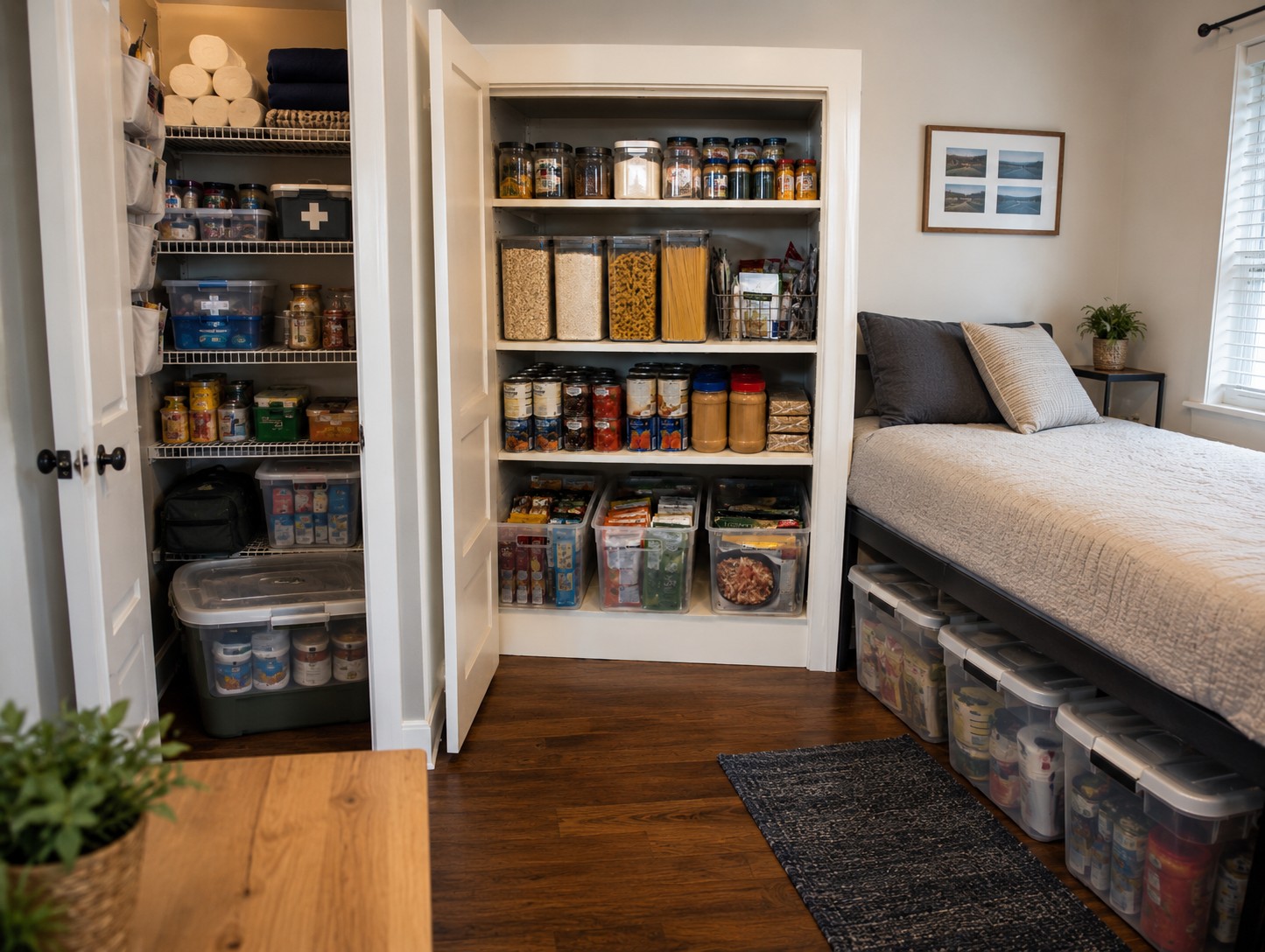
How to Store Emergency Food in Small Spaces Without Wasting Room
Small-space emergency food storage is not just normal pantry storage squeezed into a smaller room. Limited space means every item has to justify its footprint. Bulky foods, awkward packaging, forgotten bins, and supplies stored where nobody can reach them create clutter instead of resilience. The goal is to store enough useful food without making the home harder to live in every day.
Choose Foods That Earn Their Space
In a small space, emergency food should be compact, calorie-supportive, shelf-stable, and easy to use in normal meals. Rice, pasta, oats, canned proteins, beans, nut butters, crackers, ready-to-eat meals, dried fruit, and shelf-stable drinks usually earn their space better than bulky, low-calorie, fragile, or unfamiliar foods. If a food takes up room but does not help build a real meal, it probably does not belong in a limited pantry.
Build Around Meals, Not Loose Supplies
Small-space storage works better when food is planned as meals instead of random cans and boxes. Pair staples with proteins, sauces, fats, fruits, and simple sides so the pantry can actually produce breakfast, lunch, and dinner. Oats need fruit, nuts, or powdered milk. Rice needs beans, canned meat, sauce, or vegetables. Crackers need spreads or protein. A shelf full of ingredients is only useful if it turns into food on a plate.
Keep the Food Visible and Reachable
Emergency food that disappears behind luggage, decorations, cleaning supplies, or deep closet clutter will not be checked, rotated, or used well. In a small home, visibility matters. Use shallow bins, labeled shelves, cabinet zones, or one clear pantry area so older food gets used first and the emergency supply does not become a scavenger hunt with expiration dates.
Best Emergency Foods to Store in Small Spaces
The best emergency foods for small spaces provide useful calories, flexible meals, and long shelf life without wasting storage room. Choose foods your household already eats, then favor items that stack well, rotate easily, and combine with other pantry foods. Small-space storage is not about having less preparedness. It is about making every shelf, bin, and cabinet work harder.
Compact Staples
Compact staples form the base of a small-space emergency food supply. Rice, pasta, oats, instant potatoes, couscous, tortillas, crackers, and shelf-stable bread products store efficiently and pair with many other foods. Choose staples that match your cooking setup. If you do not have a reliable way to boil water during an outage, balance dry staples with no-cook options like crackers, tortillas, nut butters, canned meals, and ready-to-eat foods.
Canned Proteins and Beans
Canned chicken, tuna, salmon, sardines, chili, black beans, pinto beans, lentils, chickpeas, and baked beans add protein and meal strength without taking much space. They stack well, rotate through normal meals, and turn simple staples into filling food. In small spaces, meal-sized cans are often more practical than oversized cans because they reduce leftovers when refrigeration is limited.
Calorie-Dense Foods
Small spaces need foods that provide real energy without requiring a lot of room. Peanut butter, nut butters, nuts, trail mix, granola, powdered milk, olive oil, jerky, protein bars, and meal bars can add calories, fat, protein, and variety in compact packages. These foods are useful, but they need rotation because fats can go stale faster than dry staples. Do not hide them in the back of a closet and assume time has agreed to stop.
Ready-to-Eat Meals
Ready-to-eat meals are useful in small spaces because they reduce cooking time, cleanup, and decision-making during a disruption. Canned chili, soups, stews, pasta meals, shelf-stable rice pouches, meal bars, and compact meal kits can provide quick food when the household is tired or power is limited. Store enough for difficult days, but do not let bulky prepared meals crowd out flexible staples and proteins.
Shelf-Stable Fruits, Vegetables, and Drinks
Canned fruit, applesauce, dried fruit, canned vegetables, tomato products, shelf-stable milk, electrolyte packets, instant coffee, tea, cocoa mix, and drink powders help round out a compact emergency food supply. They add moisture, fiber, flavor, and normal routine to meals that might otherwise become heavy, dry, or repetitive. In small spaces, choose items that serve more than one purpose and fit meals your household already eats.
Best Places to Store Emergency Food in Small Spaces
Small-space food storage works best when supplies are divided between several practical locations instead of forced into one crowded shelf. A kitchen cabinet, pantry zone, closet shelf, under-bed bin, utility shelf, or labeled storage tote can all work if the food stays cool, dry, visible, protected, and easy to rotate. The right location is not the cleverest hiding place. It is the place you will actually check.
Kitchen Cabinets and Pantry Shelves
Kitchen cabinets and pantry shelves are the easiest places to rotate emergency food because they are already part of normal meal routines. Use one shelf, one cabinet zone, or one labeled bin for compact emergency staples and ready-to-eat foods. Keep older items toward the front and newer items behind them so rotation happens naturally instead of becoming another household chore nobody volunteered for.
Closet Shelves and Utility Storage
Closet shelves, utility cabinets, and laundry-area storage can hold overflow food if the space stays cool, dry, and away from chemicals, cleaning products, fuel, damp floors, and strong odors. Use labeled bins or shallow containers so food can be pulled out, checked, and rotated without unloading half the closet. Small-space preparedness should not require a rescue mission every time you need to check dates.
Under-Bed Storage Bins
Under-bed bins can work well for compact emergency food if the area stays dry, clean, and pest-free. Use low-profile bins with lids, label them clearly, and store foods that tolerate stable indoor temperatures. Avoid putting fragile packaging, glass jars, or rarely used items under the bed where they can be forgotten. Under-bed storage is useful only if it stays organized enough to inspect without turning the bedroom into a loading dock.
Vertical Shelving and Door Storage
Vertical shelving, narrow racks, and over-door organizers can add useful storage without taking up much floor space. They work best for lighter items like packets, bars, drink mixes, small cans, pouches, and snack-sized foods. Do not overload door storage with heavy cans or glass containers. A clever storage idea stops being clever when it pulls hardware out of the door frame.
How to Organize Emergency Food Without Wasting Space
Organization matters more in small spaces because clutter hides food, breaks rotation, and makes supplies harder to use during a disruption. A small emergency pantry should be simple enough to maintain: grouped by meal type, stored in visible zones, labeled clearly, and rotated through normal household meals before quality drops.
Group Foods by Meal Use
Group foods by how they will actually be used: breakfasts, quick lunches, no-cook meals, cooking staples, snacks, drinks, and comfort items. This makes it easier to see what is missing. A shelf full of pasta is not the same as a week of meals if there is no sauce, protein, oil, or way to cook it. Organizing by meal use keeps the storage tied to real eating instead of inventory theater.
Use Clear Bins, Labels, or Shelf Zones
Clear bins, simple labels, and assigned shelf zones help keep small-space food storage from turning into clutter. Label bins by purpose, such as no-cook meals, breakfast foods, canned proteins, snacks, drinks, or rotation soon. If clear bins are not practical, use consistent labels and keep a simple inventory list where someone can actually find it. The system does not need to be fancy. It needs to survive normal life.
Keep Older Food in Front
First-in, first-out rotation matters even more when space is tight. Put older food in front and newer food behind it so the oldest items get used first. This prevents small storage areas from collecting stale crackers, forgotten cans, expired nut butters, and mystery packets that somehow survive every cleanup. Rotation should happen as part of normal grocery use, not as an annual pantry autopsy.
What Not to Store in Small Spaces
Small-space storage fails when limited room gets filled with foods that are bulky, fragile, unfamiliar, hard to prepare, or difficult to rotate. The goal is not to cram every possible emergency food into the home. The goal is to keep useful food close enough, organized enough, and familiar enough that it actually supports the household during a disruption.
Bulky Low-Calorie Foods
Bulky low-calorie foods can waste valuable space in a small emergency pantry. Large bags of chips, oversized cereal boxes, puffed snacks, and bulky packaging may fill shelves without providing much staying power. Comfort foods have a place, but the core supply should focus on foods that provide useful calories, protein, fat, and meal flexibility for the space they occupy.
Foods Your Household Will Not Eat
Small-space emergency food storage should not become a museum for foods nobody likes. If your household does not eat lentils, sardines, powdered eggs, canned beets, or dry survival rations during normal life, do not give those foods precious storage space unless they have been tested and accepted. Limited storage should go to foods people will actually use, rotate, and tolerate when the day is already inconvenient.
Foods That Need Too Much Water or Cooking
Dry beans, regular rice, pasta, flour-based mixes, dehydrated meals, and hot cereals can all be useful, but they need water, heat, time, and cleanup. In a small space, those foods should be balanced with ready-to-eat meals, canned proteins, crackers, tortillas, nut butters, and other foods that can be used when cooking is limited. A compact pantry should not depend entirely on boiling water when the power is out.
Fragile or Awkward Packaging
Fragile boxes, thin bags, glass jars, oversized containers, and oddly shaped packages can waste space or create problems in tight storage areas. Repackage vulnerable dry goods into sturdier containers when needed, and avoid storing heavy glass or breakable items where they can fall. In small spaces, the package matters almost as much as the food. One leaky bag of rice can turn a closet shelf into a tiny grain-based crime scene.
Build a Small-Space Emergency Food Supply in Stages
Small-space emergency food storage works best when it is built in stages. Start with a few days of compact, useful food, then expand toward one week and later toward a longer supply if space allows. Building in stages prevents the home from being overrun by bins, boxes, and good intentions with no place to sit.
Start With a Three-Day Food Reserve
A three-day food reserve is the first useful target for small spaces. Focus on compact meals that require little preparation: oatmeal with dried fruit, peanut butter with crackers, tuna with tortillas, canned beans with shelf-stable sides, ready-to-eat meals, fruit cups, bars, and bottled drinks. Three days is enough to create a real buffer without taking over the home.
Expand Toward One Week
Once the three-day reserve is in place, expand toward one week by adding meal combinations instead of random extras. Add more proteins, compact staples, no-cook foods, fruits, drinks, and calorie-dense items that match the meals your household already uses. One week of small-space food storage should feel like a tighter pantry, not a second household hiding in the closet.
Build Longer Storage Only If It Stays Usable
Longer food storage is useful only if it stays organized, reachable, and rotated. If adding more food turns the apartment, pantry, closet, or bedroom corner into a cluttered storage problem, slow down and improve the system before adding volume. A smaller supply that gets used and maintained is better than a larger supply that disappears into boxes and regret.
Where This Fits in Your Emergency Food Plan
Small-space emergency food storage is the organization layer of a household food plan. It helps limited homes store useful food without wasting space, losing track of supplies, or building a pantry that cannot be rotated. Once the storage locations are working, connect this page to your shelf-stable foods, no-cook meals, water planning, and 14–30 day food supply so the whole system supports real meals instead of scattered supplies.
Return to Food Systems to continue building your household emergency food plan.