Rice vs Beans vs Oats for Emergency Storage: Which Staple Is Best?
Rice, beans, and oats are three of the most common emergency food staples because they are affordable, shelf-stable, filling, and easy to buy almost anywhere. But they do not solve the same problem. Rice stores calories well. Beans add protein and staying power. Oats make fast breakfasts and simple meals easier when the day starts badly. The best emergency storage choice depends on cooking time, water availability, household habits, storage space, and how you actually plan to use the food.
This guide compares rice, beans, and oats side by side so you can decide what each staple is actually good for. Instead of treating them as interchangeable “prepper pantry” foods, we’ll look at calories, protein, cooking time, water use, storage life, meal flexibility, cost, rotation, and the practical tradeoffs that show up when the power is out and dinner is no longer theoretical.
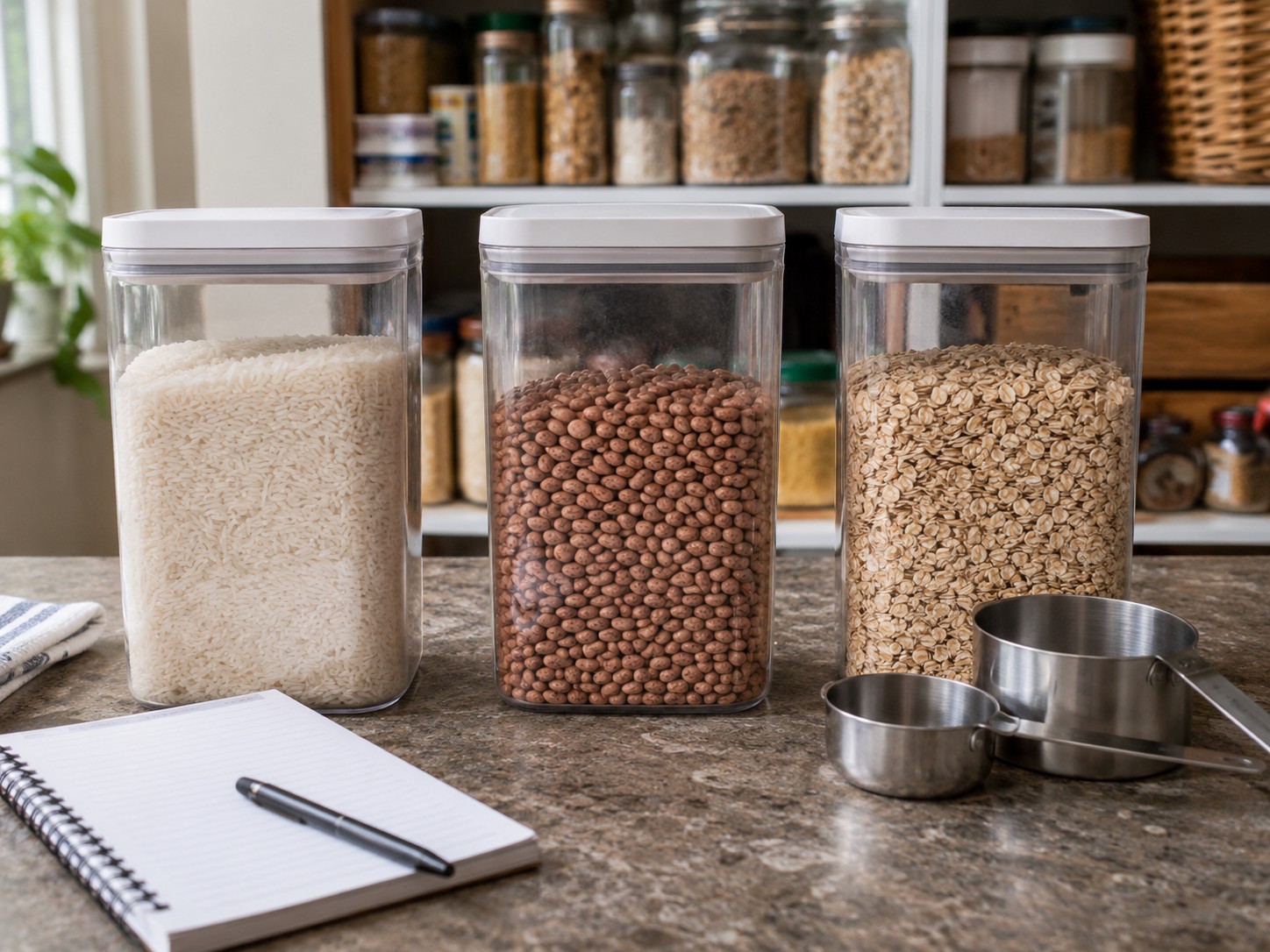
Rice vs Beans vs Oats: What Problem Is Each Staple Solving?
Rice, beans, and oats are all useful emergency storage staples, but they earn their space for different reasons. Rice is the easiest calorie base. Beans are the stronger protein and fullness staple. Oats are the fastest breakfast and low-fuss meal option. Comparing them properly means looking past the bucket label and asking what job each food will actually do when the household is tired, hungry, and trying not to turn dinner into a project.
Rice Solves the Calorie Problem
Rice is mainly a calorie staple. It is inexpensive, compact, familiar, and easy to stretch with beans, canned meat, broth, sauces, vegetables, or simple seasonings. That makes it useful for feeding a household over time. The tradeoff is that most rice still needs water, heat, and cooking time, so it is strongest when your emergency plan includes a reliable way to cook.
Beans Solve the Protein and Fullness Problem
Beans bring protein, fiber, minerals, and staying power that rice does not provide by itself. They help turn stored staples into meals that keep people full longer, especially when paired with rice, tortillas, canned tomatoes, broth, spices, or shelf-stable meats. The tradeoff is preparation. Dry beans usually need soaking, longer cooking, more fuel, and more water, which makes them excellent in a planned food system but less convenient during a short outage.
Oats Solve the Fast Breakfast Problem
Oats are useful because they are fast, familiar, and flexible. Rolled oats can become breakfast, a simple porridge, a thickener for soups, an extender for meat or bean dishes, or a low-stress meal when nobody wants to cook anything complicated. They still need water and usually heat, but they cook faster than rice or dry beans and can often be prepared with less fuel. That matters on mornings when the household is already running behind and the situation has helpfully decided to get worse.
Rice vs Beans vs Oats for Emergency Storage Comparison Chart
A side-by-side comparison is the cleanest way to see the tradeoffs. None of these staples is “best” at everything. Rice wins on cheap calories and meal flexibility. Beans win on protein and fullness. Oats win on speed and breakfast usefulness. The smart plan usually uses all three, but not in equal amounts.
Rice
Best use: Cheap calorie base
Main strength: Affordable, compact, flexible
Main weakness: Low protein by itself
Cooking need: Usually needs simmering
Water need: Moderate
Fuel need: Moderate
Best emergency role: Base staple
Beans
Best use: Protein and fullness
Main strength: Filling, protein-rich, meal-building
Main weakness: Longer cooking time
Cooking need: Usually needs soaking and longer cooking
Water need: Higher
Fuel need: Higher
Best emergency role: Nutrition staple
Oats
Best use: Fast breakfast and simple meals
Main strength: Quick cooking, familiar, easy to rotate
Main weakness: Less useful for dinner variety
Cooking need: Usually cooks quickly
Water need: Low to moderate
Fuel need: Lower
Best emergency role: Fast-meal staple
Which Emergency Storage Staple Is Best?
The best emergency storage staple is the one that fills the biggest gap in your household food plan. If you need inexpensive calories, rice usually wins. If you need protein and meals that hold people longer, beans are stronger. If you need fast breakfasts, easy rotation, and lower-fuel cooking, oats are hard to beat. The better question is not which one is best overall. The better question is which one your household can store, cook, rotate, and actually eat.
Choose Rice When You Need Cheap Calories
Rice is usually the best choice when your main goal is affordable bulk calories. It stores compactly, stretches other foods, and works with beans, canned meat, vegetables, broth, sauces, and seasonings. For long-term storage, white rice is usually more practical than brown rice because it stores longer. Brown rice has more natural oils, which makes it more nutritious in some ways but also more likely to go rancid over time.
Choose Beans When You Need Protein and Staying Power
Beans are usually the better choice when your food plan needs more protein, fiber, and meals that keep people full. They pair naturally with rice, tortillas, canned tomatoes, broth, spices, and shelf-stable meats. For bulk storage, dry beans are efficient and inexpensive, but they require more cooking time, water, and fuel. Canned beans are less efficient to store, but much easier during short disruptions.
Choose Oats When You Need Fast, Low-Fuel Meals
Oats are usually the best choice when you want fast meals with less cooking time and easier rotation. Rolled oats can be used for breakfast, simple porridge, overnight oats when safe water is available, or as an extender in other meals. They are not as strong as rice for bulk calories or beans for protein, but they are easier to use when fuel, time, and patience are all running low.
Cooking Time, Water Use, and Fuel Requirements
Rice vs beans vs oats for emergency storage is not really a contest between three identical pantry staples.. It is what they require when you need to turn them into food. A staple that needs long cooking, extra water, or steady heat is still useful, but it depends on a stronger backup cooking plan. During a short outage, that difference can matter more than the price on the bag.
Rice Needs Steady Heat and Measured Water
Rice is simple, but it still needs a dependable cooking method. Most white rice needs measured water, steady heat, and enough time to simmer without burning. That is not difficult on a normal stove, but it matters during an outage when fuel is limited or the only cooking option is a camp stove on the porch. Rice belongs in emergency storage, but it should be paired with a realistic backup cooking plan.
Beans Need the Most Time, Water, and Fuel
Dry beans are excellent emergency storage food, but they ask more from the household than rice or oats. They usually need soaking, longer cooking, more water, and more fuel before they become a meal. That makes them strong for planned cooking and longer disruptions, but weaker for the first few hours of a power outage unless you also store canned beans or have a pressure cooker and dependable backup power.
Oats Need the Least Cooking Effort
Oats are the easiest of the three staples to prepare with limited fuel. Rolled oats cook quickly, can be softened with hot water, and can sometimes be prepared as overnight oats if safe water and clean storage are available. They are not a complete emergency food plan by themselves, but they are useful when you need a fast meal before the day starts making requests.
Storage Life Differences for Rice, Beans, and Oats
Rice, beans, and oats do not age the same way in storage. Packaging, temperature, moisture, pests, and oxygen exposure all matter, but the food itself matters too. White rice is usually the strongest long-storage choice. Dry beans can store well but may take longer to soften as they age. Oats are easy to rotate, but they are not usually the longest-lasting staple in the group.
White Rice Stores Longer Than Brown Rice
White rice is usually the better emergency storage choice because it has less oil and stores longer when kept dry, cool, sealed, and protected from pests. Brown rice has more nutrition, but those natural oils shorten its storage life. That does not make brown rice bad food. It just means brown rice belongs in normal pantry rotation, not forgotten in a bucket until some future version of you opens it with optimism.
Dry Beans Store Well but Change With Age
Dry beans can store for years when kept dry, sealed, and protected from heat and pests, but older beans often take longer to soften. That matters because longer cooking means more fuel, more water, and more patience. Store dry beans for planned meals, but keep some canned beans for short disruptions when nobody wants to spend half the evening negotiating with a pot.
Oats Are Easy to Rotate
Oats are one of the easiest staples to rotate because they fit naturally into normal breakfasts, baking, snacks, and simple meals. That makes them less likely to sit untouched for years. Rolled oats are usually more practical than instant flavored packets for emergency storage because they are more flexible, less sugary, and easier to use in larger quantities.
Meal Flexibility: What Can You Actually Make?
Emergency storage staples are only useful if they turn into meals your household can recognize. Rice, beans, and oats all have flexibility, but in different directions. Rice works as a base. Beans build heartier meals. Oats handle breakfast, thickening, and simple low-fuel food. The question is not whether the food stores well. The question is whether you can make it useful three days into a disruption without everyone staring at the pantry like it owes them an apology.
Rice Works as a Base Staple
Rice is strongest as a base for other foods. It can stretch canned chicken, beans, broth, vegetables, gravy, sauces, curry, chili, or simple seasonings into a larger meal. By itself, rice fills space. Combined with protein, fat, and flavor, it becomes useful household food. That is the difference between storing calories and planning meals.
Beans Build Heavier Meals
Beans turn emergency staples into heavier, more filling meals. They work with rice, tortillas, canned tomatoes, broth, chili seasoning, onions, peppers, canned meat, and simple spices. Beans also help prevent a food plan from becoming nothing but starch stacked on starch, which is technically food but not much of a strategy.
Oats Handle Breakfast and Simple Meals
Oats are most useful for breakfast and simple low-effort meals. They can be made plain, sweet, savory, thickened into porridge, mixed with shelf-stable milk, combined with dried fruit, or used to stretch other foods. Oats will not carry dinner variety the way rice and beans can, but they make mornings easier, and easy mornings matter when the rest of the day is already acting suspicious.
Best Emergency Storage Mix: Rice, Beans, and Oats Together
The strongest emergency storage plan usually includes rice, beans, and oats together because they solve different problems. Rice gives you bulk calories. Beans add protein and longer-lasting fullness. Oats give you fast meals that are easy to rotate. Used together, they create a better household food base than any one staple can provide alone.
A Practical Staple Ratio for Most Households
A practical starting mix for many households is more rice than beans, and fewer oats than rice. Rice usually carries the calorie load. Beans strengthen the meals. Oats cover breakfast and fast low-fuel eating. A reasonable starting point might be roughly 50 percent rice, 30 percent beans, and 20 percent oats by stored meal role, then adjust based on what your household actually eats.
Keep Some Convenience Versions Too
Bulk staples are efficient, but convenience versions make the system easier to use during short disruptions. Store some instant rice, canned beans, and quick oats alongside the deeper supply. They cost more per meal, but they save fuel, water, time, and patience when the goal is feeding people instead of proving a point to a bag of dry beans.
Common Mistakes When Storing Rice, Beans, and Oats
Most mistakes with rice, beans, and oats happen because people store ingredients instead of meals. A shelf full of staples looks responsible, but it still needs water, heat, fuel, seasonings, tools, recipes, and a household willing to eat what was stored. Emergency storage works better when every staple has a clear job and a realistic way to become food.
Storing Staples Without a Cooking Plan
Rice, beans, and oats all need some level of preparation. If your food plan depends on them, your cooking plan needs to be just as real as the storage containers. That means water, fuel, matches or ignition, a safe cooking area, pots, utensils, and enough practice to know how the setup works before the outage. A pantry without a cooking plan is mostly decoration with calories inside.
Forgetting Seasonings and Fats
Plain rice, plain beans, and plain oats will keep people fed, but they get old quickly. Store salt, pepper, bouillon, oil, shelf-stable butter powder, spices, sauces, canned tomatoes, powdered milk, sugar, honey, peanut butter, and other simple add-ins your household already uses. Calories matter, but so does making food decent enough that people will eat it twice.
Buying Foods Your Household Does Not Eat
Emergency storage is not the place to reinvent your household’s diet. If nobody eats beans now, storing fifty pounds of them does not magically create bean people later. Buy staples your household already uses, then expand slowly. The best stored food is not the one that looks most impressive on a shelf. It is the one that can become a meal without an argument.
Ignoring Water Needs
Rice, beans, and oats all depend on water in different ways. Rice needs measured cooking water. Beans often need soaking and longer cooking water. Oats need less, but still need safe water to become a meal. If you store dry staples without enough water, you have not stored meals yet. You have stored dry ingredients and a future problem.
Related Food Systems Guides
Rice, beans, and oats are only one part of the Food Systems plan. These related guides help connect staple storage to shelf-stable foods, emergency quantities, small-space storage, no-cook meals, and backup cooking decisions.
Return to Food Systems to continue building your household emergency food plan.