Emergency Communication Systems
Emergency communication systems help a household receive alerts, share information, and stay coordinated when normal communication tools become unreliable. Phones, internet service, television, and power can all fail at the same time or degrade slowly enough that people do not notice until they need them. A strong communication plan gives the household more than one way to know what is happening and more than one way to reach the people who matter.
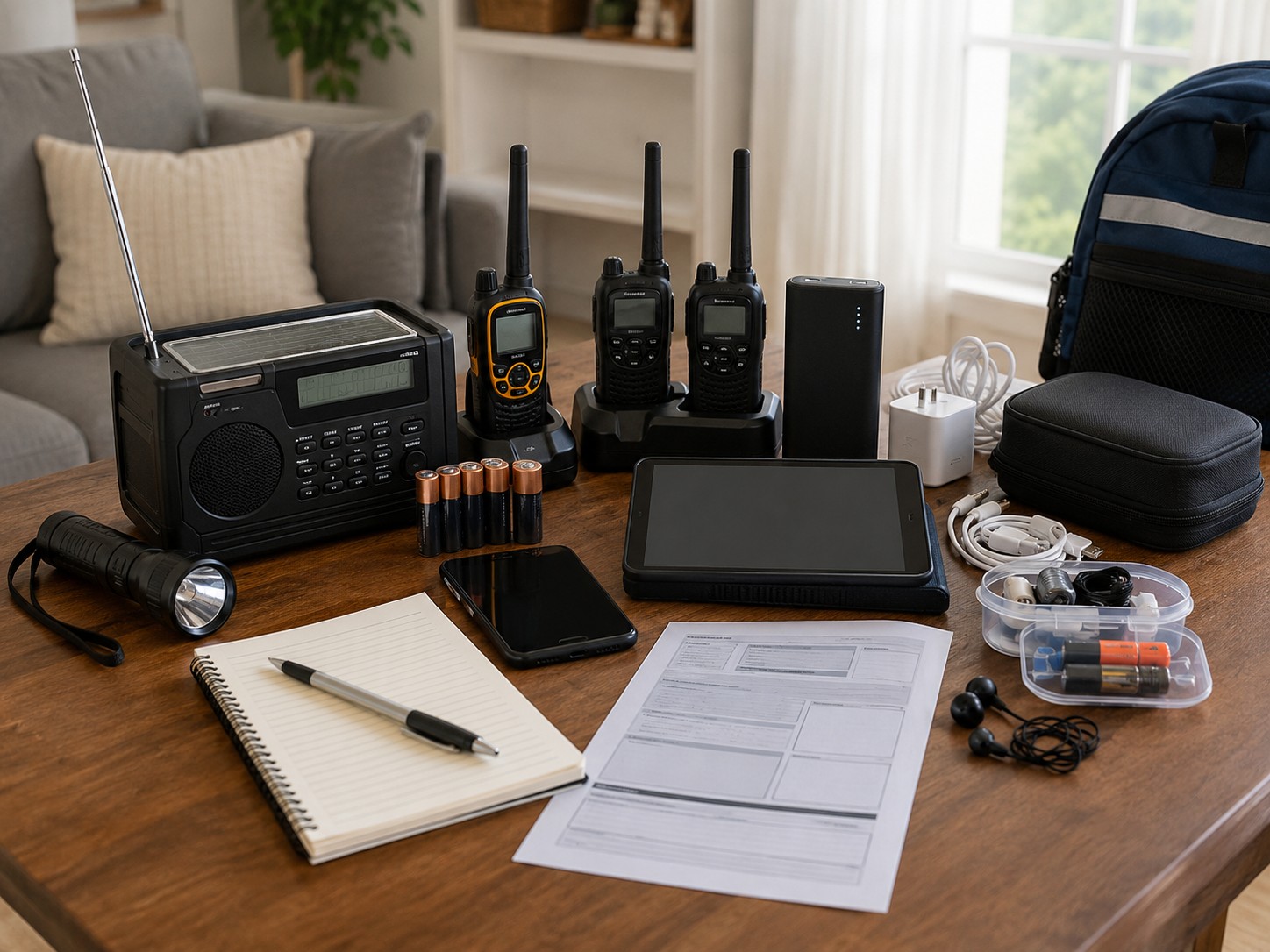
This page explains the main layers of household emergency communication: official alerts, weather radios, emergency radios, two-way radios, backup power, written contact plans, local information sources, and family check-in routines. The goal is not to build a complicated radio room. The goal is to keep basic information moving when the usual systems stop behaving like adults.
Why Emergency Communication Systems Matter
Emergency communication systems matter because information failure creates decision failure. When households cannot receive alerts, confirm conditions, coordinate with family, or understand what is happening locally, small disruptions become more confusing and more dangerous. A layered communication system gives the household a steadier picture of what is happening and a better chance of responding calmly instead of guessing.
They Keep Alerts and Local Information Flowing
A household emergency communication system should keep official alerts and local information moving even when normal routines break down. That may mean a weather radio for warnings, an emergency radio for broadcast updates, a charged phone for calls and texts, and written local contacts in case the phone becomes less helpful than advertised. Information does not solve every problem, but bad information and no information both make decisions harder.
They Give the Household More Than One Way to Communicate
One communication method is convenient until it fails. A better household system uses layers: phone calls when service works, text messages when calls do not, two-way radios for short-range local contact, written contact information when devices are dead, and agreed check-in routines so everyone knows what to do without inventing the plan during the problem.
They Reduce Confusion During the First Hours
The first hours of an outage, storm, wildfire warning, evacuation notice, or local disruption are when confusion spreads fastest. A communication system gives the household a basic order of operations: check alerts, confirm local conditions, contact key people, preserve phone battery, and avoid making decisions from rumor, panic, or the loudest person in the group chat.
Core Layers of an Emergency Communication System
Emergency communication systems work best when they are built in layers. Each layer has a different job: receiving alerts, gathering local information, reaching family, communicating nearby, and keeping devices powered. The point is not to own every tool. The point is to avoid depending on one fragile path when the household needs information quickly.
Official Alert Layer
The official alert layer is how the household receives warnings from trusted sources. This may include Wireless Emergency Alerts on phones, NOAA Weather Radio alerts, local emergency management notices, public safety alerts, and official city or county updates. This layer matters because the household needs a reliable way to hear about threats before the situation is already at the front door.
Local Information Layer
The local information layer helps the household understand what is happening nearby. Local radio stations, county emergency management pages, utility outage maps, road closure updates, school alerts, neighborhood communication, and trusted local officials can all help confirm conditions. Use this layer carefully. Local information is useful; local rumor is just noise wearing boots.
Family Contact Layer
The family contact layer is the plan for reaching the people who matter. It should include phone numbers, text-message habits, out-of-area contacts, meeting points, school or workplace contacts, and a simple check-in routine. The goal is to avoid everyone making separate decisions with partial information while the situation is still unfolding.
Short-Range Communication Layer
The short-range communication layer covers nearby contact when phones are unreliable or when household members are spread across a property, neighborhood, campsite, school pickup line, or local work area. Simple two-way radios can help with short-distance coordination, but they need charged batteries, agreed channels, basic practice, and realistic expectations. They are useful tools, not magic walkie-talkies from a movie.
Power and Charging Layer
The power and charging layer keeps communication tools usable when the grid is down. This includes charged phones, battery banks, spare batteries, USB charging cables, car chargers, solar chargers, and backup power for radios. Communication planning fails quickly when every device depends on the same dead outlet.
Essential Tools for Household Emergency Communication
A household does not need every communication tool on the market. It needs a dependable set of tools that match likely hazards, household size, local conditions, and daily routines. The best emergency communication systems are simple enough to maintain and familiar enough to use when the day is already off the rails.
Emergency Weather Radio
An emergency weather radio gives the household a dedicated way to receive weather alerts and emergency broadcasts without depending entirely on phones, internet service, or television. It is especially useful for overnight warnings, severe storms, tornado threats, flash flooding, winter weather, and any situation where official alerts need to be heard quickly.
Emergency Radio
An emergency radio helps the household receive broader broadcast information during outages, disasters, and local disruptions. Many models include AM/FM radio, weather bands, USB charging, flashlights, hand-crank power, solar charging, or battery backup. The useful part is not the gadget list. The useful part is having one reliable place to check updates when the internet is down and everyone’s phone battery is starting to look nervous.
Two-Way Radios
Two-way radios can help household members communicate over short distances when phones are unreliable, batteries are low, or people are spread across a property, neighborhood, worksite, campsite, or evacuation staging area. They work best when the household practices with them, agrees on channels, keeps batteries charged, and understands their limits. Terrain, buildings, distance, and weather can all shorten range. The box usually sounds more confident than the real world.
Phones and Text Messaging
Phones remain one of the most useful emergency communication tools, but they should not be the only plan. Calls may fail when networks are overloaded, while text messages often get through with less signal and less battery use. Keep phones charged, use low-power mode early, save important contacts offline, and avoid draining the battery on nonessential use when the situation is still developing.
Written Contact Plan
A written contact plan keeps important information available when phones are dead, locked, lost, damaged, or out of service. Keep printed copies of key phone numbers, out-of-area contacts, school and workplace numbers, medical contacts, meeting locations, and basic check-in instructions. Paper is not fancy, but it has excellent battery life.
How to Build a Simple Emergency Communication Plan
A simple emergency communication plan should tell the household what to check first, who to contact, what tools to use, and what to do if the first method fails. The plan does not need to be complicated. It needs to be written down, practiced occasionally, and simple enough that someone can follow it while tired, distracted, or holding a flashlight in their teeth.
Write Down Primary and Backup Contacts
List the people and organizations the household may need to reach during a disruption. Include household members, nearby relatives, an out-of-area contact, schools, workplaces, neighbors, medical providers, utility companies, insurance contacts, and local emergency information sources. Store the list on paper and in phones, because one copy is convenient and two copies are planning.
Choose an Out-of-Area Contact
An out-of-area contact gives family members one shared person to check in with if local calls are overloaded or household members are separated. Choose someone outside the likely affected area, make sure they agree to the role, and write their number on the contact plan. The goal is simple: if everyone cannot reach everyone, everyone knows who to try next.
Decide How the Household Will Check In
Decide in advance how household members will check in during a disruption. That may mean texting first, calling only if needed, checking in at set times, using an out-of-area contact, or meeting at a known location if communication fails. The point is to remove guesswork before stress, bad timing, and weak signal start making decisions for everyone.
Keep the Plan Where People Can Find It
Store the communication plan in places where people will actually find it: on the refrigerator, in the emergency binder, inside a go bag, near the weather radio, and saved offline on phones. A plan hidden in a folder nobody remembers is not a plan. It is paperwork with ambitions.
Common Emergency Communication Mistakes
Most emergency communication mistakes happen because households assume normal systems will keep working normally. Phones, apps, internet service, power, and local information sources are useful, but they all have failure points. A strong communication system does not assume perfection. It builds enough backup paths to keep people informed when the easy options stop being easy.
Relying Only on Phones
Phones are useful, but they are not a complete emergency communication system. They depend on battery power, working towers, network capacity, charging cables, service coverage, and user settings. Keep phones in the plan, but back them up with weather radios, emergency radios, written contacts, text-message routines, and charging options.
Forgetting Backup Power
Communication tools fail quickly when the household forgets power. Store charged battery banks, spare batteries, charging cables, wall adapters, car chargers, and any radio-specific power supplies together. Check them occasionally. A dead backup battery is not backup power. It is just a small brick with confidence issues.
Not Practicing the Plan
A communication plan should be tested before it is needed. Practice sending a family check-in text, turning on the weather radio, changing two-way radio channels, finding the printed contact list, and charging the backup battery. The practice does not need to be dramatic. It just needs to prove the plan works before the house is dark and everyone suddenly becomes a project manager.
Where Communication Fits in the Foundation Framework
Communication is the system that helps every other preparedness layer work better. Power plans depend on knowing outage status and charging priorities. Water plans depend on receiving boil-water notices or service updates. Food plans depend on knowing whether disruption is short, extended, local, or widening. Security decisions depend on accurate local information instead of rumor. When communication breaks down, every other household system becomes harder to manage.
That is why emergency communication systems should not sit off to the side as a gadget category. They should be treated as a household coordination system: alerts, contacts, power, local information, and simple routines that help people make better decisions when the normal channels are unreliable.
Related Communication Guides
Emergency communication systems work best when they connect to the rest of the Communication plan. These related guides help build the alert, radio, backup power, and household coordination layers around this hub page.
Return to Communication to continue building your household emergency communication plan.