How to Store Rice Long Term for Emergency Food Storage
Learning how to store rice long term is one of the simplest ways to build a practical emergency food foundation. Rice is affordable, compact, familiar, easy to buy in bulk, and flexible enough to support many meals. But long-term rice storage only works well when you choose the right type of rice, protect it from moisture and pests, understand shelf life, and have a realistic way to cook it when normal kitchen routines are interrupted.
This guide explains how to store rice long term for household emergency food storage, including which rice stores best, what shortens shelf life, how to package rice correctly, how much to store, how to rotate it, and what cooking and water needs should be planned before rice becomes the backbone of your food supply.
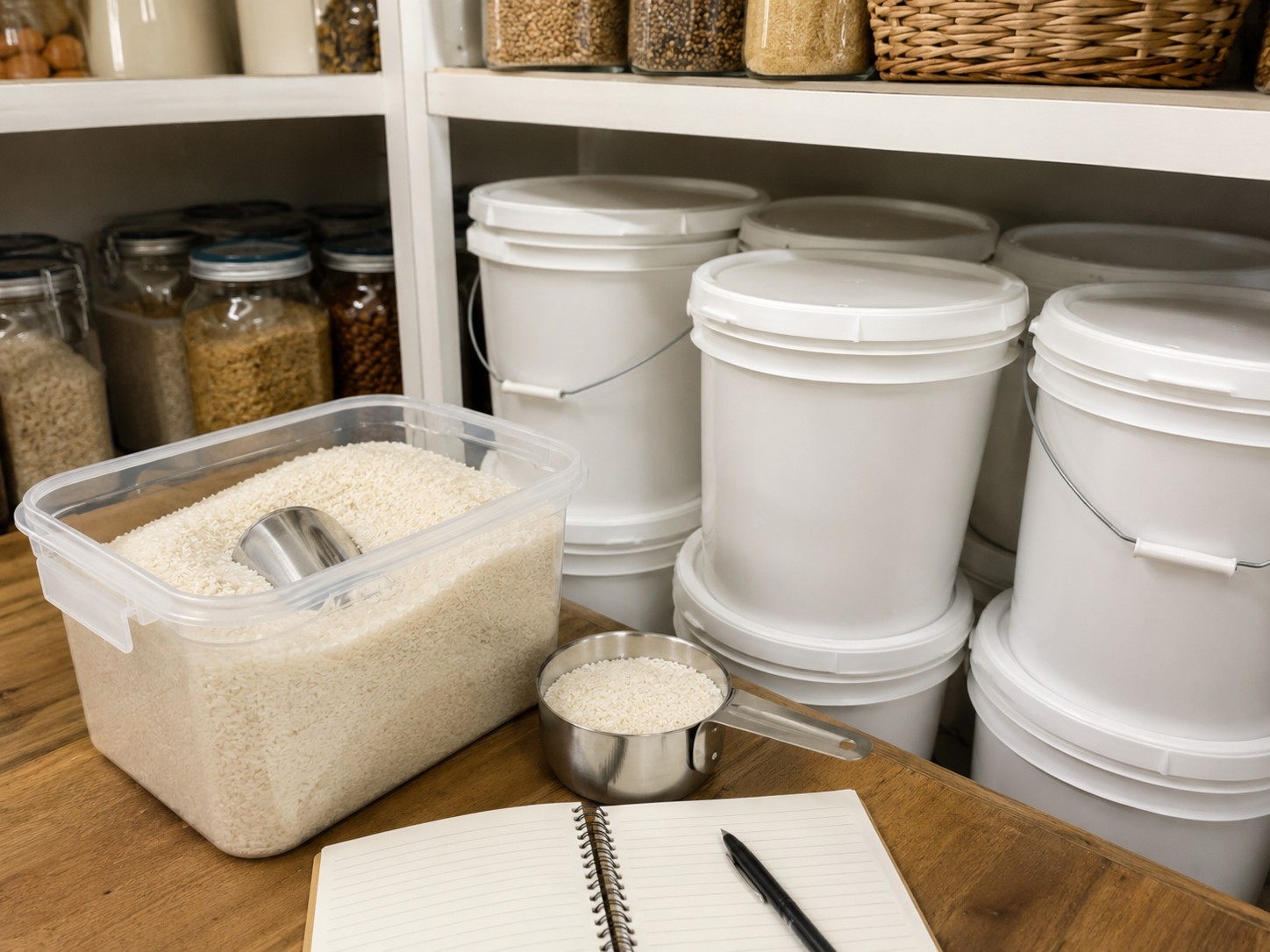
Why Rice Works Well for Emergency Food Storage
Rice works well for emergency food storage because it is inexpensive, compact, familiar, and easy to combine with other shelf-stable foods. It can stretch canned meat, beans, broth, vegetables, sauces, and seasonings into larger meals without taking much storage space. That makes rice useful as a base staple, but not a complete food plan by itself.
Rice Is a Base Staple, Not a Complete Meal
Rice provides useful calories, but it does not provide everything a household needs from an emergency food plan. By itself, rice is low in protein, fat, and variety. It works best when paired with beans, canned meat, lentils, broth, oil, vegetables, sauces, and seasonings. Store rice as the foundation of meals, not as the whole meal. A bucket of rice is useful. A bucket of rice with no plan is just a heavy promise.
Rice Is Useful Only If You Can Cook It
Long-term rice storage depends on more than sealed containers. Rice needs safe water, steady heat, a pot, measured portions, and enough fuel to cook it through. That is easy on a normal stove, but it becomes a real planning issue during an outage. If rice is part of your emergency food storage, your backup cooking plan needs to be just as real as the rice itself.
Best Types of Rice for Long-Term Storage
The best rice for long-term storage is usually plain white rice because it stores longer, cooks predictably, and works with many meals. Brown rice, wild rice blends, instant rice, and flavored rice mixes can still be useful in normal pantry rotation, but they are not all equal for long-term emergency food storage. The type of rice matters because oil content, processing, packaging, and added ingredients all affect shelf life.
White Rice Is Best for Long-Term Storage
White rice is the strongest choice for long-term emergency rice storage because the outer bran layer has been removed, reducing the natural oils that shorten shelf life. Plain long-grain white rice, jasmine rice, basmati rice, and other white rice varieties can store well when protected from moisture, oxygen, heat, pests, and damaged packaging. For deep storage, plain white rice is boring in exactly the way emergency food should sometimes be: stable, predictable, and useful.
Brown Rice Is Better for Rotation Than Deep Storage
Brown rice contains more natural oils than white rice because it keeps the bran layer. That gives it more nutrition, but it also makes it more likely to go rancid over time. Brown rice can still belong in a household pantry, especially if your family eats it regularly, but it should be rotated through normal meals instead of treated as a long-term bucket staple.
Instant Rice Is Convenient but Less Efficient
Instant rice can be useful for short disruptions because it cooks faster and uses less fuel. That makes it helpful when time, heat, or patience is limited. The tradeoff is storage efficiency. Instant rice usually costs more per serving, takes up more space, and may not store as well as plain white rice packed for long-term use. Keep some for convenience, but do not rely on it as your main deep-storage rice.
How Long Does Rice Last in Emergency Storage?
Rice shelf life depends on the type of rice, packaging, storage temperature, moisture, oxygen exposure, and pest control. Plain white rice can last a long time when stored correctly, while brown rice has a much shorter practical storage life because of its natural oils. The goal is not just to buy rice and forget it. The goal is to store rice in a way that keeps it dry, protected, usable, and part of a real household food plan.
White Rice Has the Longest Practical Shelf Life
White rice has the longest practical shelf life for household emergency storage because it contains less oil than brown rice. When stored in food-safe containers with protection from moisture, heat, oxygen, insects, and rodents, white rice can remain useful for many years. Storage conditions matter more than wishful thinking. A sealed bucket in a cool, dry pantry is very different from a half-open bag in a hot garage.
Brown Rice Has a Shorter Shelf Life
Brown rice has a shorter shelf life because the bran layer contains oils that can turn rancid over time. It is still useful food, but it should be treated as a rotation pantry item rather than a deep-storage staple. If your household prefers brown rice, store smaller amounts, keep it cool and dry, and use it regularly before replacing it.
Storage Conditions Decide the Real Shelf Life
Rice lasts longest when it is kept cool, dry, sealed, and protected from pests. Heat speeds up quality loss. Moisture can ruin rice quickly. Oxygen and insects can shorten storage life. Rodents are worse because they do not respect your preparedness plan or your storage budget. Long-term rice storage is really a moisture, temperature, packaging, and pest-control problem.
How to Store Rice Long Term
To store rice long term, protect it from the four things most likely to ruin it: moisture, heat, pests, and oxygen. The basic system is simple: choose plain white rice, package it in food-safe long-term storage containers, keep it cool and dry, label it clearly, and rotate smaller pantry amounts through normal meals. The storage method does not need to be fancy. It needs to be consistent.
Use Food-Safe Buckets or Mylar Bags
For long-term rice storage, use food-safe buckets, Mylar bags, or a combination of both. Mylar bags help create a sealed barrier against oxygen and moisture, while buckets protect the bags from punctures, crushing, insects, and rodents. Do not store rice long term in thin store bags and hope the pantry remains polite. Store packaging is meant for selling rice, not defending it for years.
Add Oxygen Absorbers for Deep Storage
Oxygen absorbers are useful when rice is packed in sealed Mylar bags for deep storage. They reduce oxygen inside the package, which helps protect rice from insects and quality loss over time. Use the correct absorber size for the bag or bucket volume, seal the package promptly, and label the container with the rice type and packing date. Oxygen absorbers are helpful, but they do not fix wet rice, weak packaging, or storage in a hot garage.
Keep Rice Cool, Dry, and Off the Floor
Store rice in a cool, dry location away from direct sunlight, humidity, concrete floors, and temperature swings. Shelves are better than floors because they reduce moisture risk, make inspection easier, and keep containers away from small leaks or pest activity. A quiet pantry shelf beats a hot garage almost every time. Rice does not need luxury. It needs boring, stable conditions.
Label Rice With the Packing Date
Every long-term rice container should be labeled with the rice type, packing date, package size, and any storage method used, such as Mylar bags or oxygen absorbers. Labels make rotation easier and prevent the familiar household mystery where everyone agrees something is probably rice but nobody knows when it was packed.
How Much Rice Should You Store?
he amount of rice to store depends on household size, storage goals, appetite, cooking ability, and what other foods are stored with it. Rice should be counted as a meal base, not a complete meal. A practical plan stores enough rice to support meals with beans, canned meat, vegetables, broth, oils, sauces, and seasonings instead of expecting plain rice to carry the whole emergency food supply.
Use Rice as Part of a Meal Count
A simple way to plan rice storage is to decide how many meals rice should support, then store enough to serve as the base for those meals. For many households, rice works best in dinners and larger cooked meals rather than every meal of the day. Count it alongside beans, canned meat, vegetables, broth, fats, and seasonings so the final plan creates meals instead of just measuring dry pounds.
Do Not Store Rice Without Foods to Pair With It
Rice becomes much more useful when it has partners. Store beans, lentils, canned chicken, tuna, vegetables, broth, bouillon, oil, sauces, spices, and salt with the rice plan. Those additions provide protein, fat, flavor, and variety. Without them, rice may fill a bowl, but it will not carry morale very far. Plain rice three nights in a row has a way of turning dinner into a quiet household referendum.
How to Cook Stored Rice During an Emergency
Stored rice only becomes useful when you can turn it into food safely. During an emergency, cooking rice depends on safe water, measured portions, steady heat, a covered pot, and enough fuel to finish the job. Rice is simple on a normal stove, but during an outage, even simple cooking needs a plan.
Store Enough Water to Cook the Rice
Rice needs water before it becomes food, and that water has to come from somewhere. Plan cooking water as part of your emergency rice storage, not as an afterthought. If your water supply is tight, rice may still be useful, but it should be balanced with ready-to-eat foods, canned meals, and other options that do not compete as heavily with drinking water.
Use a Backup Cooking Method You Have Practiced
Do not wait for an outage to learn how your backup cooking setup behaves. Practice cooking a small batch of rice with the method you actually plan to use, whether that is a camp stove, propane burner, butane stove, grill side burner, solar generator with an electric cooker, or another safe option. Practice shows how much fuel, water, time, ventilation, and patience the setup really requires.
Keep the Cooking Tools With the Food Plan
Store the pot, lid, measuring cup, spoon, lighter, matches, fuel notes, and basic cooking instructions where they can be found with the rice plan. The goal is not to create a perfect kitchen in storage. The goal is to make sure someone can cook rice without searching three rooms, two drawers, and one garage shelf while everyone else helpfully asks if dinner is ready.
Common Rice Storage Mistakes
Most rice storage mistakes happen because people treat rice like it is finished emergency food instead of an ingredient that still needs protection, water, heat, tools, and meal support. Rice is dependable when the system around it is dependable. Without that system, it is just a lot of dry food waiting for better management.
Storing the Wrong Type of Rice
The biggest type mistake is treating all rice the same. Plain white rice is usually best for long-term emergency storage because it stores longer and holds quality better. Brown rice, wild rice blends, and flavored rice mixes are better for shorter pantry rotation because oils, seasonings, and added ingredients can shorten shelf life. Store the rice that fits the job, not the bag that looked interesting at the store.
Leaving Rice in Store Packaging
Store packaging is made to sell rice, move it through the supply chain, and sit in a pantry for normal use. It is not meant to protect rice for long-term emergency storage. Thin bags can tear, absorb moisture, invite pests, and fail quietly. For deeper storage, move rice into Mylar bags, food-safe buckets, sealed containers, or another durable system designed to protect the food instead of merely contain it.
Forgetting Water and Fuel
Rice storage fails fast when the food is stored but the water and fuel are not. Every stored rice meal needs cooking water, heat, a pot, and enough fuel to finish the meal safely. If those pieces are missing, the rice is not useless, but it is incomplete. A long-term rice plan should always be checked against the household water plan and backup cooking plan.
Failing to Rotate Smaller Pantry Amounts
Deep storage rice should not be the only rice your household ever touches. Keep a smaller pantry amount in normal rotation so rice stays familiar, recipes stay practiced, and older food gets used before quality drops. Rotation also proves whether your household actually eats the rice you stored, which is a useful discovery to make before the power is out and everyone is hungry.
Where Rice Fits in a Household Emergency Food Plan
Rice fits best as a base staple in a larger emergency food system. It helps stretch proteins, vegetables, broth, beans, lentils, sauces, and seasonings into filling meals. It should sit alongside ready-to-eat foods, no-cook options, stored water, backup cooking methods, and other staples rather than being treated as the entire plan.
For short disruptions, rice is less useful than ready-to-eat meals unless you can cook. For longer disruptions, rice becomes much more valuable because it stores compactly and stretches other foods. That is why rice belongs in the middle layer of the Food Systems plan: not first-meal food, not the whole pantry, but a dependable meal base when the cooking system is ready.
Related Food Systems Guides
Rice works best when it is connected to the rest of the household food plan. These related guides help place long-term rice storage alongside beans, oats, water planning, emergency food quantities, no-cook meals, and backup cooking decisions.
- Food Systems
- Beans as an Emergency Food Staple
- Oats as an Emergency Food Staple
- Rice vs Beans vs Oats for Emergency Storage: Which Staple Is Best?
- How Much Water To Store For Emergencies
- Emergency Cooking Without Power
- Best Shelf-Stable Foods for a 14–30 Day Emergency Supply
Return to Food Systems to continue building your household emergency food plan.