Why Every Emergency Plan Needs a Weather Radio
An emergency weather radio is one of the most important tools for receiving alerts when severe weather or other disasters threaten your area. While many people rely on smartphones or television broadcasts for warnings, those systems can fail or become unreliable during major emergencies.
Emergency weather radios provide a dedicated alert system that broadcasts warnings directly from the National Weather Service. Because they operate independently from internet and mobile networks, they can continue delivering life-saving alerts even when other communication systems are disrupted.
This page explains why weather radios are considered a critical layer in a reliable household emergency communication system and how they help ensure warnings are received when other alert methods fail.
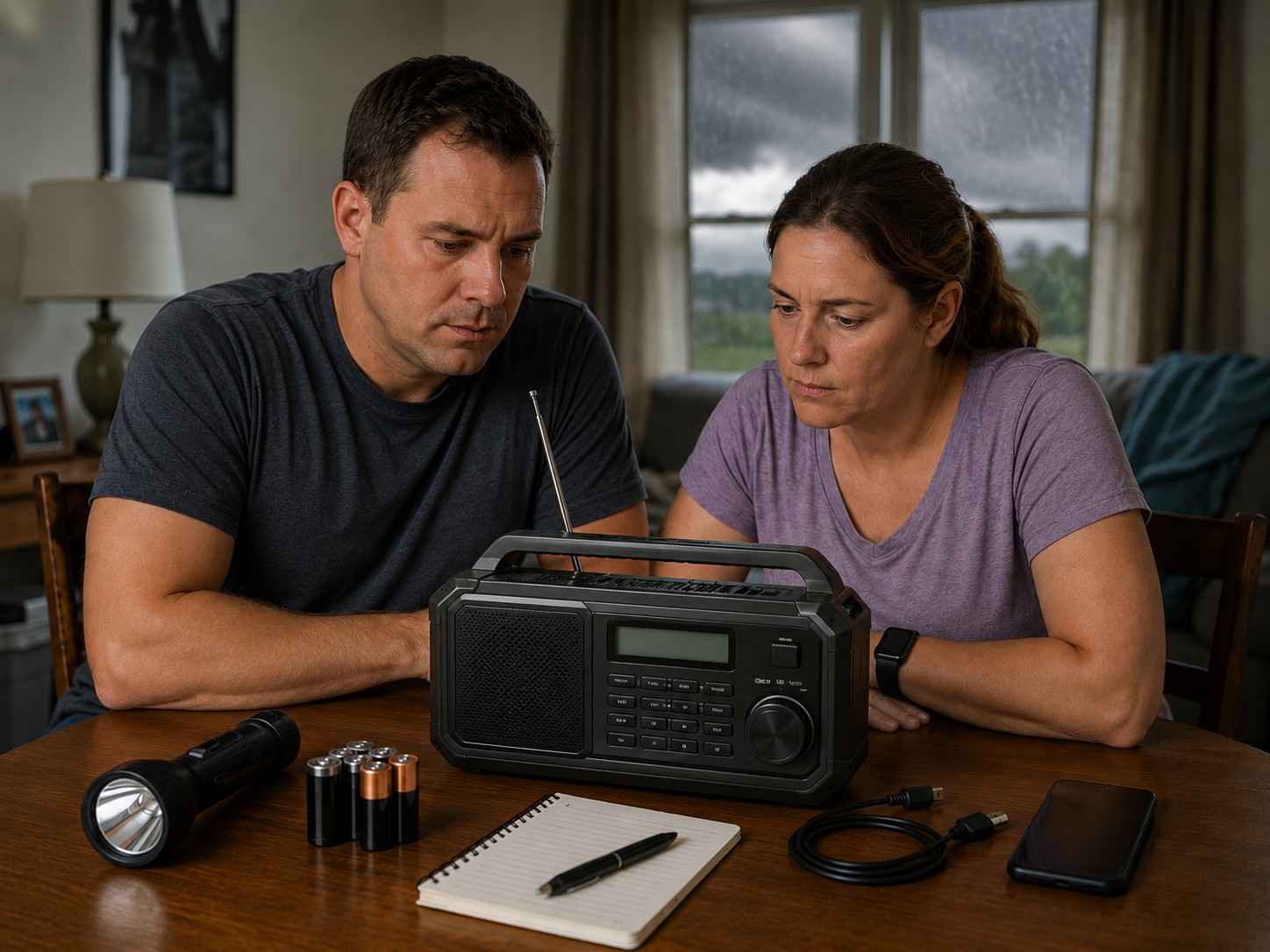
Why Phones and Internet Alerts Are Not Always Reliable
Many people assume their smartphones will always provide emergency warnings, but several factors can prevent alerts from reaching you during major disasters. Cell towers can become overloaded, power outages can disable internet services, and some alerts may be delayed or missed entirely if devices are muted or out of signal range.
Because of these limitations, relying solely on mobile alerts can leave gaps in your warning system. Emergency weather radios provide a separate alert channel that operates independently from cellular networks and internet infrastructure.
How Weather Radios Provide Reliable Emergency Alerts
Weather radios receive continuous broadcasts from the National Weather Service through a nationwide network of weather radio transmitters. These broadcasts provide official weather forecasts, watches, warnings, and other emergency alerts around the clock.
Because these alerts are transmitted through dedicated weather radio frequencies rather than internet or cellular networks, they often remain available during severe storms and widespread outages. Many radios also include automatic alert features that sound a loud alarm when the National Weather Service issues a warning for your area.
They Receive Dedicated Weather Alert Broadcasts
An emergency weather radio is built to receive dedicated weather alert broadcasts instead of depending on phone apps, internet service, or television coverage. That gives the household a separate alert path for severe thunderstorms, tornado warnings, flash flooding, winter storms, hurricanes, and other hazards. Separate systems matter because failures rarely ask permission before arriving together.
They Can Alert While You Are Not Watching a Screen
A weather radio can sit in alert mode while people are sleeping, working, cooking, cleaning up, or trying to keep the day moving. That matters because warnings are not always convenient enough to arrive while someone is staring at a phone. A dedicated alert tone can cut through normal household noise when attention is somewhere else.
They Help Preserve Phone Battery
During an outage, a phone has too many jobs already: calls, texts, maps, family updates, flashlight duty, photos, notes, and sometimes entertainment for someone who has run out of patience. A weather radio takes alert monitoring off the phone so battery power can be saved
They Work Best With Backup Power
An emergency weather radio should not depend on one power source. Look for models that support replaceable batteries, USB charging, hand-crank charging, or another backup option. Then keep the batteries charged or stored nearby. A radio with three backup power methods still becomes a paperweight if every battery in the drawer is dead.
Why Weather Radios Are Recommended in Preparedness Plans
Emergency management agencies and preparedness organizations frequently recommend weather radios as a core part of household emergency planning. Because these radios receive alerts directly from the National Weather Service, they provide one of the fastest and most reliable ways to receive warnings about severe weather and other hazards.
Having a weather radio ensures your household has a dedicated alert system that can operate even when other communication tools are unavailable. For this reason, many emergency preparedness guides list NOAA weather radios among the most important devices for maintaining situational awareness during disasters.
Where to Keep an Emergency Weather Radio
Keep an emergency weather radio where it can actually be heard and used. A good location is a central room, bedroom area, kitchen command spot, or emergency supply shelf where the radio, batteries, charging cable, flashlight, and written contact notes stay together. The best radio in the house is not very helpful if it lives in a forgotten closet under old cables and optimism.
Keep It Where Alerts Can Be Heard
A weather radio should be placed where the alert tone can wake or reach the household. For many homes, that means a bedroom, hallway, kitchen, or central living area rather than a basement shelf or garage cabinet. Test the alert volume before you trust it. A radio nobody can hear is just a very responsible-looking decoration.
Store Batteries and Charging Cables With It
Store spare batteries, charging cables, wall adapters, and any radio instructions with the weather radio itself. Do not assume those pieces will be easy to find later. Emergency gear works better when the supporting parts are kept together instead of scattered through the house like a small treasure hunt nobody requested.
Test the Radio Before Storm Season
Test the weather radio before storm season, winter weather season, or any local hazard period that tends to cause trouble in your area. Confirm the batteries work, the radio receives alerts, the volume is loud enough, and everyone knows where it is. Testing takes a few minutes. Discovering the radio does not work during a warning is a less charming schedule.
Choosing a Weather Radio for Your Emergency Plan
Choosing a reliable weather radio is an important step in building a resilient emergency communication system. Radios that include SAME alert capability, backup power options, and strong alert alarms help ensure your household receives warnings when severe weather or other hazards threaten your area.
To compare recommended models and see which radios provide the best reliability and emergency features, visit our guide to the Best Emergency Radios for Disaster Preparedness.
Return to the Best Emergency Radios for Disaster Preparedness guide to compare recommended models and complete your emergency communication plan.