Household Preparedness for Pets During Emergencies
Household preparedness for pets during emergencies means planning for the animals that depend on your daily systems. Power outages, water disruptions, evacuation orders, extreme weather, and utility failures can affect pets quickly because they cannot gather supplies, explain symptoms, refill medication, or understand why normal routines changed.
A useful pet emergency plan focuses on the basics first: water, medication, food, containment, sanitation, identification, transportation, and safe shelter. The goal is not to overcomplicate pet care. The goal is to keep pets stable when the household is already managing enough problems.
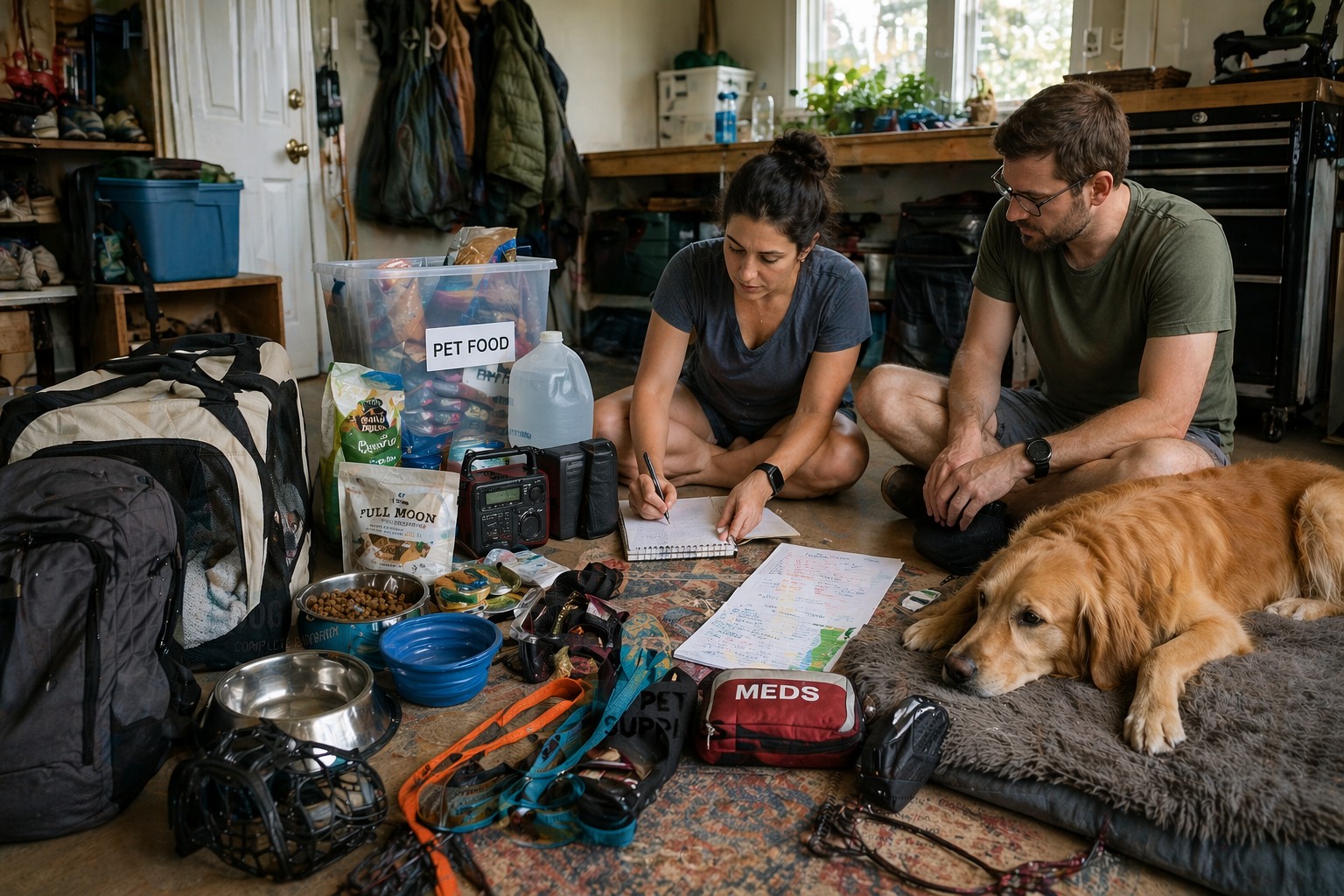
Water and Medication Come Before Pet Food
Many households think pet preparedness starts with extra food, but water access and medication continuity usually create faster emergencies. Pets can decline quickly when hydration fails, prescriptions are interrupted, refrigeration is lost, or normal routines collapse during stress.
Preparedness starts by protecting what cannot fail safely. Drinking water, temperature control, medications, veterinary access, and basic daily care must be secured before extra food storage becomes the priority. Strong planning protects stability first, not convenience.
Know Which Pets Have Medical Risk First
Older pets, animals on prescription medication, pets with diabetes, heart conditions, seizure history, anxiety disorders, or temperature sensitivity create much higher emergency risk than healthy routine cases. Preparedness should begin with the animals that cannot safely tolerate disruption.
The real question is not “Do we have pet supplies?” but “Which animal becomes a medical emergency first if normal routines stop?” Prepared households identify the highest-risk pets first and protect those continuity points before everything else.
A common mistake is treating every pet as if disruption affects them equally.
Water Demand Changes Faster Than Food
Heat, stress, evacuation, medication routines, and sanitation all increase how quickly pets depend on reliable water access. Water bowls are only part of the issue. Cleaning, cooling, litter maintenance, and safe transport all create higher daily demand during disruption.
The real test is what happens if refill access stops for several days. If pets remain fed but hydration, cooling, sanitation, or medication support begins failing quickly, the weak point is not food storage—it is water continuity.
Prepared households calculate realistic pet water needs instead of assuming stored water for people automatically covers animals. A common mistake is planning food carefully while underestimating how fast water becomes the real problem.
Medication Continuity Cannot Be Improvised
Prescription diets, insulin, seizure medication, pain management, and refrigerated veterinary medications create fast failure points during outages or evacuation pressure. Waiting until a refill is needed often means the problem is already dangerous.
The real test is identifying what happens if normal veterinary access stops for several days. If a delayed prescription, refrigeration failure, missed dosage, or transportation problem creates immediate health risk, that weak point must be solved before disruption begins.
Prepared households track refill timing, veterinary contacts, written medication instructions, and refrigeration protection before disruption begins. A common mistake is assuming normal vet access and pharmacy availability will continue during emergencies.
Evacuation Gets Harder With Pets
Many households delay evacuation because they assume pets can be managed later. That assumption creates dangerous last-minute decisions when carriers are missing, animals are stressed, shelter options are unclear, or safe transportation becomes limited. Pets make evacuation slower, not simpler.
Preparedness works best when evacuation planning happens before the crisis. Secure carriers, leashes, identification, veterinary records, shelter options, and known destinations should already be ready before leaving becomes urgent.
Leave Earlier, Not Later
Pets make evacuation slower because loading animals, medications, carriers, food, and safe transport takes more time than most households expect. Waiting for certainty often removes the safest travel window and creates panic-driven handling that increases risk for both people and animals.
Prepared households decide departure triggers early and leave while roads, fuel, visibility, and destination support still exist. A common mistake is using normal evacuation timing for a household that includes pets and requires much more preparation.
Secure Containment Prevents Chaos
Stress changes animal behavior quickly. Even calm pets can bolt, hide, become aggressive, or refuse normal handling during outages, storms, smoke, or rushed movement. Secure carriers, crates, leashes, and containment routines protect both the animal and the household.
Prepared households do not assume good behavior under pressure. A common mistake is waiting until evacuation begins to discover that a pet cannot be safely loaded or controlled.
Destination Planning Matters More Than Departure
Leaving without a confirmed destination creates a second emergency. Hotels, shelters, relatives, boarding options, and veterinary support all change when pets are involved. Not every evacuation location can safely receive animals.
The real test is what happens after the vehicle leaves the driveway. If the household reaches a hotel that does not allow pets, a shelter with no animal access, or a location without safe containment or veterinary support, evacuation has only moved the problem instead of solving it.
Prepared households know where they can go before leaving becomes necessary. A common mistake is focusing on getting out without confirming where the pet can actually remain safe and supported.
Routine Stability Prevents Behavior Problems
Pets respond to disruption through behavior long before people recognize a serious problem. Missed feeding times, unfamiliar smells, heat, smoke, noise, confinement changes, and household stress can quickly create anxiety, aggression, hiding, escape attempts, or medical decline.
Preparedness is stronger when routines stay as normal as possible. Feeding schedules, medication timing, sleeping areas, containment habits, and familiar caregiver behavior all protect stability. A household that protects routine often prevents emergencies before they begin.
Pet Emergency Supplies and Records to Keep Ready
Pet preparedness works better when the basic supplies and records are already gathered before the household is rushed, tired, or deciding whether to leave. Pets need more than food in a disruption. They need safe water, medications, containment, identification, sanitation supplies, comfort items, and proof that helps shelters, hotels, veterinarians, or family members care for them properly.
Know When Staying Home Stops Being Safe
Pet Supply Checklist
- Pet food for at least several days
- Stored water for drinking, cleaning, and cooling
- Medications and written dosing instructions
- Leash, harness, carrier, crate, or travel container
- Collar with current ID tags
- Food and water bowls
- Waste bags, litter, litter pan, or cleanup supplies
- Towels, bedding, or familiar comfort items
- Recent pet photo in case of separation
- Veterinary records, vaccine records, and microchip information
- Vet contact information and emergency animal clinic information
Keep Identification and Records Together
Keep pet identification and records in one place so they can move with the household if needed. Include vaccine records, medication instructions, microchip information, license details, recent photos, feeding notes, vet contacts, and emergency clinic information. If someone else has to care for your pet, they should not have to solve a paperwork puzzle while the animal is already stressed.
Plan for Sanitation and Cleanup
Sanitation becomes harder when pets are stressed, routines change, or the household is sheltering in place longer than expected. Store waste bags, litter, litter pans, pads, towels, disinfecting wipes, paper towels, gloves, and sealable trash bags. Cleanup supplies are not the exciting part of pet preparedness, but they are the part everyone notices when they are missing.
Some emergencies stop being a shelter-in-place problem and become a leaving problem for pets even faster than for people. Extreme heat, wildfire smoke, flooding, chemical exposure, medical failure, unsafe temperatures, or loss of secure containment can make staying home dangerous very quickly.
Prepared households decide these thresholds early. The goal is not waiting for obvious collapse—it is recognizing when the home can no longer safely protect the animal and leaving while transportation, destination options, and calm handling still exist.
Return to Household Preparedness Systems