Dual-Fuel Generators (4,000–7,500 Watts)
Dual-fuel generators in the 4,000–7,500 watt range can be a practical home backup power option for households that need more than a small portable generator but are not ready for a whole-house standby system. This size range can often support essential loads such as refrigeration, lights, device charging, a furnace blower, small appliances, sump pump use, or selected circuits when the generator is sized and connected correctly.
This guide focuses on how to choose dual-fuel generators for household emergency power, not just how to compare spec sheets. The goal is to understand what this wattage range can realistically run, when gasoline or propane makes more sense, what safety equipment is required, and where a portable generator fits inside a larger Power plan.
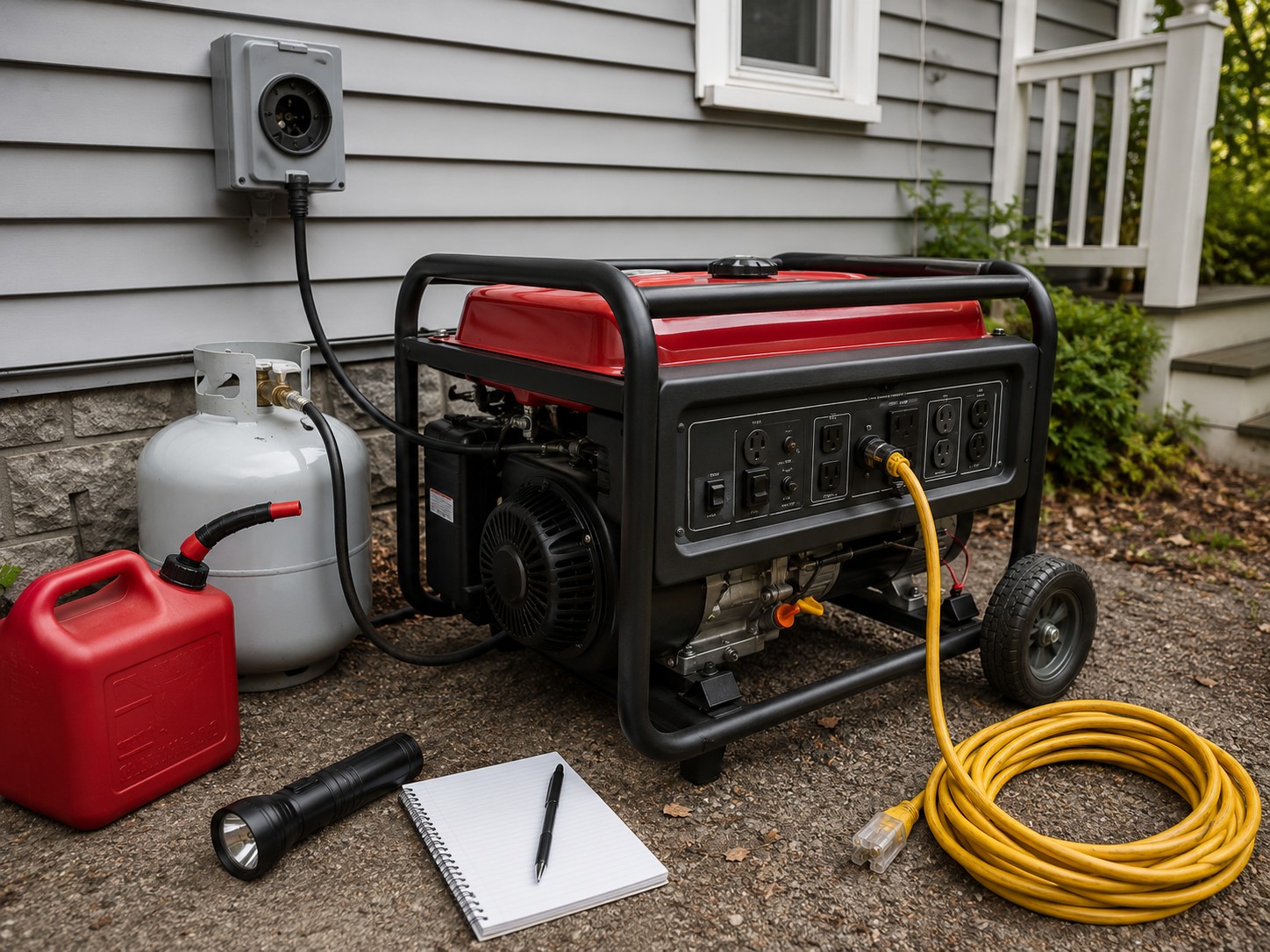
Why This Dual-Fuel Generator Size Range Matters
Dual-fuel generators in the 4,000–7,500 watt range sit in the practical middle of home backup power. They are large enough to support meaningful household loads, but still portable enough for many households to store, maintain, and deploy without moving into standby-generator territory. For many homes, this size range is where backup power becomes genuinely useful instead of merely comforting.
Big Enough for Essential Circuits
A 4,000–7,500 watt dual-fuel generator can often support selected essential circuits rather than the whole house. Depending on the home and generator capacity, that may include a refrigerator, freezer, lights, phone charging, internet equipment, furnace blower, sump pump, well pump, microwave, coffee maker, or a few small appliances used one at a time. The key is choosing priorities before the outage, not learning the wattage of everything you own by tripping breakers in the rain.
Still Small Enough to Manage
This wattage range is still portable enough for many households to store, move, maintain, and set up during an outage. That matters because backup power that is too large, too heavy, too loud, too thirsty, or too complicated may sit unused when it is needed most. A generator has to fit the household, not just the spec sheet.
Flexible Fuel Options Matter During Outages
Dual-fuel generators can run on gasoline or propane, which gives households more flexibility when one fuel is hard to find, unsafe to store in quantity, or inconvenient during an extended outage. Gasoline usually provides strong output and familiar operation. Propane stores longer, burns cleaner, and avoids some fuel-staleness problems, but it may reduce available wattage depending on the generator. The useful part is having options before fuel becomes the limiting factor.
What Can a 4,000–7,500 Watt Dual-Fuel Generator Run?
A 4,000–7,500 watt dual-fuel generator is best understood as an essential-load generator, not a whole-house solution. It can usually run several important items if the loads are chosen carefully, but it may not run central air conditioning, electric heat, electric water heating, large ovens, dryers, or every circuit in the house at once. The question is not “what can it run?” The better question is “what must keep working first?”
Typical Essential Loads
Typical essential loads include refrigerators, freezers, lights, phone chargers, internet equipment, furnace blowers, sump pumps, well pumps, medical devices, fans, small kitchen appliances, and a few outlets for necessary tasks. These loads should be prioritized and tested before an outage. A generator in this range can do useful work, but it still needs discipline. Everything plugged in at once is how optimism becomes a breaker trip.
Loads That Usually Do Not Belong on This Size Generator
Large electric loads usually do not belong on a 4,000–7,500 watt portable generator unless the system has been specifically sized and installed for them. Central air conditioning, electric heat, electric water heaters, clothes dryers, large ovens, and multiple high-draw appliances can overwhelm this generator class quickly. This is where people learn that “watts” on a box and “my whole house” are not the same sentence.
Starting Watts Matter More Than People Expect
Motors and compressors often need extra power when they start. Refrigerators, freezers, sump pumps, well pumps, furnace blowers, and some power tools may draw more starting watts than running watts. That surge can overload a generator even when the normal running load looks acceptable on paper. Always compare both running watts and starting watts before deciding what this generator can support.
Gasoline vs Propane for Dual Fuel Generators
Gasoline and propane both have a place in dual-fuel generator planning, but they solve different problems. Gasoline is widely available and often provides higher output. Propane stores longer, burns cleaner, and avoids many stale-fuel problems. The best choice depends on what you can store safely, how long the outage may last, how much power you need, and which fuel you can actually get when everyone else has the same idea.
Gasoline Usually Provides More Output
Gasoline usually allows a dual-fuel generator to produce its highest rated wattage. That can matter when starting motors, running several essentials, or supporting heavier temporary loads. The tradeoff is storage. Gasoline has a shorter storage life, needs safe containers, may require stabilizer, and becomes harder to manage during long outages when fuel stations are closed, crowded, or without power themselves.