Solar Generators for Emergency Backup Power
Solar generators provide a clean, quiet way to maintain electricity during power outages. Unlike fuel generators, they rely on rechargeable batteries that can be replenished with solar panels. This makes them especially useful during extended disruptions when fuel may be unavailable.
A properly sized solar generator can power essential household devices such as refrigerators, lighting, communication equipment, and small appliances.
Solar generators provide a quiet, renewable power source for maintaining essential household functions during outages. Unlike fuel-based systems, they rely on stored battery capacity and solar recharging to deliver consistent power without fuel dependency.
This page explains how solar generators work, when to use them, and how they fit into your overall emergency power system.
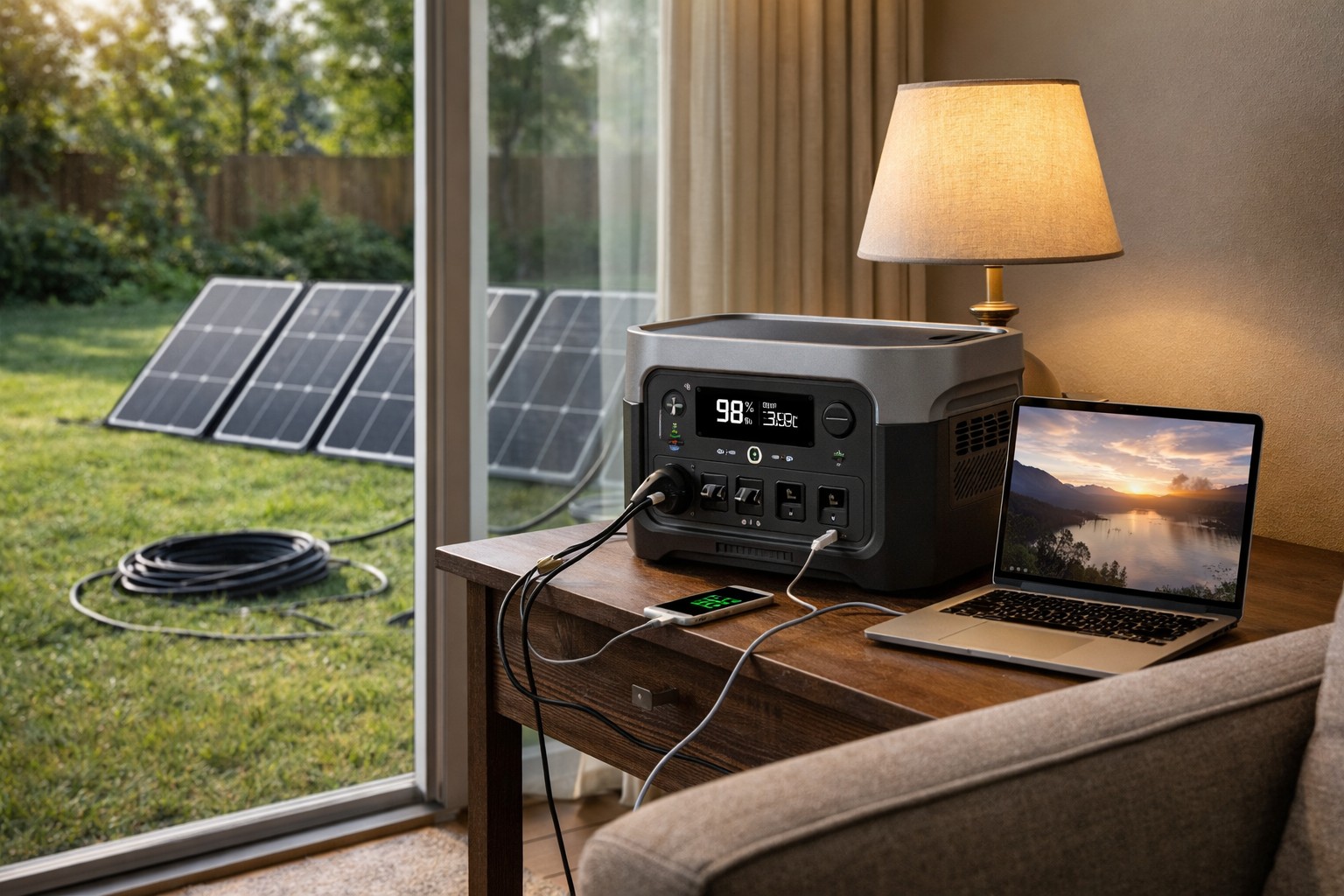
What Is a Solar Generator
A solar generator is a portable power system that combines a battery, inverter, and solar panels to store and deliver electricity. Unlike traditional fuel generators, solar generators do not require gasoline or propane and operate quietly without emissions.
They are designed to capture energy from the sun, store it in a battery, and provide usable power for household devices when grid electricity is unavailable.
When to Use a Solar Generator for Backup Power
Solar generators combine battery storage, an inverter, and charging inputs in one portable system. Unlike traditional generators, they produce no exhaust and require very little maintenance. This makes them safe for indoor use and easy to operate during stressful situations.
Because they can recharge from solar panels, these systems can continue producing power long after fuel generators stop working.
Advantages and Limitations of Solar Generators
Solar generators offer several important advantages for emergency preparedness. They operate quietly, do not require fuel storage, and can be used safely indoors because they do not produce exhaust fumes. They also provide a renewable charging option when paired with solar panels, making them useful during extended outages.
Their limitations should also be considered. Solar generators usually provide less total output than large fuel-powered generators, may take longer to recharge, and depend on available sunlight for renewable charging. For many households, they work best as part of a layered backup power strategy rather than as the only solution.
Key Components of a Solar Generator System
Battery Storage
The battery is the core of a solar generator system. It stores electricity that can be used later when power is needed. Battery capacity is usually measured in watt-hours (Wh), which determines how long devices can run before the battery must be recharged.
Larger batteries provide longer runtime but increase cost and system weight.
Inverter
The inverter converts stored battery power into usable household electricity. Most solar generators provide standard AC outlets through the inverter so common appliances and electronics can run normally.
Inverter capacity is measured in watts and determines the maximum power the system can supply at one time.
Solar Panels
Solar panels recharge the battery using sunlight. Panel wattage determines how quickly the system can replenish stored energy. During extended outages, solar charging allows the generator to continue operating without fuel.
Panel size, sunlight conditions, and battery capacity all affect real-world charging performance.
How to Size a Solar Generator for Your Needs
Choosing the correct solar generator size begins with understanding how much power your essential devices require. Refrigerators, freezers, lighting, communication equipment, and medical devices all consume different amounts of electricity.
Estimating your total wattage needs helps determine the battery capacity and inverter output required. To better understand how much power your household requires, review our emergency backup power planning guide.
Small Solar Generators
Small solar generators are designed for phones, radios, small lights, and short-term device charging. They are lightweight and portable, but typically cannot run high-draw appliances like refrigerators for long.
These systems are best for short outages, evacuation kits, and minimal essential power.
Medium Solar Generators
Medium solar generators can power devices like refrigerators, televisions, laptops, and lighting for limited periods. These systems provide a practical balance between portability and usable capacity.
Many households choose medium-sized systems for emergency preparedness because they support several essential appliances without becoming excessively large or expensive.
Large Solar Generators
Large solar generators provide enough capacity to power multiple appliances for extended periods. These systems often support refrigerators, freezers, lighting, communication equipment, and additional household devices simultaneously.
While larger systems cost more and weigh more, they offer significantly greater resilience during long outages.
How Solar Generators Fit Into Your Power Plan
Solar generators are most effective when chosen based on your critical loads and realistic energy demand. A structured plan prevents underpowered systems that fail during outages and oversized systems that waste budget. Solar generators are most effective when combined with other backup methods such as fuel generators or battery systems to provide redundancy during extended outages. Solar generators are most effective when combined with other backup power solutions, such as fuel generators or battery systems, to provide redundancy during extended outages.
Use your backup power planning framework to identify priority devices, estimate wattage needs, and select a solar generator system that supports your household goals.
Return to the preparedness overview to keep your full plan aligned.